January 2025
Big Tech meets Big VC meets Big Pharma: the new power plays reshaping HealthTech

Founder & CEO, HGM Advisory
Key takeaway
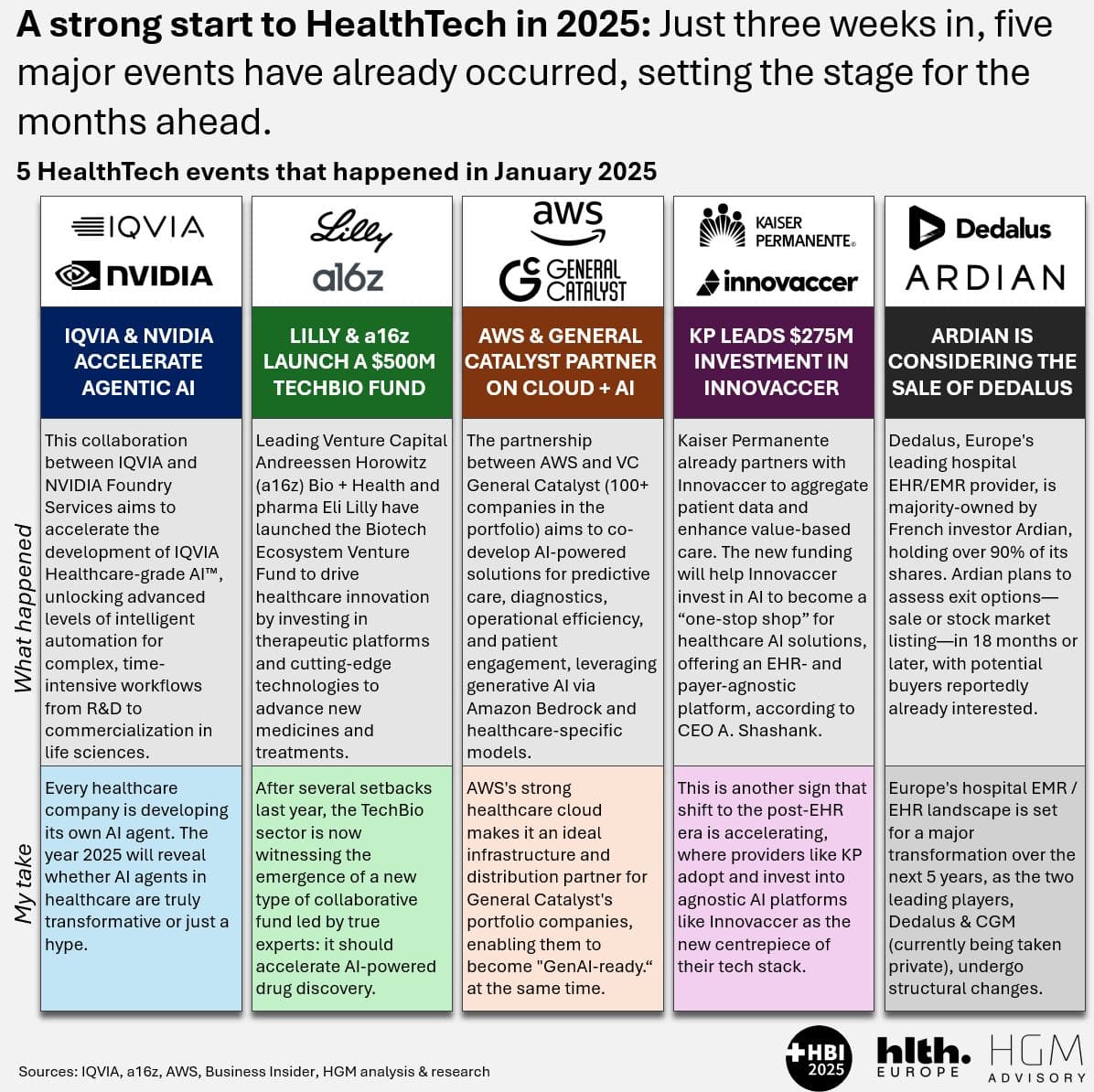
The biggest shift in HealthTech in early 2025 is not a product launch but a series of strategic partnerships: General Catalyst x AWS, Andreessen Horowitz x Eli Lilly, Kaiser Permanente x Innovaccer. These signal that the era of VCs competing with Big Tech and pharma is over. The era of structured collaboration has begun.
General Catalyst partners with AWS. Andreessen Horowitz launches a TechBio fund with Eli Lilly. Kaiser Permanente builds a post-EHR data layer with Innovaccer. And legacy EHR provider Dedalus is up for sale. The power dynamics in healthcare technology are shifting fast.
Big VCs are partnering with Big Tech and Big Pharma
General Catalyst partnered with AWS to provide distribution for its 100+ HealthTech portfolio companies through Amazon's cloud infrastructure. This is not a typical cloud deal: it is a systematic pipeline connecting VC-backed startups with enterprise healthcare buyers via AWS's sales channels.
Andreessen Horowitz is launching a TechBio fund with Eli Lilly, signaling that top-tier VCs now collaborate with Big Pharma rather than trying to disrupt them. The fund combines a16z's technology expertise with Lilly's clinical development infrastructure and regulatory know-how.
These partnerships mark a maturation of the HealthTech market: the capital-intensive, highly regulated nature of healthcare means that collaboration between VCs, Big Tech, and pharma is more effective than competition.
Kaiser Permanente builds the post-EHR era
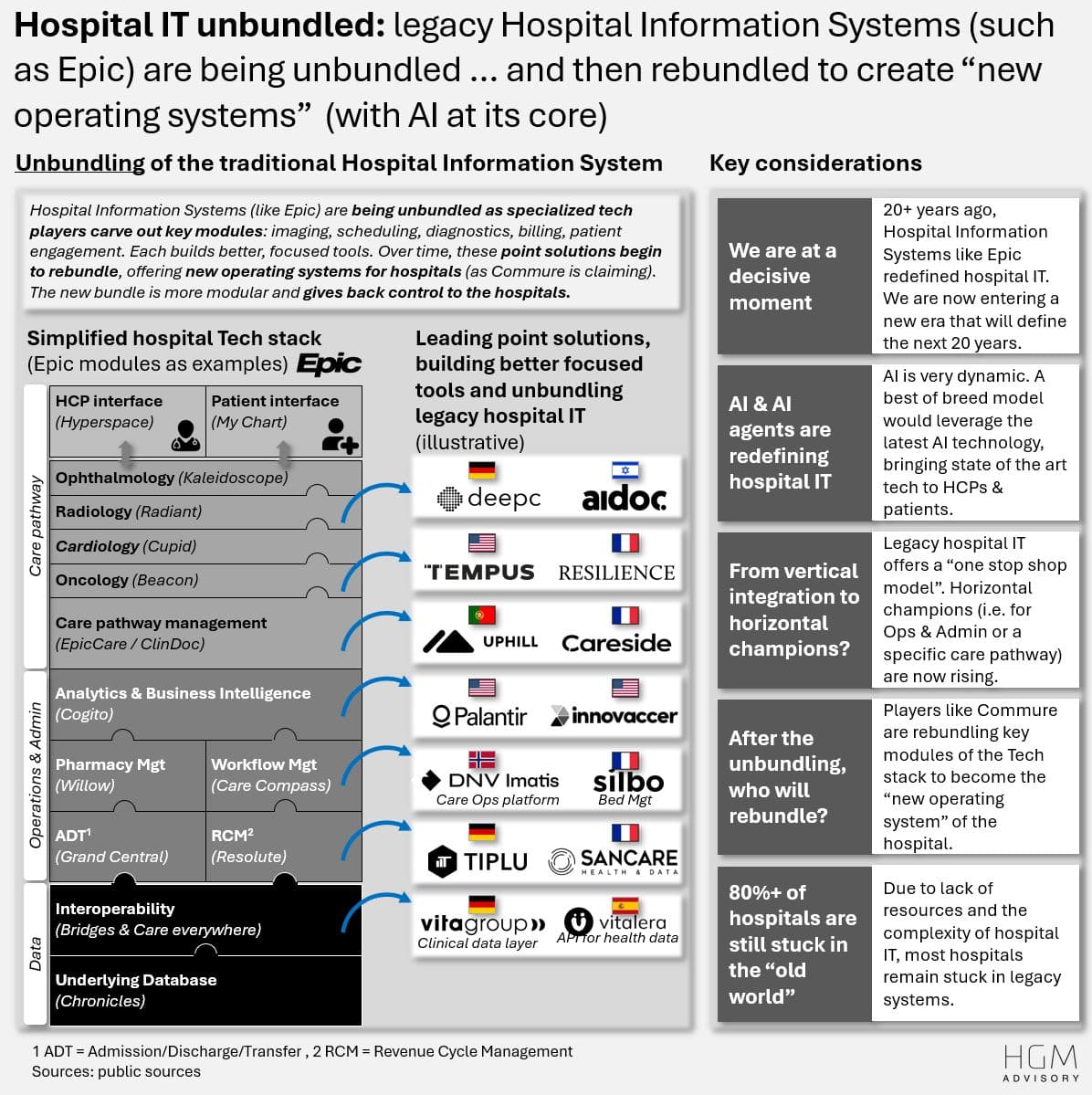
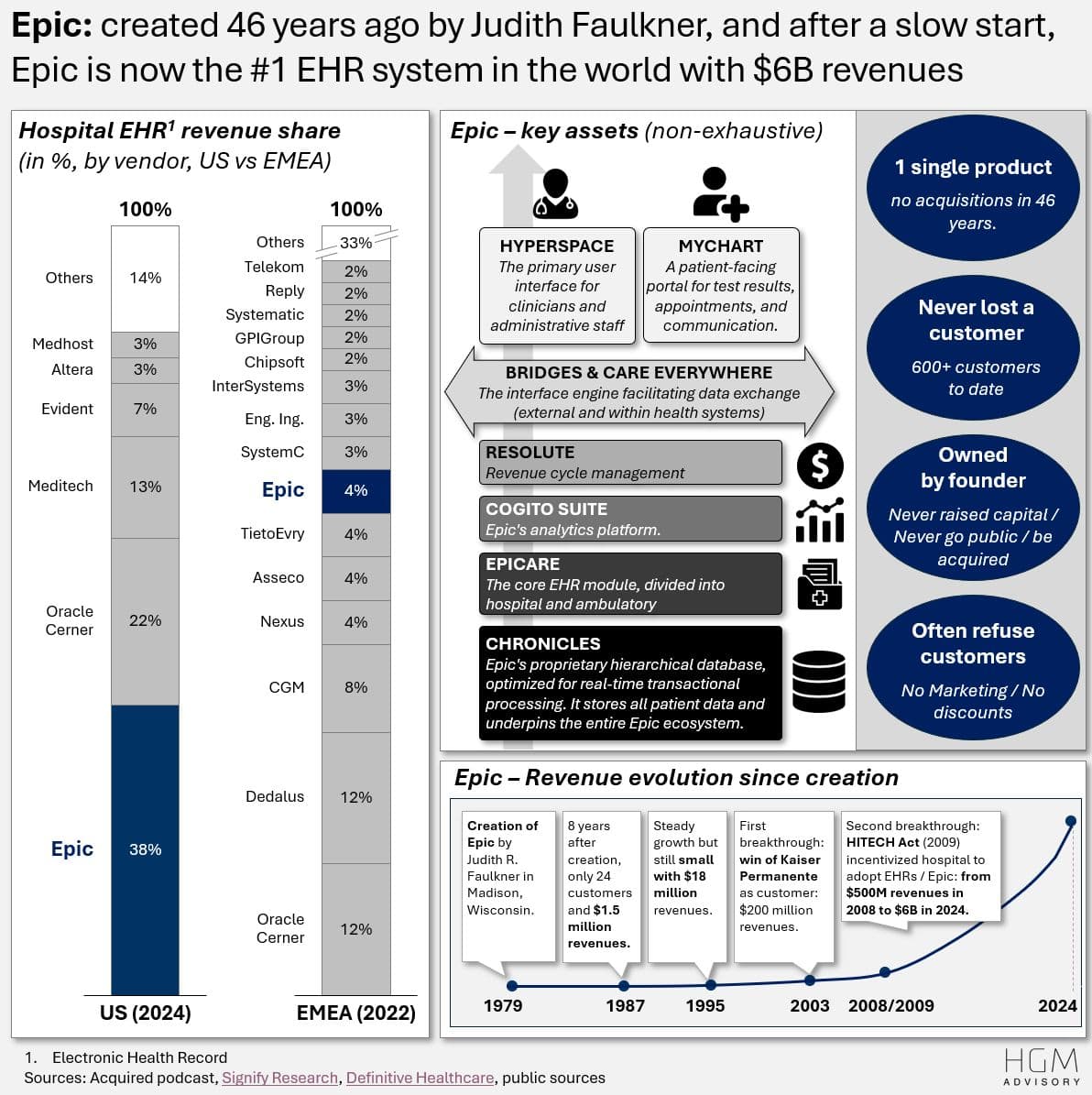
Over 10 years after spending $4 billion+ on Epic, Kaiser Permanente is working with Innovaccer to build a neutral data layer on top of its Epic system. This enables value-based care contracts, population health management, and AI deployment in ways that Epic's native architecture was not designed to support.
The strategic significance is clear: even the most sophisticated health system in the US does not view its EHR as sufficient for the AI era. KP needs a layer above Epic that can integrate data from multiple sources, run AI models, and support new care delivery models. This is the post-EHR architecture that other health systems will eventually adopt.
The sale of Dedalus
Dedalus, the Italian hospital EHR/EMR provider, is a top-2 player in most European markets. But its closed system architecture hinders interoperability and limits the ability to layer AI and modern workflow tools on top.
A new buyer with HealthTech companies in its portfolio (like an Innovaccer equivalent) could 'open' Dedalus and drive hospital digital transformation in Europe. The Dedalus sale could become the most consequential European hospital IT deal of the decade if the right buyer sees it as a platform play rather than a legacy software acquisition.
AI agents: will the bubble burst?
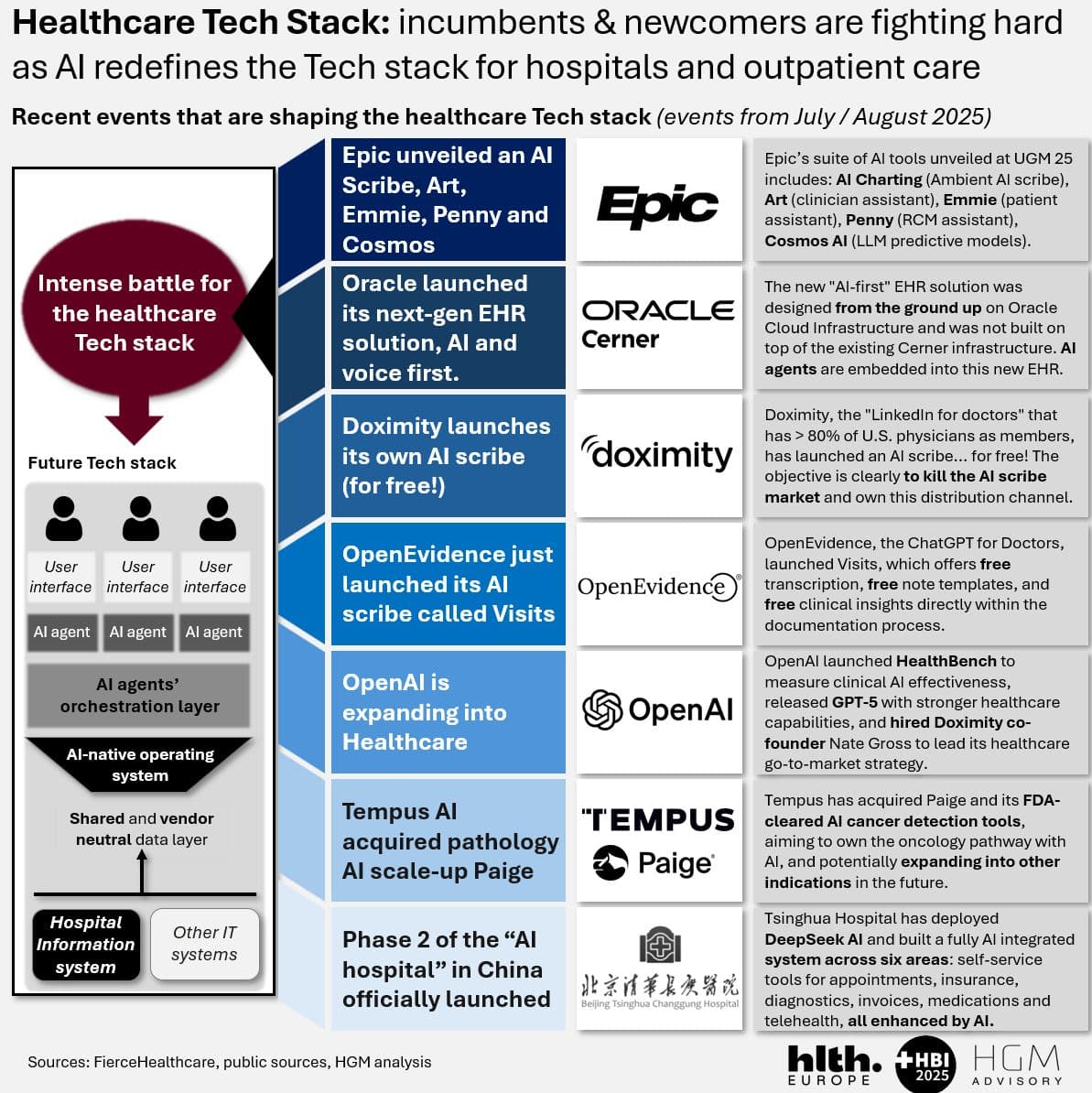
Even traditional players like IQVIA are launching AI agents, signaling that the category has reached peak hype. The question for 2025 is whether AI agents in healthcare will deliver measurable value or become the next wave of vaporware.
History suggests the truth will be somewhere in between: narrow, well-scoped agents (documentation, scheduling, patient follow-up) will prove their value, while ambitious autonomous agents (end-to-end prior authorization, clinical triage) will fall short of their promises. The M&A cycle will begin by late 2025 as the market separates viable products from overvalued demos.

About the author
Thomas HagemeijerFounder & CEO of HGM Advisory. Management consultant and HealthTech expert working across the full healthcare ecosystem: pharma, MedTech, investors, startups, hospitals, and policymakers. Investor at Springboard Health Angels. Ambassador at HLTH Europe and HBI. Regular keynote speaker on AI in healthcare and digital health transformation.