January 2025
Hippocratic AI launches an AI agent app store for healthcare at $1.6B valuation

Founder & CEO, HGM Advisory
Key takeaway
Hippocratic AI's $141M Series B at $1.6B valuation introduces a radical concept: an AI agent app store where clinicians create their own agents in under 30 minutes and earn revenue share. If AI agent marketplaces can leapfrog existing hospital tech solutions, the 95% of hospitals still struggling with basic data infrastructure might skip the traditional modernization path entirely.
Hippocratic AI (backed by General Catalyst, $141M Series B, $1.6B valuation) announced an AI agent app store where physicians can create their own agents in under 30 minutes and earn revenue share. Could AI agent ecosystems leapfrog existing hospital solutions entirely?
Clinicians in the driver seat
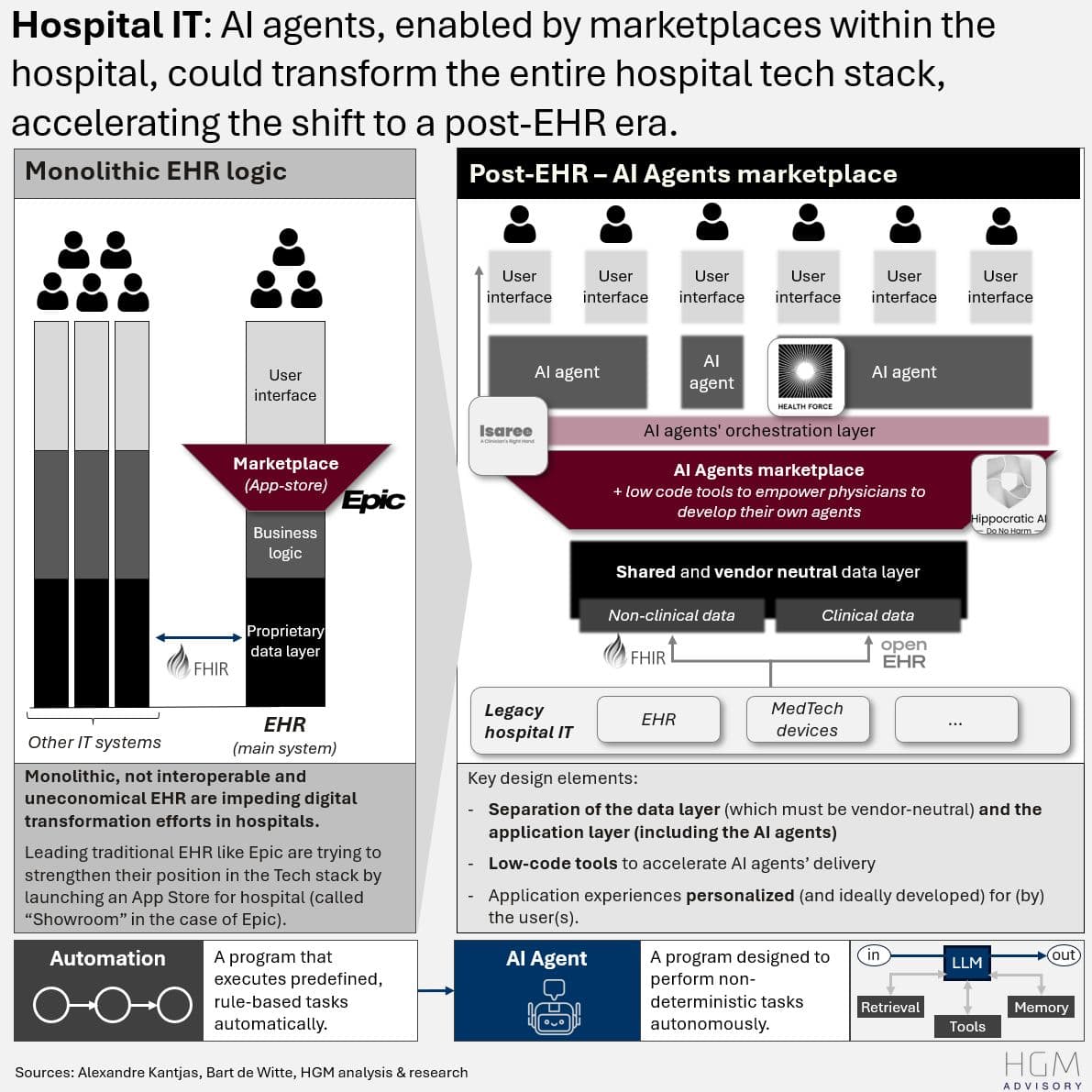
Hippocratic AI's most innovative feature is not its AI technology but its marketplace model. Physicians can create their own AI agents in under 30 minutes, without coding. These agents go through safety testing before deployment. And critically, clinicians earn revenue share when their agents are used by others.
This is the 'YouTube for clinical AI' model: just as YouTube enabled anyone to become a content creator, Hippocratic enables any physician to become an AI agent creator. The implications for adoption are significant: clinician-created agents have inherent clinical credibility that vendor-built agents do not.
Could AI agent ecosystems leapfrog existing solutions?
Over 95% of hospitals still struggle to establish a proper data layer. The conventional wisdom is that hospitals need to fix their data infrastructure before adopting AI. Hippocratic's model suggests an alternative: jumping straight to AI agent marketplaces might actually be the better strategy.
If AI agents can operate across fragmented systems, pulling data from multiple sources and executing tasks across workflow boundaries, they could render many existing hospital tech solutions obsolete. The agent becomes the integration layer, not the data warehouse.
Legacy EHR systems risk missing the train
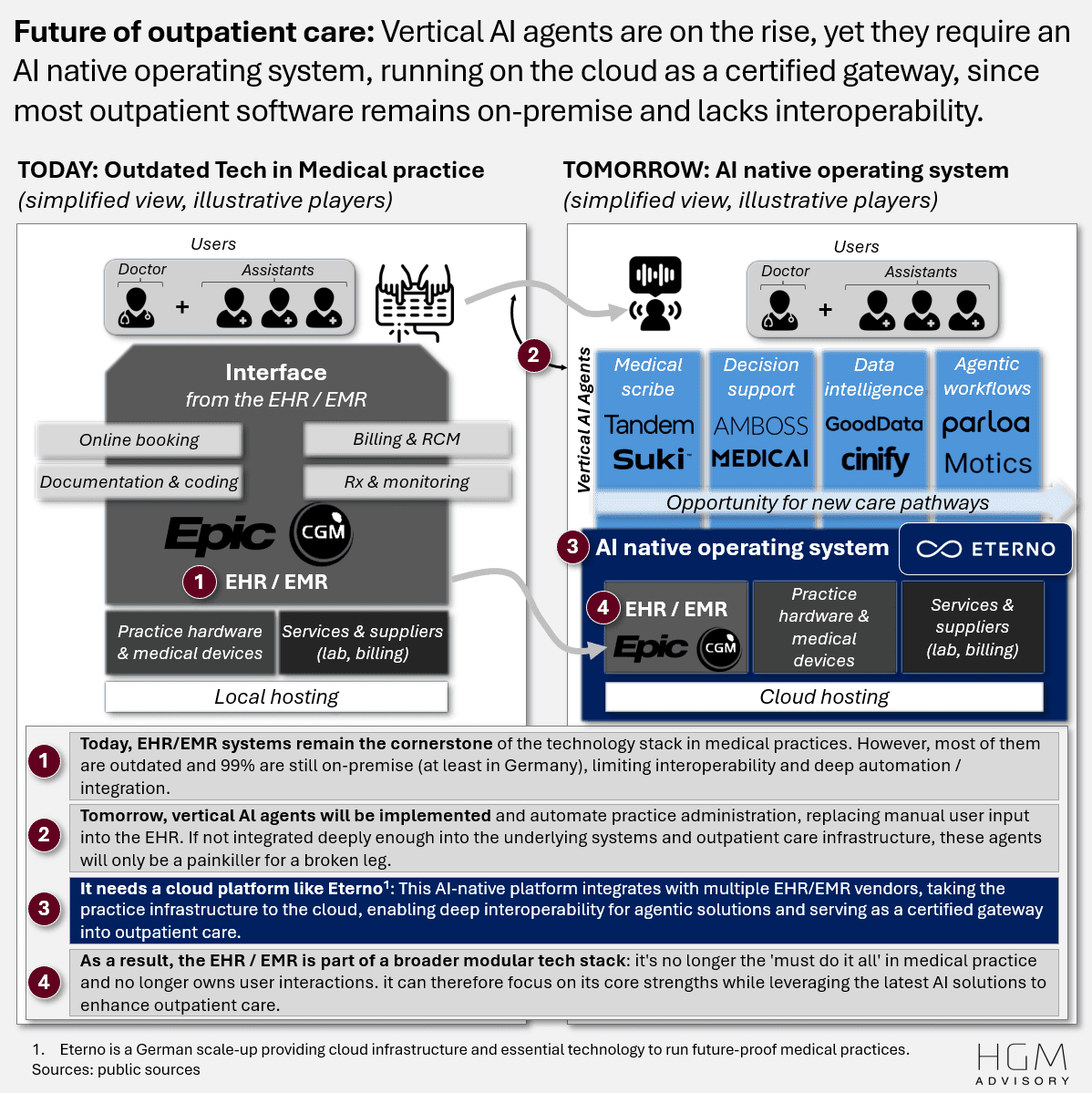
Hospitals locked into rigid, monolithic EHR systems face a strategic dilemma. Strengthening a legacy EHR makes sense only if there is no better alternative. Leading hospitals like Mayo Clinic understand that new technologies help them regain control of their data and IT systems.
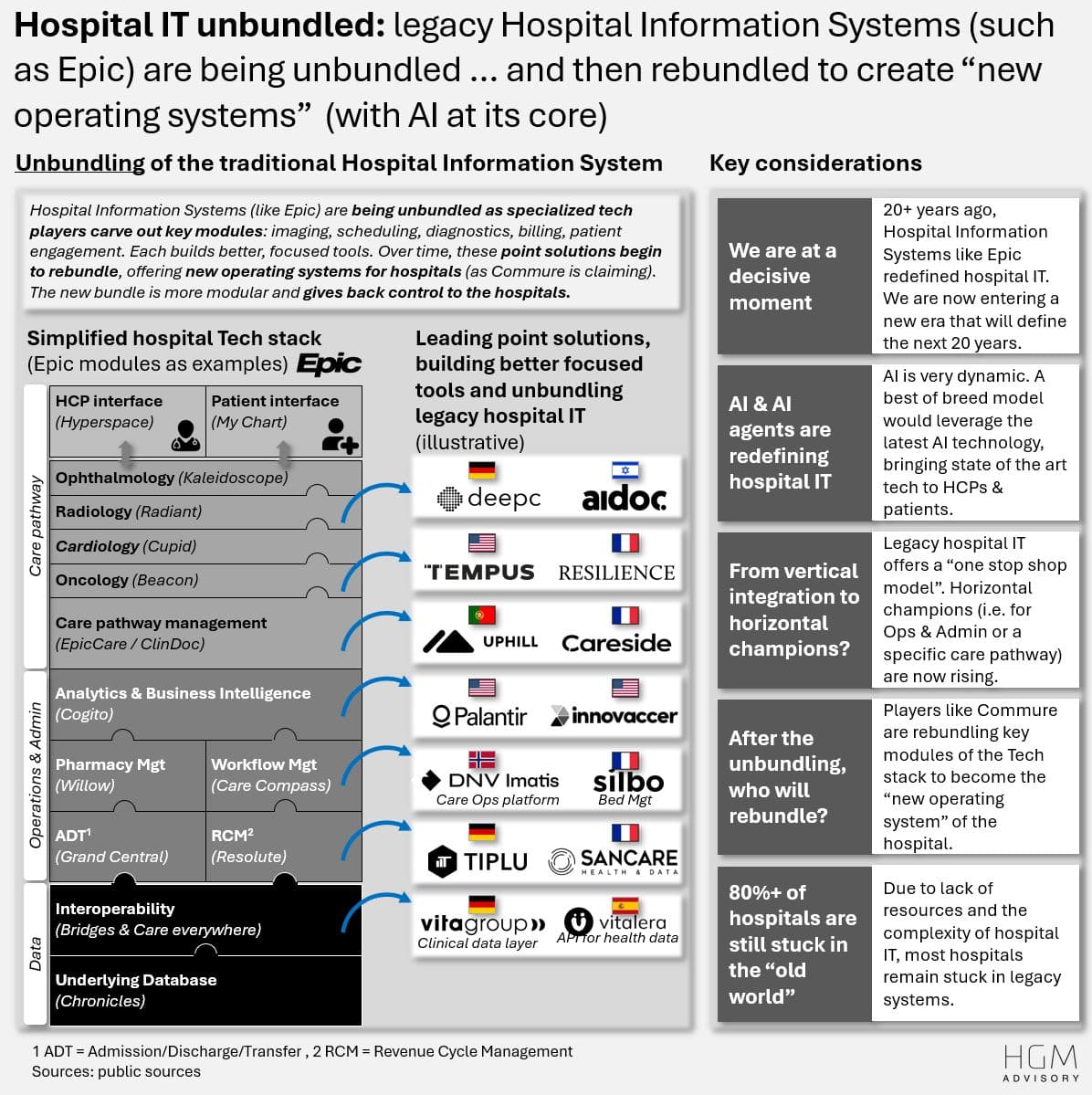
The risk for EHR vendors is clear: if AI agent marketplaces gain traction, the EHR's role shrinks from 'platform that controls the workflow' to 'database that stores the records.' The value and pricing power shift from the EHR vendor to the AI agent ecosystem.
2025 will reveal whether AI agents are transformative or hype
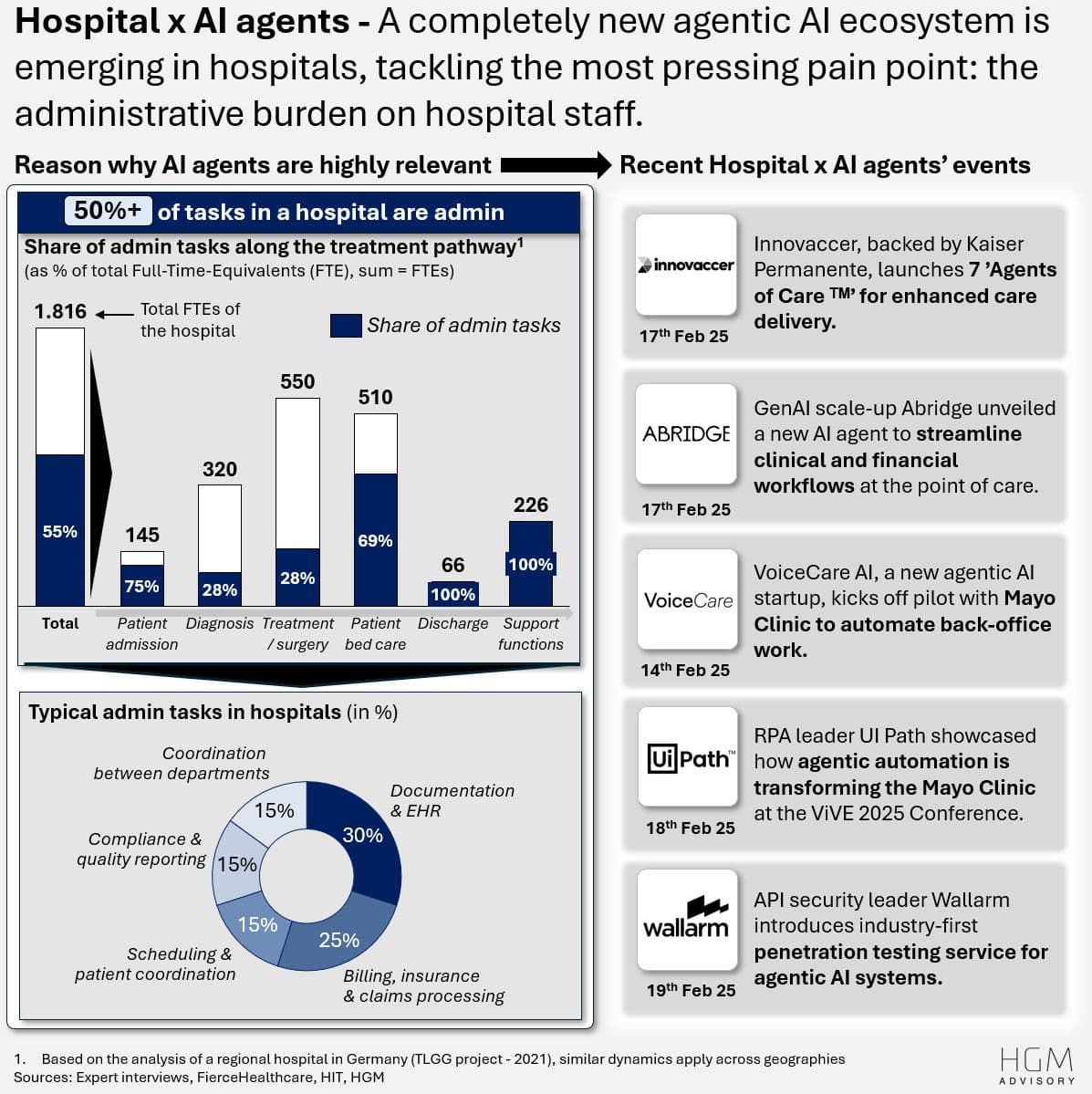
The healthcare industry enters 2025 with enormous expectations for AI agents. Hippocratic AI's app store, combined with launches from Microsoft, Oracle, Salesforce, and others, creates a level of competitive intensity that will quickly separate viable products from vaporware.
The test is simple: do AI agents measurably reduce clinician burnout, improve patient outcomes, or lower operational costs in real-world deployments? By the end of 2025, we will have enough data to answer this question definitively.

About the author
Thomas HagemeijerFounder & CEO of HGM Advisory. Management consultant and HealthTech expert working across the full healthcare ecosystem: pharma, MedTech, investors, startups, hospitals, and policymakers. Investor at Springboard Health Angels. Ambassador at HLTH Europe and HBI. Regular keynote speaker on AI in healthcare and digital health transformation.