
Key takeaway
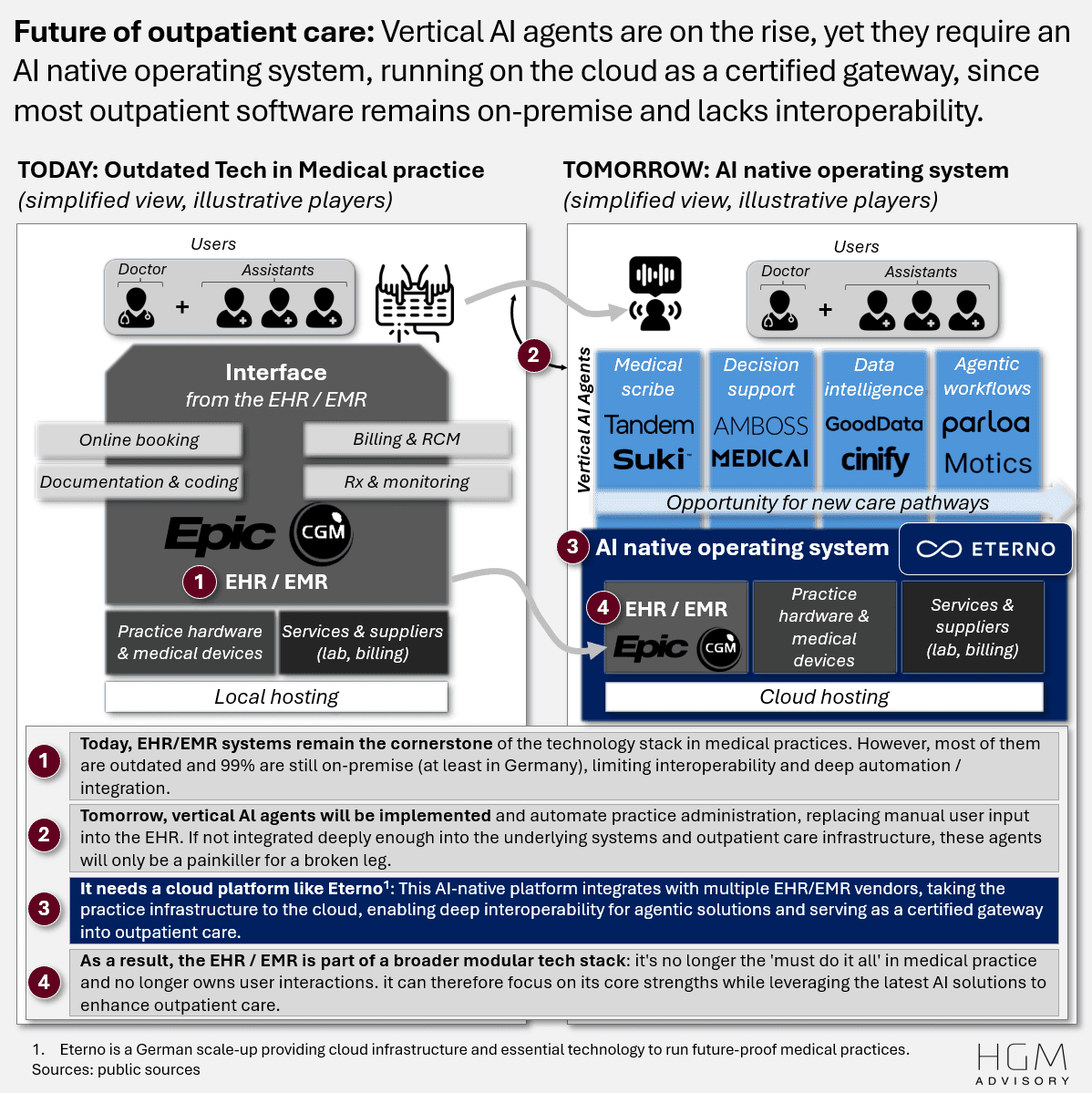
Outpatient care, not hospitals, is where AI agents are achieving real scale first, because fragmented workflows, thin margins, and physician burnout create urgent demand for automation that legacy EHR systems were never designed to provide.
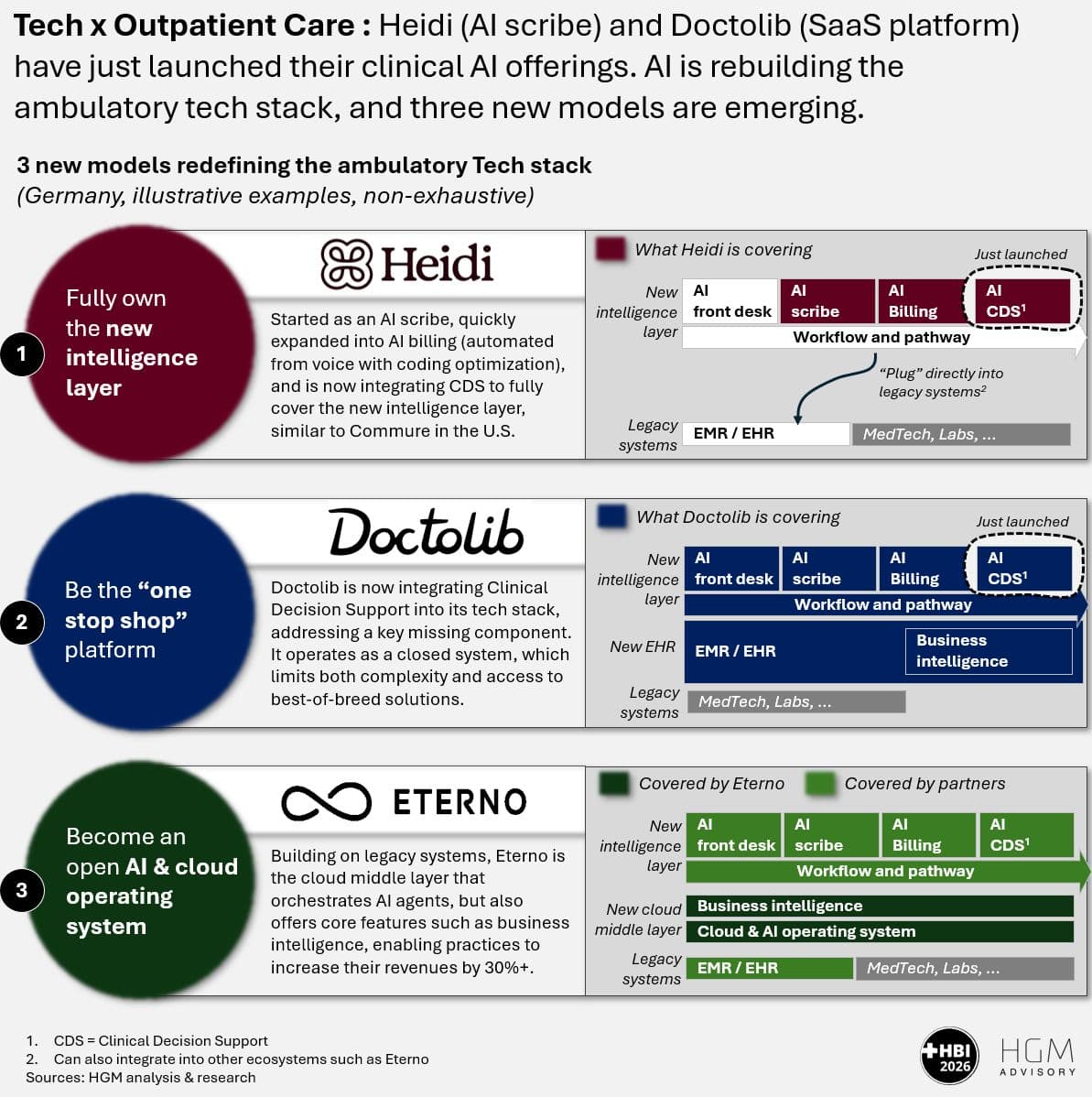
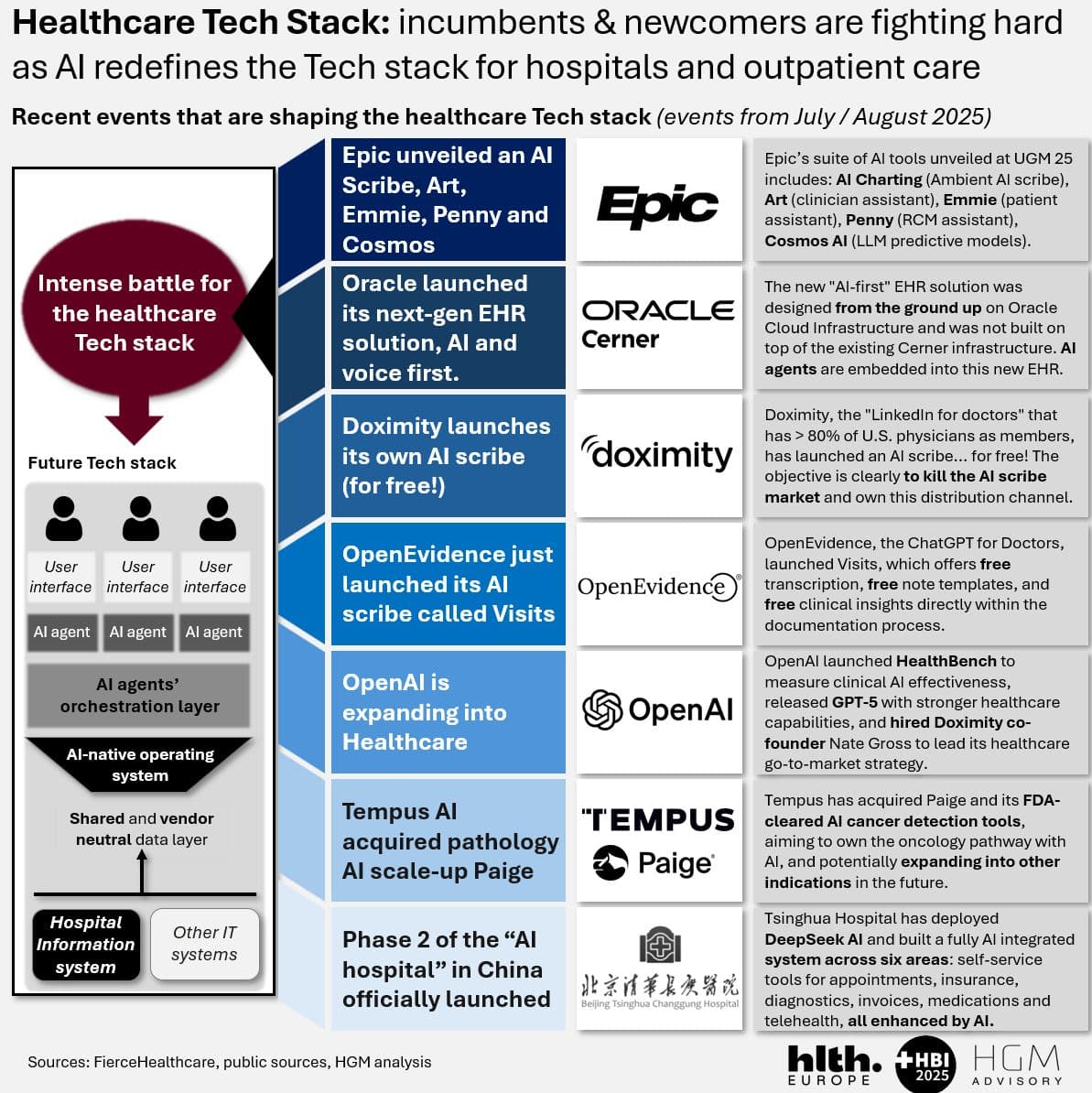
Hippocratic AI, Commure, Nabla, Tandem, AI agents are now scaling. Outpatient care needs a tech upgrade. Vertical AI agents (scribes, decision support, billing) now solve problems better than legacy EHR systems.
Why outpatient care is the beachhead
Outpatient settings operate on thin margins (3-5%) with small administrative teams. A typical primary care physician spends 2 hours on documentation for every 1 hour of patient contact. Staff turnover averages 25-30% annually.
Outpatient care also has simpler IT environments than hospitals, shorter procurement cycles, fewer integration points, and faster decision-making. A 20-physician group can pilot an AI scribe in a week; a 500-bed hospital takes 6-12 months.
Outpatient visits in the US exceeded 1 billion in 2024. The ambulatory care IT market is projected to reach $78 billion by 2027.
Key companies scaling AI agents
Hippocratic AI ($53M Series A, $500M valuation) builds patient-facing AI agents handling 2M+ monthly interactions across 150+ outpatient partners.
Commure ($300M+ total funding) has taken a platform approach spanning documentation, communication, and operational workflows across 40+ health systems.
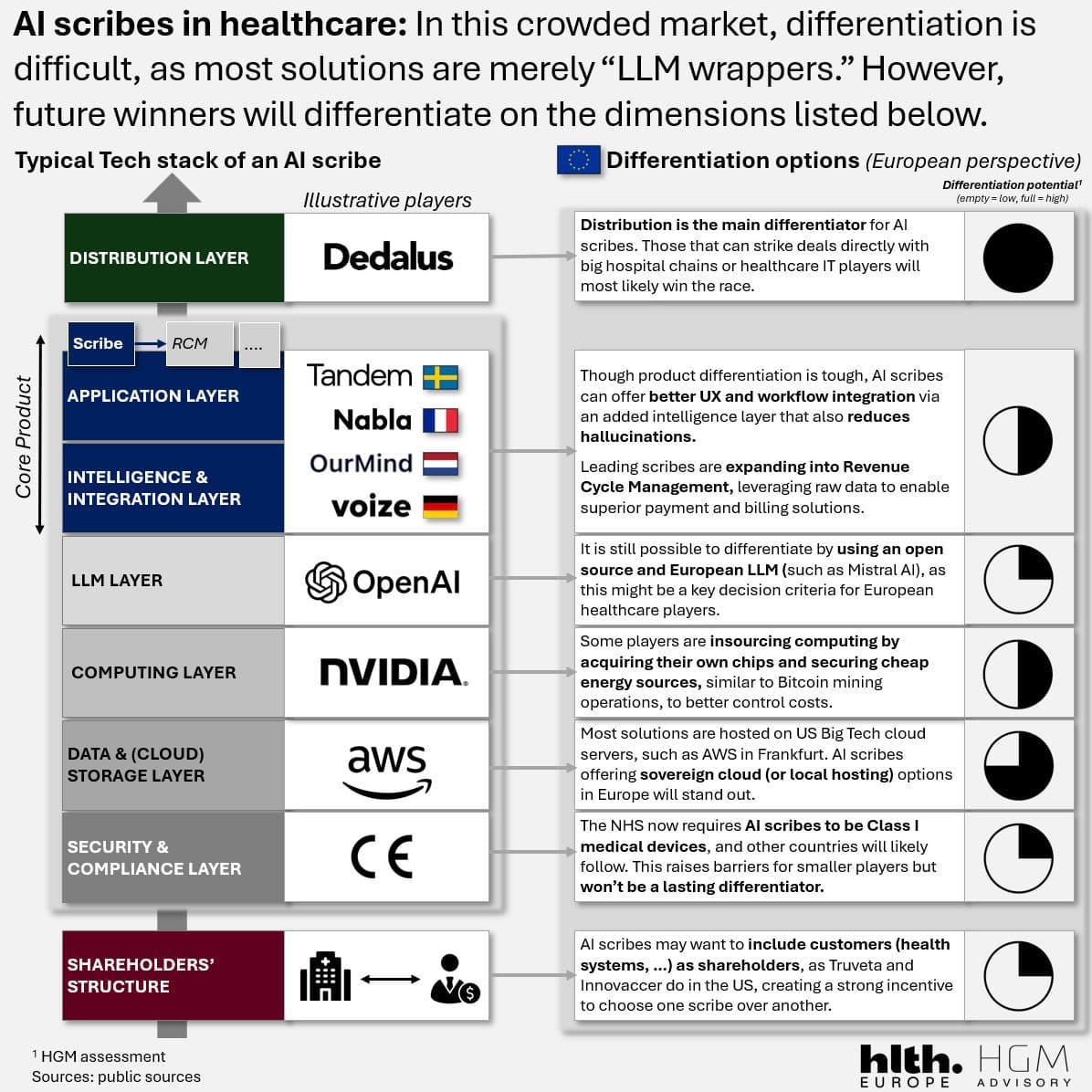
Nabla has emerged as a leading AI scribe with 95%+ note acceptance rates. Tandem Health targets European outpatient care with multilingual support.
Use cases driving adoption
AI scribes reduce documentation time by 40-60%, and they're a Trojan horse for broader workflow automation. Clinical decision support at the point of care (OpenEvidence, AMBOSS Lisa) is the second major use case. Billing and coding automation (Akasa, Regard, Nym Health) can recover 5-10% of revenue. Patient communication agents (Hyro) resolve 65% of calls without human intervention.
| Company | Use Case | Funding | Key Metric |
|---|---|---|---|
| Hippocratic AI | Patient-facing agents | $53M | 2M+ monthly interactions |
| Commure | Clinical workflow platform | $300M+ | 40+ health system integrations |
| Nabla | AI scribe | EUR 25M+ | 95%+ note acceptance rate |
| Abridge | AI scribe | $212.5M | Epic, Oracle partnerships |
| Hyro | AI phone/chat agents | $35M | 65% call resolution rate |
| Akasa | Revenue cycle AI | $85M | 100+ health systems |
Outpatient vs. hospital adoption
Hospitals face 6-18 month procurement cycles and complex integration requirements. Outpatient settings offer faster decisions, simpler tech stacks, and direct ROI measurement.
The outpatient market is functioning as the proving ground where AI agent companies refine products and build revenue before tackling hospitals. We expect the outpatient AI agent market to reach $12-15 billion by 2028.

About the author
Thomas HagemeijerFounder & CEO of HGM Advisory. Management consultant and HealthTech expert working across the full healthcare ecosystem: pharma, MedTech, investors, startups, hospitals, and policymakers. Investor at Springboard Health Angels. Ambassador at HLTH Europe and HBI. Regular keynote speaker on AI in healthcare and digital health transformation.