
Key takeaway
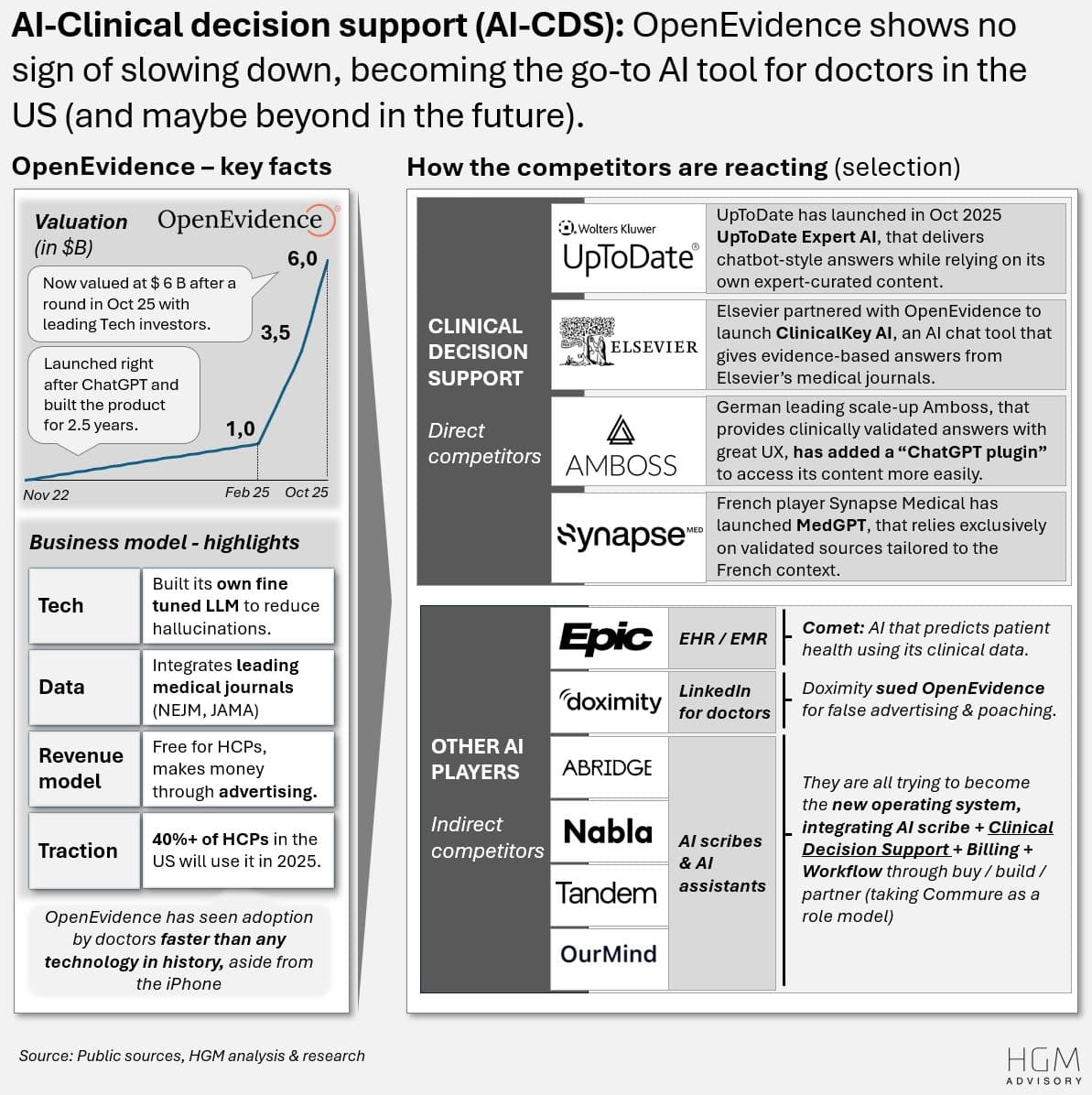
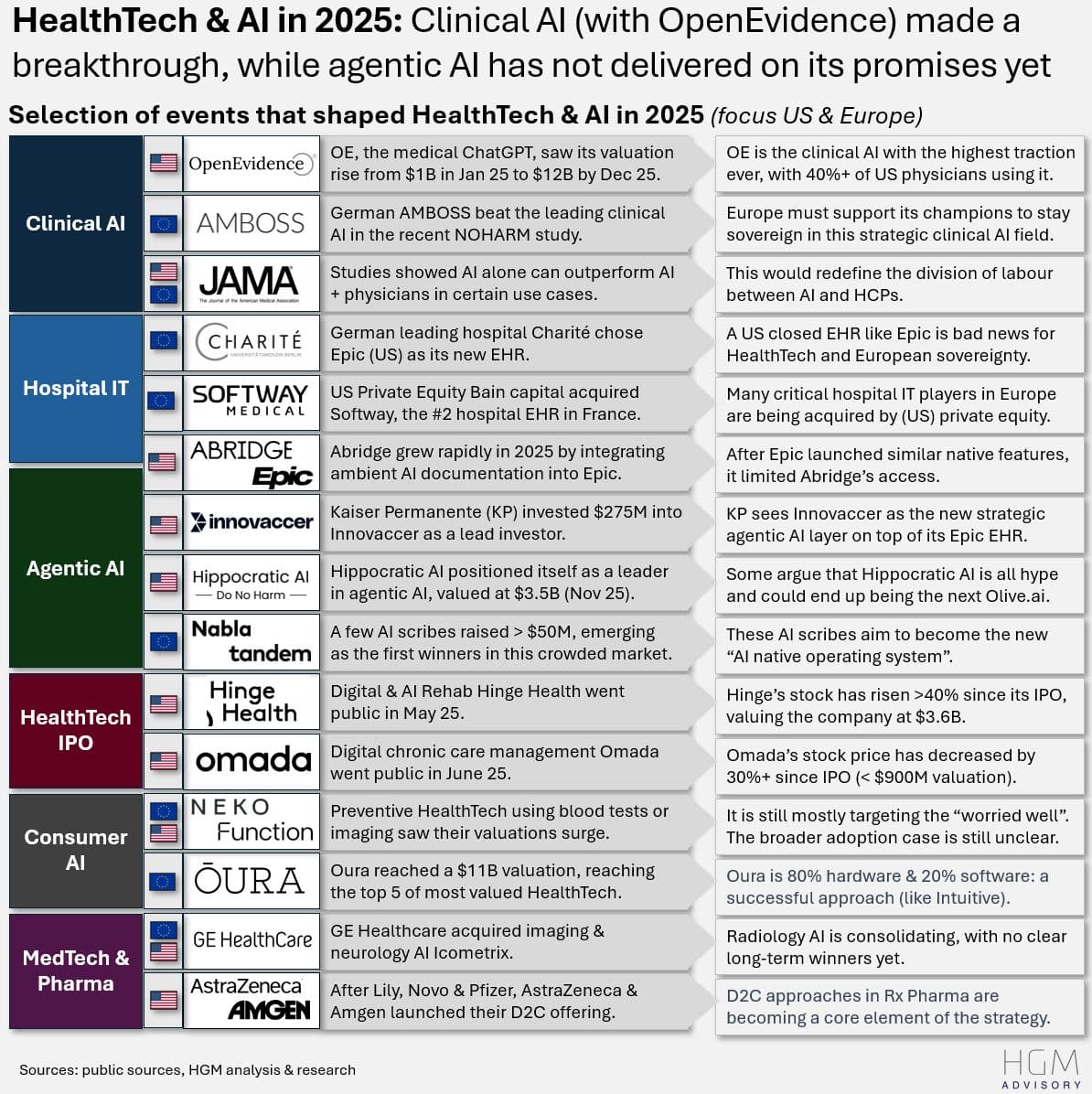
OpenEvidence's $210M Series B at a $3.5B valuation makes it the most valuable AI-clinical decision support company in the world, a signal that AI is no longer supplementing how physicians access medical knowledge, but replacing the legacy model entirely.
OpenEvidence, the fastest-growing physician app, is now in 10K+ U.S. hospitals with 8.5M monthly consultations. DeepConsult AI agents synthesize real-time clinical evidence at the point of care.
The round: $210M Series B at $3.5B
The round was led by Andreessen Horowitz (a16z), with participation from General Catalyst, Khosla Ventures, Thrive Capital, and T. Rowe Price. The valuation represents a roughly 5x step-up from its Series A less than 12 months earlier.
Capital will be deployed across: expanding the DeepConsult AI agent platform, international expansion, and deepening EHR integrations.
Growth metrics
OpenEvidence is in 10,000+ US hospitals with 8.5 million monthly consultations and 180,000+ daily active physicians. In Q1 2024, consultations were at 500,000/month, a 17x increase in 15 months.
Retention rates exceed 85% month-over-month. ARR is estimated at $80-120M. The implied revenue multiple of 30-45x is high but reflects the growth rate and market size ($7-9B global CDS market).
DeepConsult: why physicians are switching
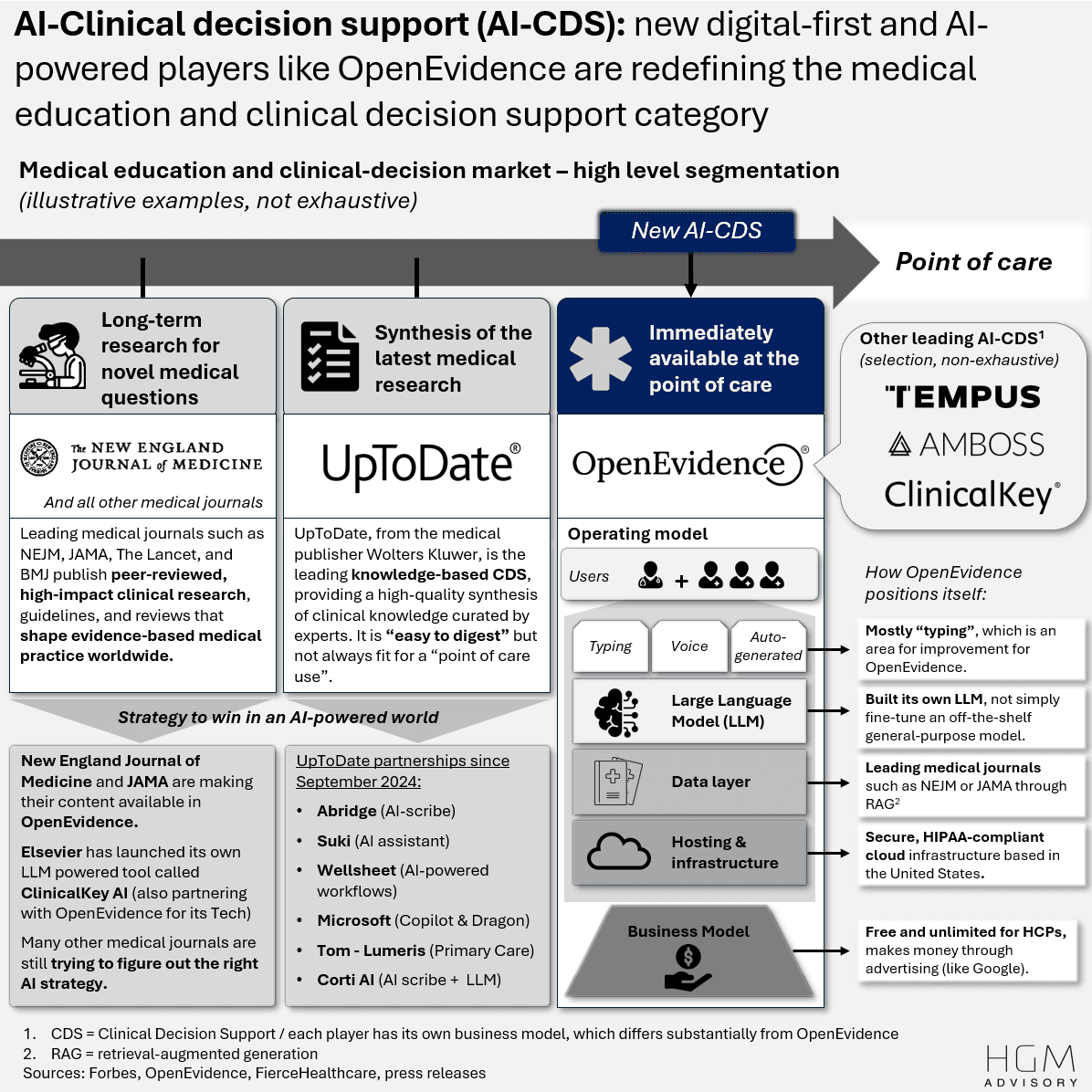
Legacy CDS operates on search-and-read (average lookup: 5-8 minutes). DeepConsult operates on consult-and-synthesize (under 30 seconds), reasoning across the full medical literature for patient-specific evidence.
In a validation study, DeepConsult demonstrated 92% concordance with expert panel recommendations, outperforming both UpToDate-assisted physicians (84%) and unassisted physicians (71%).
Competitive implications
UpToDate (Wolters Kluwer, 2M subscribers) faces the most direct threat, its editorial model is expensive, slow, and increasingly outmatched by real-time AI synthesis.
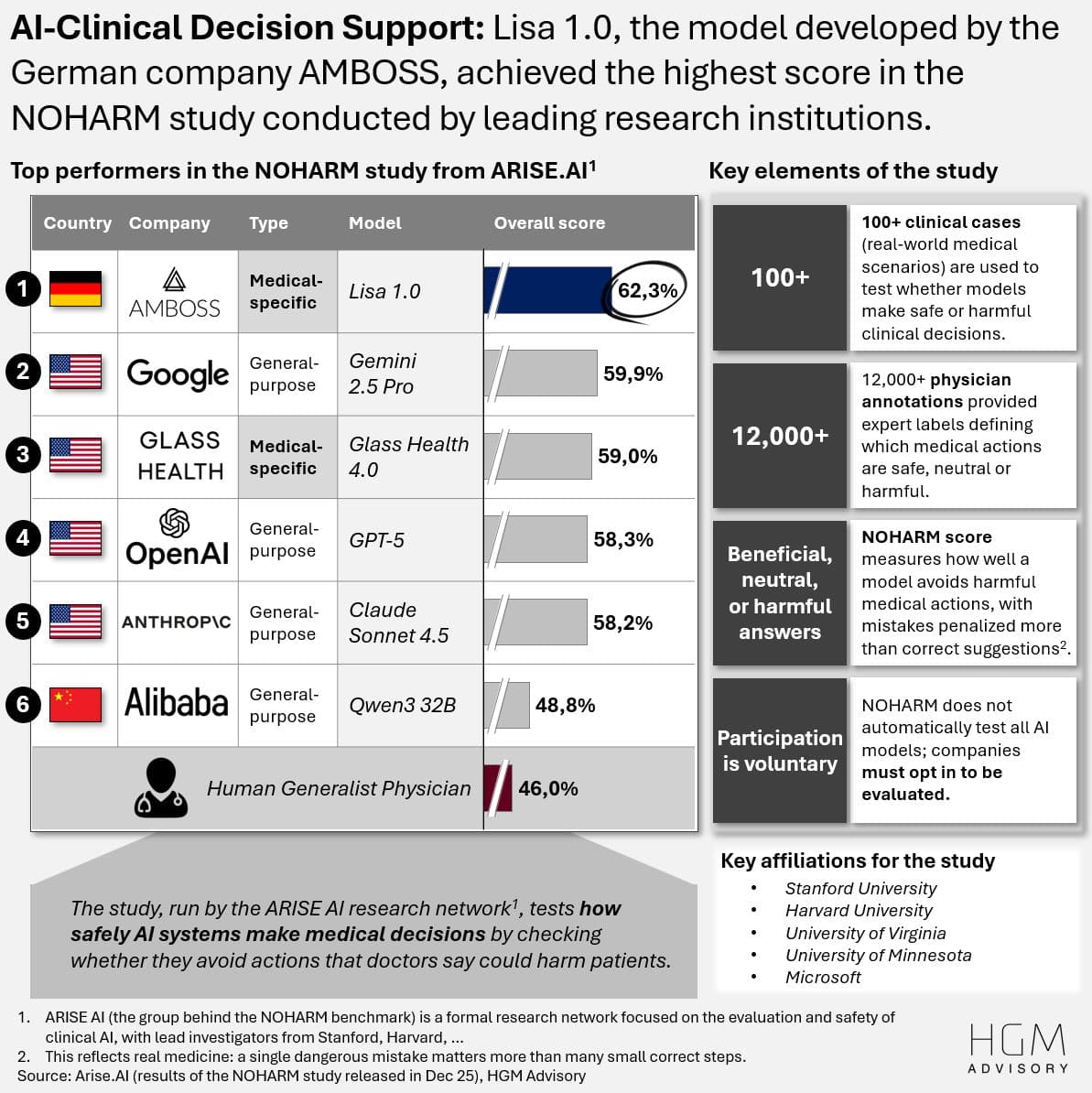
AMBOSS is pursuing an AI-first approach with Lisa, which topped the NOHARM benchmark. But AMBOSS's US hospital penetration remains limited.
At HGM Advisory, we believe UpToDate will need to acquire an AI-native company or fundamentally rebuild its product within 18-24 months to remain competitive.
International expansion ahead
OpenEvidence has signaled expansion to the UK, Germany, and Japan. The UK's NHS could be a rapid scaling opportunity. Germany's fragmented hospital market mirrors the US bottom-up adoption model.
Beyond CDS, the platform creates optionality in clinical trial matching, drug information delivery, and CME, each a billion-dollar adjacent market.

About the author
Thomas HagemeijerFounder & CEO of HGM Advisory. Management consultant and HealthTech expert working across the full healthcare ecosystem: pharma, MedTech, investors, startups, hospitals, and policymakers. Investor at Springboard Health Angels. Ambassador at HLTH Europe and HBI. Regular keynote speaker on AI in healthcare and digital health transformation.