February 2025
AI agents in hospitals: only the top 5% can implement them today

Founder & CEO, HGM Advisory
Key takeaway
Only the top 5% of hospitals, institutions like Mayo Clinic and Kaiser Permanente, can implement AI agents today. For the remaining 95%+, outdated infrastructure means AI agents are at least five years away. This gap will accelerate hospital closures and consolidation, as only hospitals offering cutting-edge technology and working environments will attract physicians and survive.
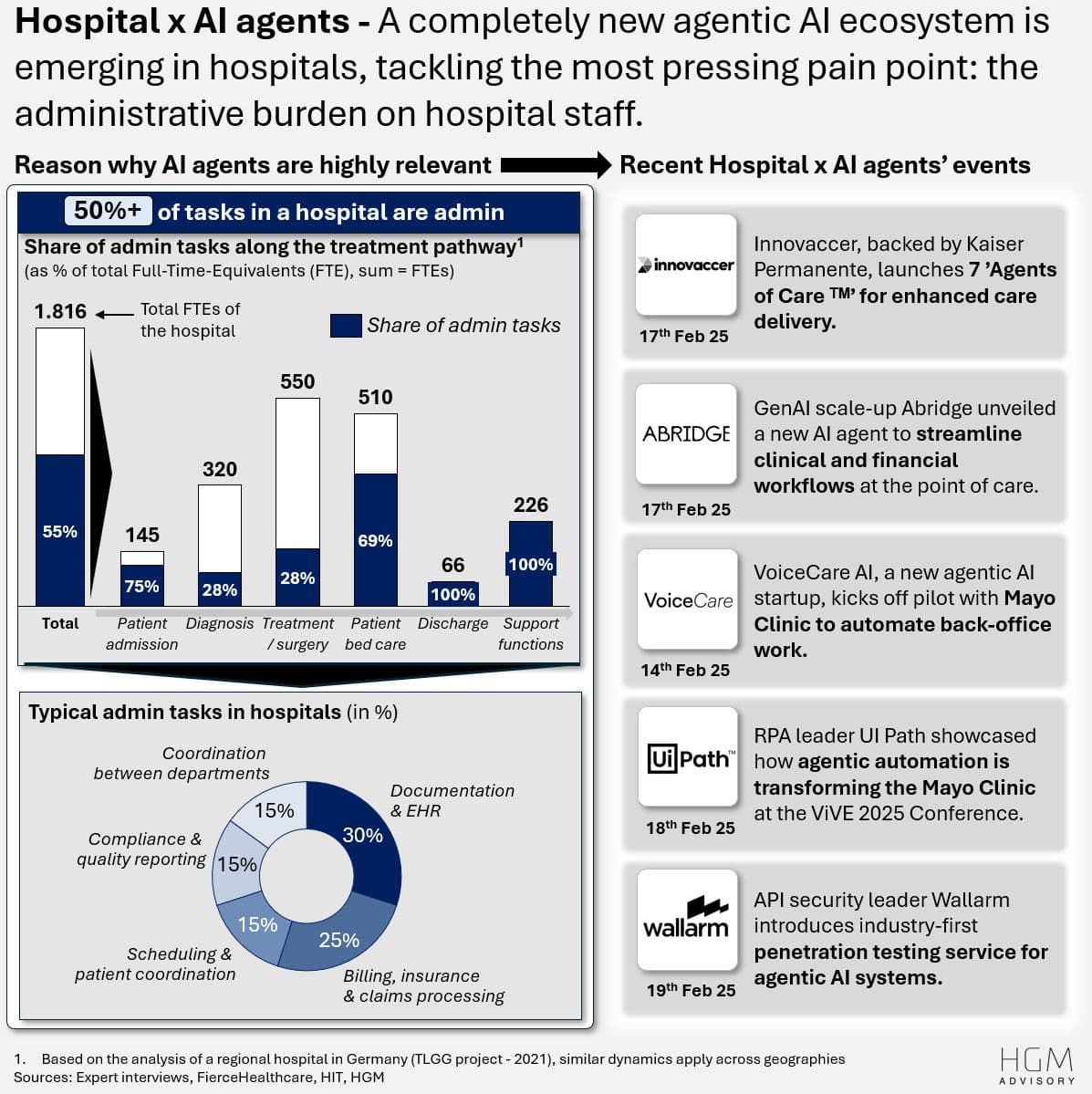
Innovaccer (backed by Kaiser Permanente) is launching 7 AI agents. Mayo Clinic is investing in UIPath and VoccaCare AI. But for 95%+ of hospitals, AI agents are at least five years away. The gap between leading and regional hospitals is widening, and it will force smaller hospitals to shut down.
Only top hospitals can implement AI agents today
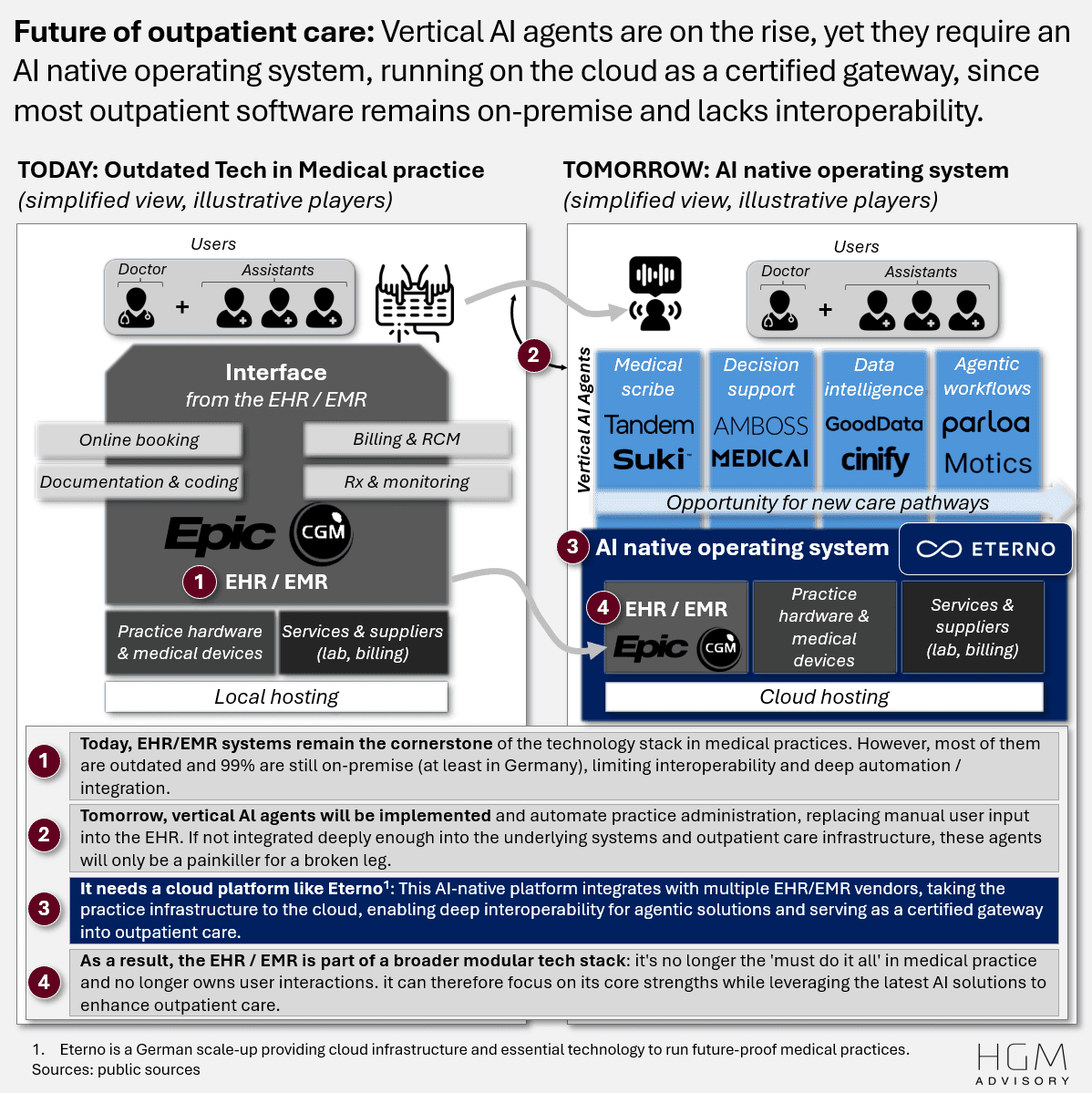
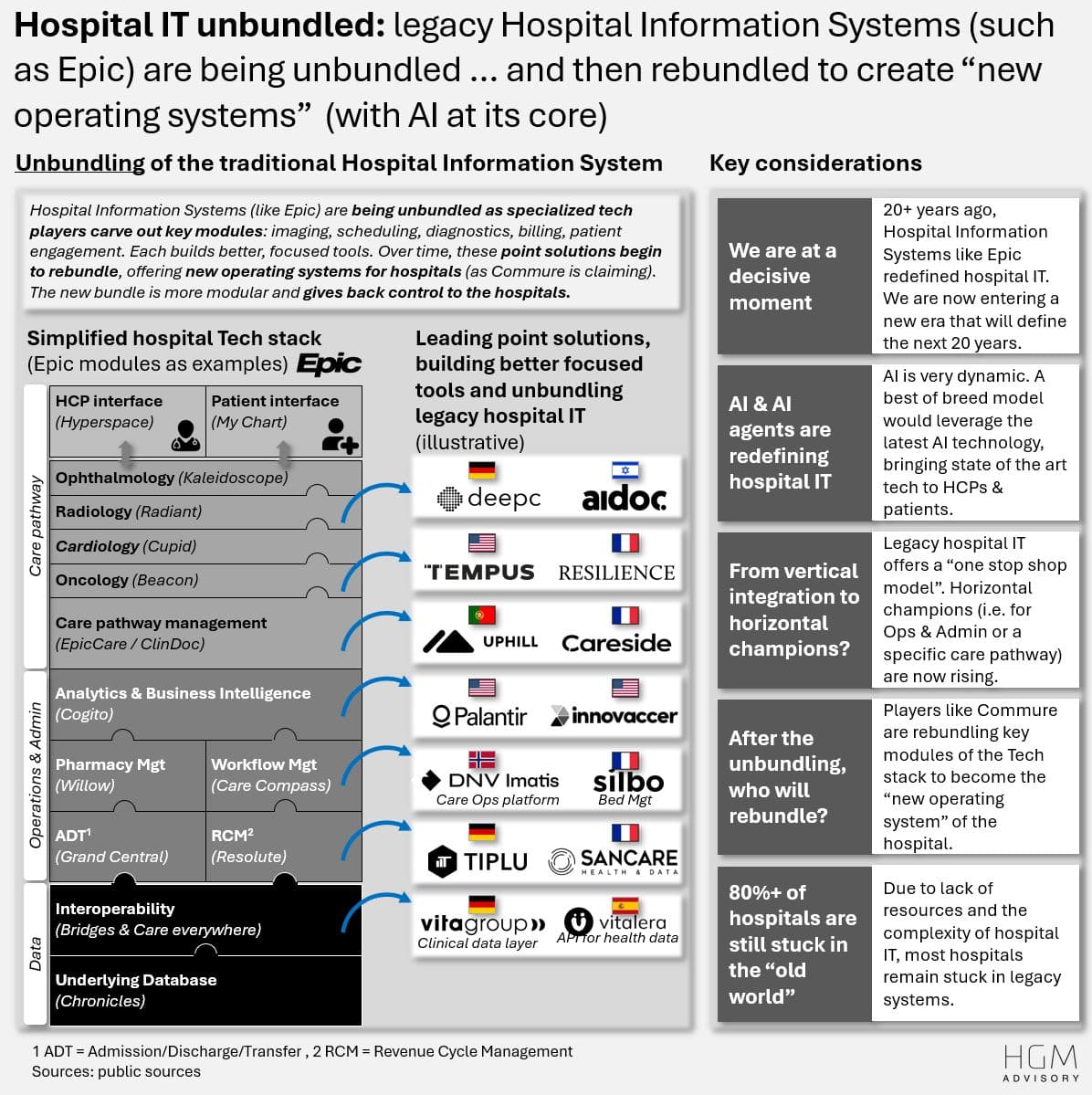
For 95%+ of hospitals, AI agents are at least five years away. Most hospital IT departments remain focused on establishing basic EHR systems, leaving them with outdated infrastructure that cannot support AI agent deployment.
Right now, only top institutions like the Mayo Clinic (investing in both RPA leader UIPath and AI company VoccaCare AI) and Kaiser Permanente (backing Innovaccer's 7 new AI agents) can fully adopt AI. This is widening the gap between leading hospitals and smaller regional ones at an accelerating rate.
The gap will force smaller hospitals to shut down
Working conditions in hospitals are getting worse. Every week, physicians leave the profession for new career paths. Only top hospitals, those offering the best working environments and cutting-edge technology, will attract and retain talent.
Smaller hospitals will either transform into outpatient centers or disappear entirely, as we are already seeing in Germany where dozens of hospitals have closed or merged in the past two years. AI is not causing this trend, but it is accelerating it: hospitals that cannot offer AI-assisted workflows will lose physicians to institutions that can.
AI agents are only a means to an end
AI agents will soon become a commodity. The technology itself will not be the differentiator. Instead, AI agent companies will follow a 'land and expand' strategy: starting with a single use case (documentation, scheduling, or billing) and then integrating deeper into the hospital tech stack to secure their position.
By 2026, M&A activity will pick up as winners begin to emerge. The companies that survive will be those that successfully transition from point solutions to platform plays.
Big Tech vs. scale-ups: who will hospitals choose?
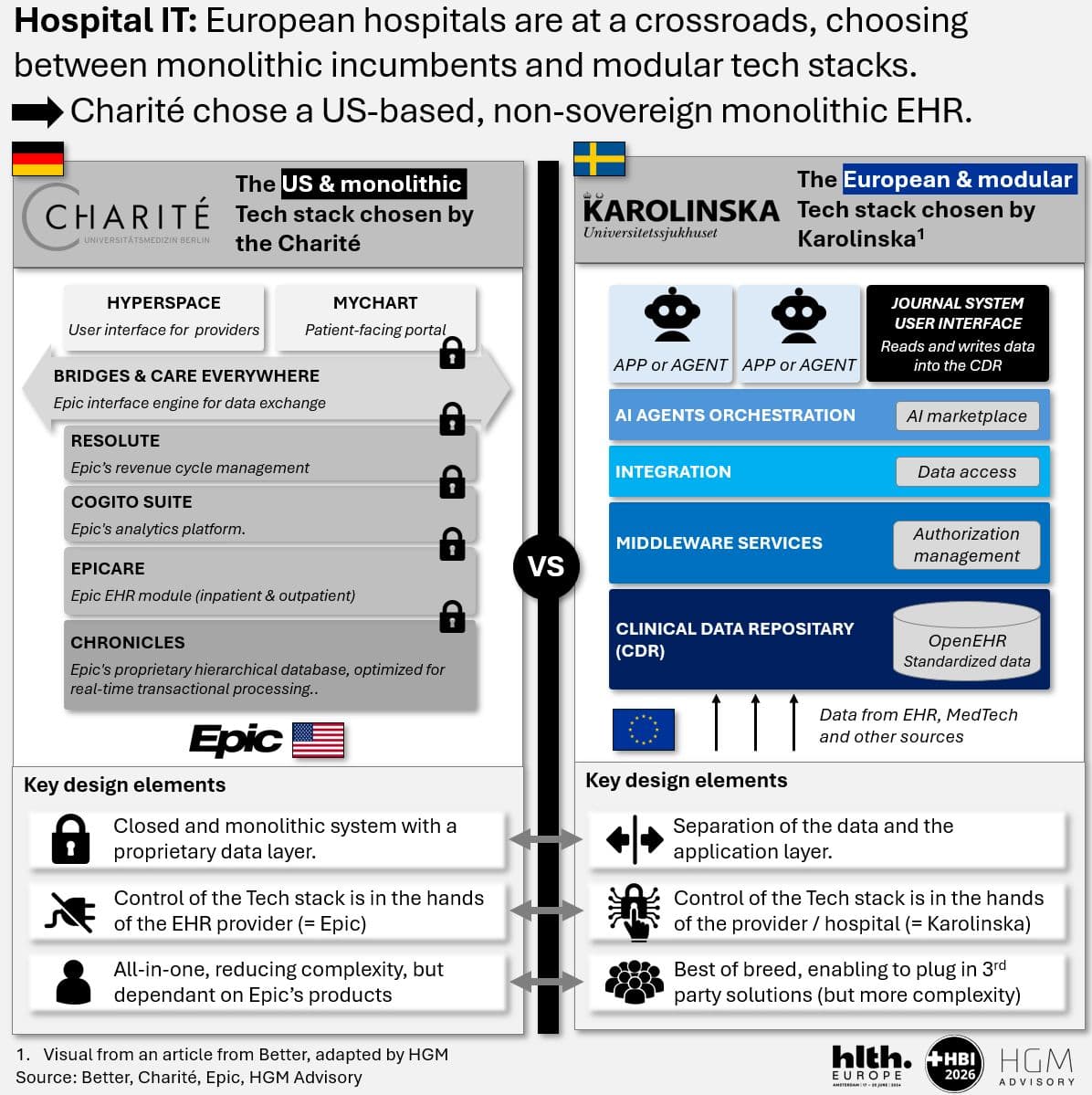
On paper, Big Tech, especially Microsoft with its Cloud + OpenAI + Nuance + Epic partnership, seems best positioned to dominate healthcare AI. However, leading hospitals are betting on smaller players to maintain more control.
Kaiser Permanente's investment in Innovaccer and Mayo Clinic's bet on VoccaCare both signal a preference for scale-ups over Big Tech incumbents. These health systems want to own their AI infrastructure rather than become dependent on a single vendor. Open-source AI models may emerge as the enabling technology that allows this independence.

About the author
Thomas HagemeijerFounder & CEO of HGM Advisory. Management consultant and HealthTech expert working across the full healthcare ecosystem: pharma, MedTech, investors, startups, hospitals, and policymakers. Investor at Springboard Health Angels. Ambassador at HLTH Europe and HBI. Regular keynote speaker on AI in healthcare and digital health transformation.