February 2025
AI alone outperforms physician-assisted AI in radiology: what it means for the field

Founder & CEO, HGM Advisory
Key takeaway
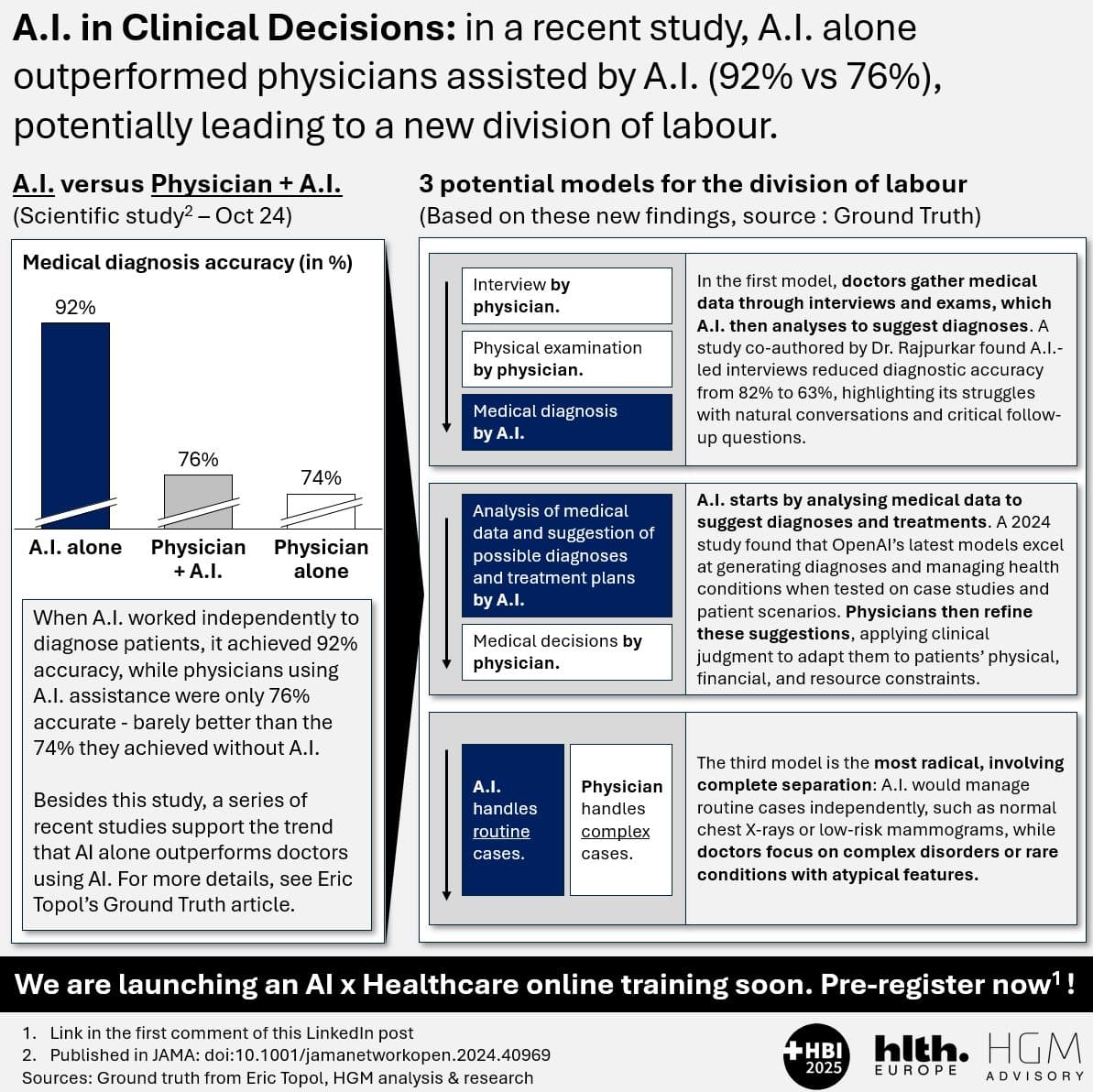
A series of studies highlighted by Eric Topol show AI alone outperforming physician-assisted AI across chest X-rays, mammography, and clinical decision-making. This counterintuitive finding, if confirmed, would force investors to rethink radiology portfolio strategies, medical schools to redesign AI training, and hospitals to redefine the division of labor between humans and algorithms.
Recent studies suggest AI alone outperforms physician-assisted AI in diagnostics, from chest X-rays to mammography. Eric Topol calls it 'highly counterintuitive.' If confirmed, this reshapes radiology AI investment, physician training, and hospital operating models.
The counterintuitive finding
The scientific community now agrees that AI adds value to radiology. But the assumption has been that physicians using AI would always outperform AI alone. Recent studies challenge this directly.
As Eric Topol published in The New York Times and on his Substack Ground Truths: 'This pattern consistently emerged across various medical tasks, from chest X-ray and mammography interpretation to clinical decision-making. In some studies, the performance gap in favor of AI alone was significant.'
The implication is profound: adding a human to the loop may sometimes degrade rather than improve performance.
Why physicians + AI can underperform AI alone
Two factors may explain this counterintuitive result. First, 'automation neglect': physicians may have a bias against relying on AI recommendations, overriding correct AI outputs based on instinct or experience. Second, lack of training: most physicians have received no formal education on how to effectively collaborate with AI systems.
As Topol notes: 'Instead of assuming that combining AI and doctors always works best, we need to figure out which tasks AI does better, which humans do better, and where teamwork truly helps. The goal isn't to replace doctors but to find the best way to work together.'
Implications for investors and PE
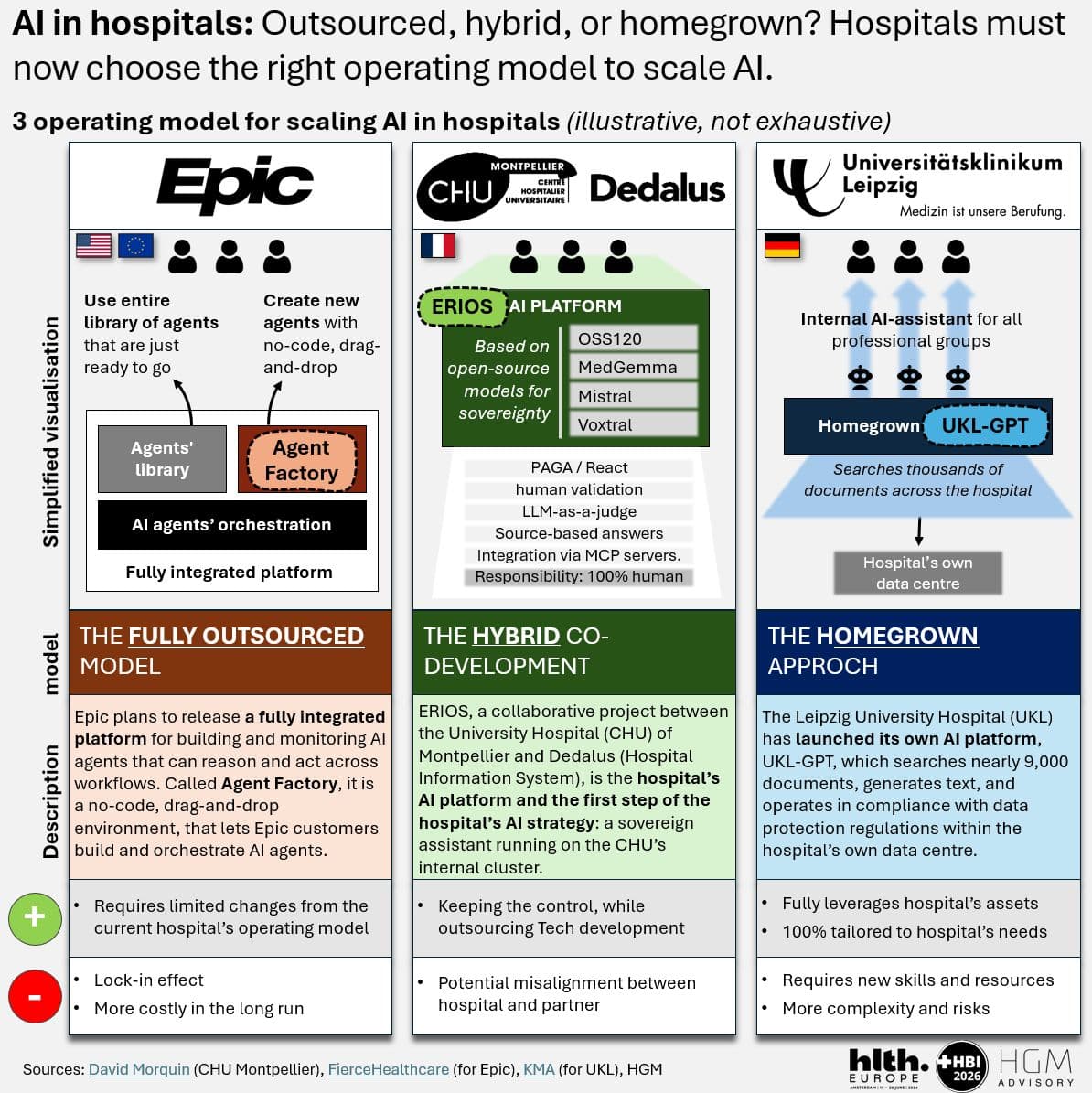
Private equity firms own radiology chains across Europe and the US. If AI alone outperforms physician-assisted AI, the operating model for these chains needs fundamental rethinking. Which of three models should they pursue: full AI automation (with physician oversight for edge cases), hybrid (AI first-read with physician second-read), or physician-led (with AI as a safety net)?
The answer will determine staffing ratios, margin structures, and competitive positioning for the next decade of radiology operations.
Radiology AI scale-ups must move beyond technology
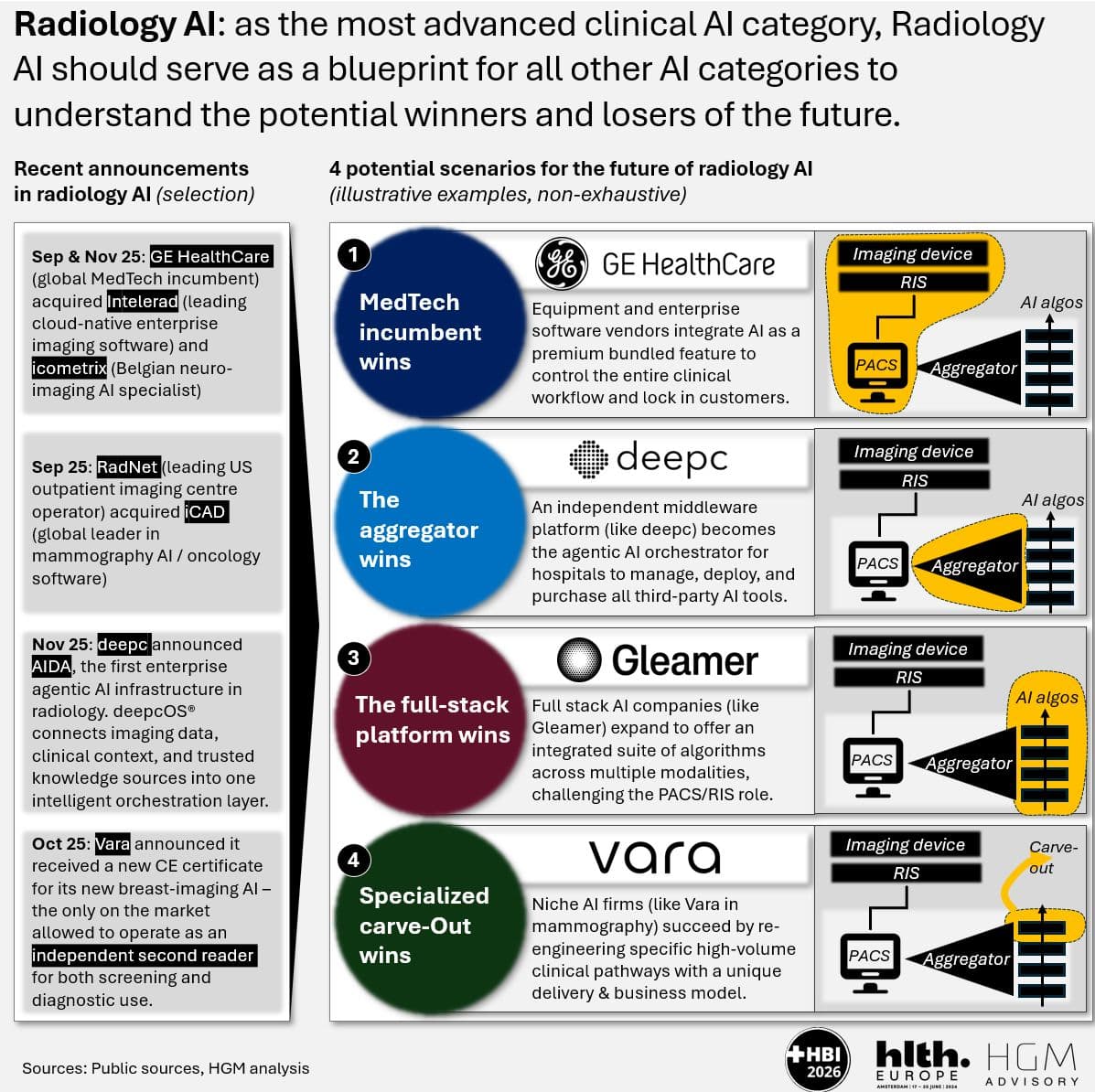
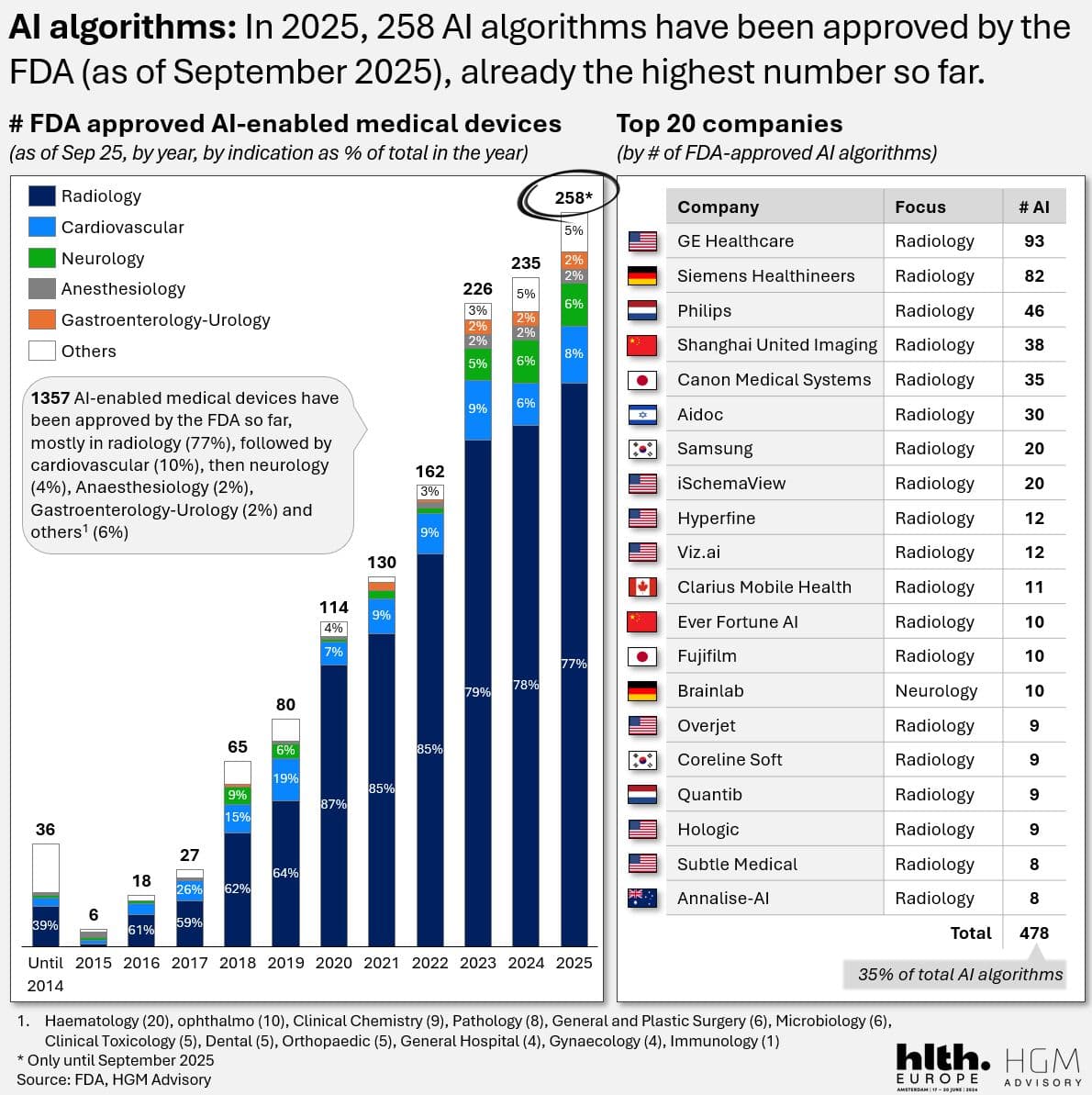
Radiology AI is the most established AI category in healthcare. The leading scale-ups have focused on algorithm robustness, UX, and integration into clinical workflows. The next frontier is redefining the operating model and the division of labor to fully leverage AI's potential.
This means radiology AI companies need to become operating model consultants, not just software vendors. The technology is mature enough. The question now is organizational: how do you redesign a radiology department's workflow when the AI is better than the human-AI team?

About the author
Thomas HagemeijerFounder & CEO of HGM Advisory. Management consultant and HealthTech expert working across the full healthcare ecosystem: pharma, MedTech, investors, startups, hospitals, and policymakers. Investor at Springboard Health Angels. Ambassador at HLTH Europe and HBI. Regular keynote speaker on AI in healthcare and digital health transformation.