December 2025
Radiology AI: a blueprint for all clinical AI categories

Founder & CEO, HGM Advisory
Key takeaway
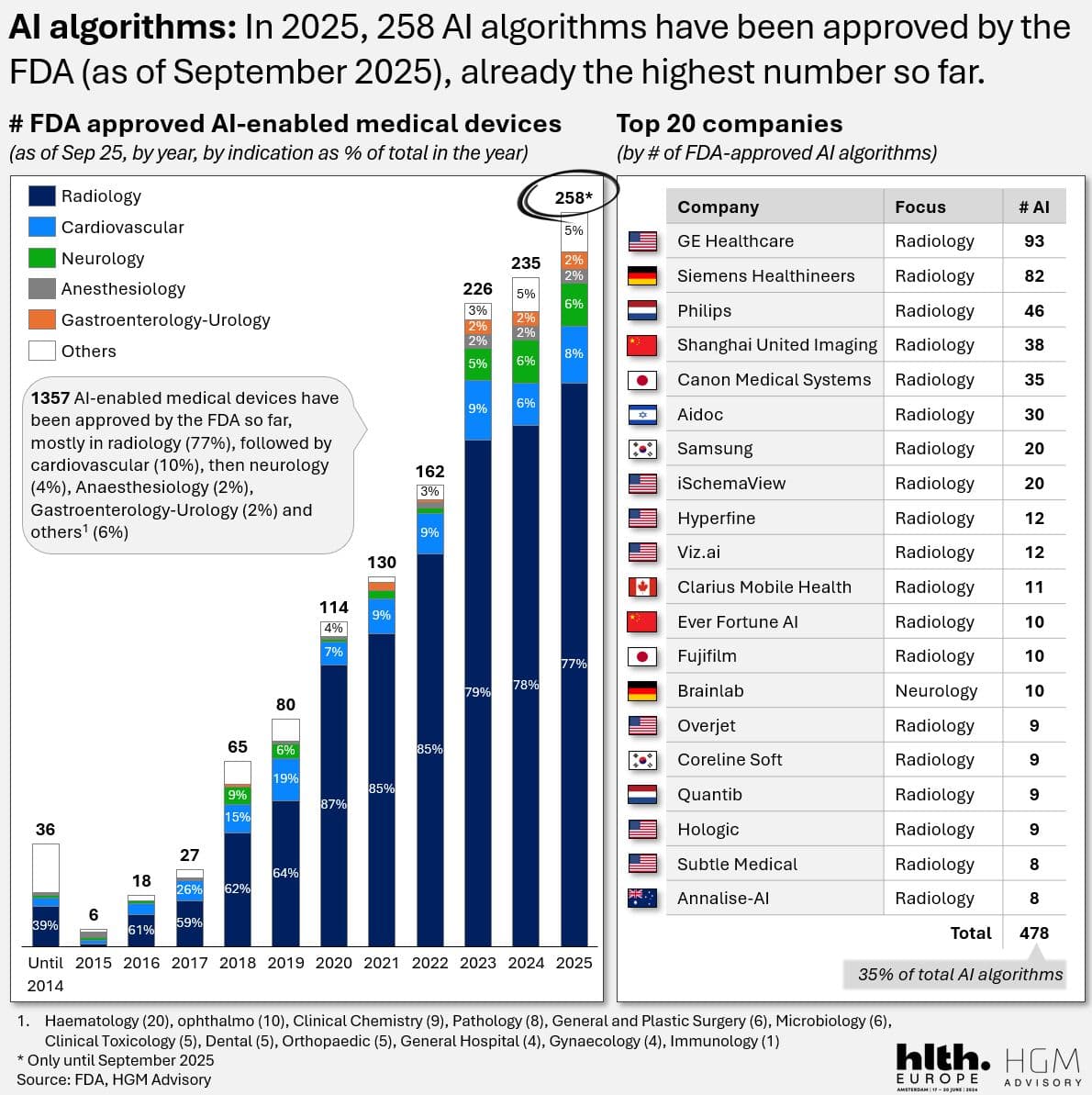
Radiology AI is the most mature clinical AI category with 79% of all FDA-cleared algorithms, making it the definitive blueprint for how clinical AI markets will consolidate, the four scenarios outlined here will repeat in pathology, cardiology, and ophthalmology within 24 months.
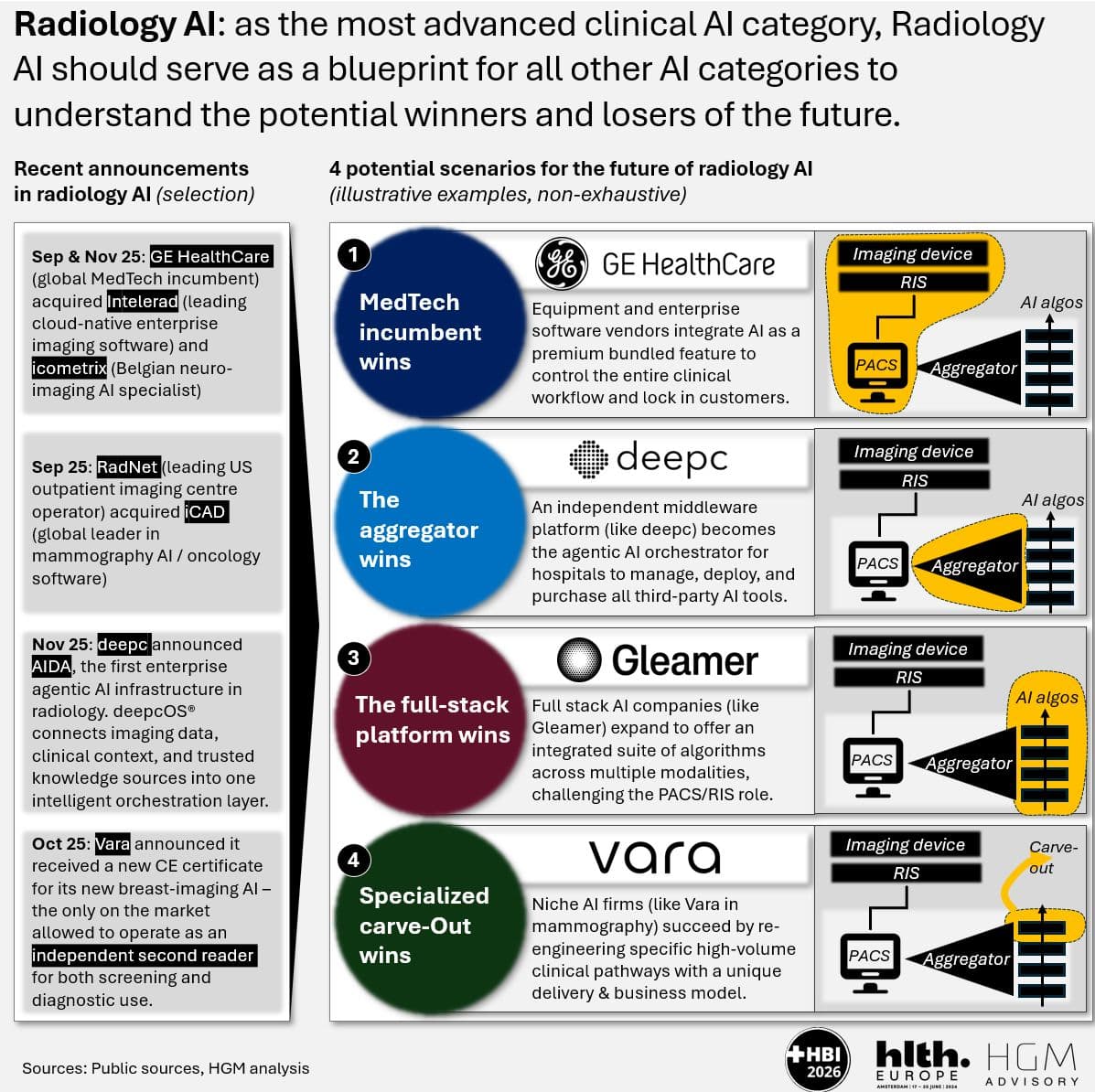
As the most advanced clinical AI category, Radiology AI should serve as a blueprint for understanding potential winners and losers across all clinical AI. Four scenarios emerge: MedTech incumbent wins, aggregator wins, full-stack platform wins, or specialized carve-out wins.
Radiology AI: the most mature clinical AI category
Of the 1,387 AI-enabled medical devices cleared by the FDA, approximately 79% are in radiology. The market is projected to reach $3.2 billion by 2027. More than 200 companies have received FDA clearance, but the top 20 account for over 60% of all cleared products.
What makes radiology AI instructive is that it has already passed through the early hype cycle. The competitive dynamics playing out here will be replicated in pathology AI, cardiology AI, and ophthalmology AI as they mature.
Four scenarios for market structure
Based on our analysis of competitive positioning and health system procurement patterns, we identify four plausible consolidation scenarios.
| Scenario | Winner Profile | Key Examples | Likelihood | Primary Risk |
|---|---|---|---|---|
| MedTech Incumbent Wins | Hardware OEM with AI bundling | GE HealthCare, Siemens | High | AI quality gap vs. pure-plays |
| Aggregator Wins | Platform aggregating best-of-breed | Aidoc (aiOS), Nuance/Microsoft | Medium-High | Thin margins; quality control |
| Full-Stack Platform Wins | End-to-end radiology AI workflow | RadNet (DeepHealth), Annalise.ai | Medium | Massive R&D investment required |
| Specialized Carve-Out Wins | Niche clinical focus | Viz.ai (stroke), Heartflow (cardiac) | Medium | Limited TAM; acquisition vulnerability |
Lessons for other clinical AI categories
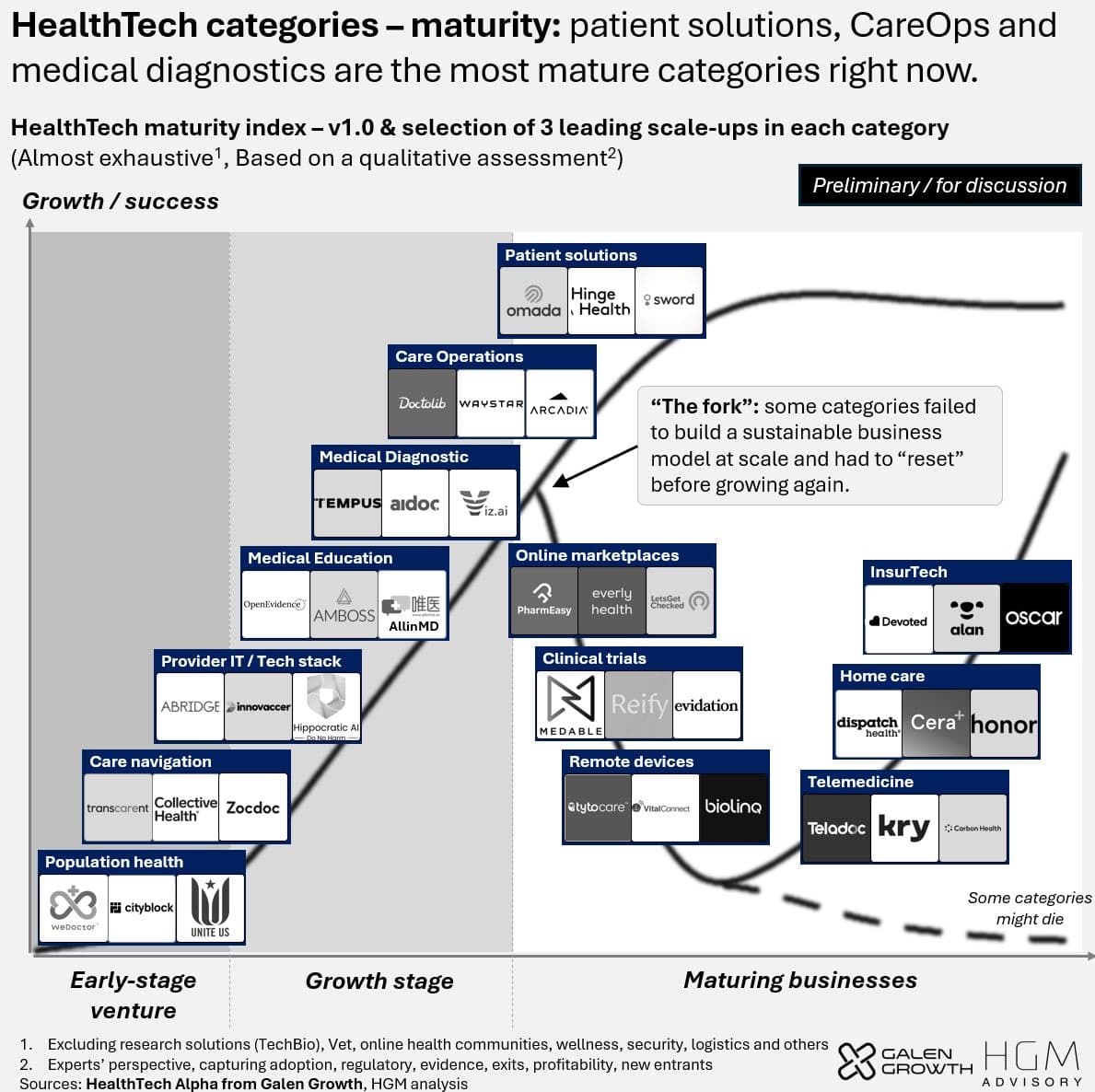
Pathology AI is 3-4 years behind radiology. Cardiology AI is following a similar trajectory with companies like Eko Health and Caption Health. Ophthalmology AI has the IDx-DR precedent, the first autonomous AI diagnostic.
In each category, the market will likely support one dominant aggregator, one or two incumbent bundles, and two to three specialized carve-outs. Pure-play companies that do not achieve scale within 18-24 months risk being acquired at modest multiples.
What this means for health systems
The average academic medical center now has 8-12 separate radiology AI tools. This is unsustainable.
Our recommendation: adopt a ‘platform-first, niche-second' procurement strategy. Select one primary aggregation platform for broad coverage and supplement with specialized solutions for high-acuity use cases where clinical evidence clearly supports a standalone tool.

About the author
Thomas HagemeijerFounder & CEO of HGM Advisory. Management consultant and HealthTech expert working across the full healthcare ecosystem: pharma, MedTech, investors, startups, hospitals, and policymakers. Investor at Springboard Health Angels. Ambassador at HLTH Europe and HBI. Regular keynote speaker on AI in healthcare and digital health transformation.