March 2026
AI in hospitals: outsourced, hybrid, or homegrown? 3 operating models to scale AI

Founder & CEO, HGM Advisory
Key takeaway
There is no single best model for deploying AI in hospitals. The right operating model depends on a hospital's IT maturity, budget, and strategic ambition, but hybrid co-development is emerging as the dominant approach for large academic medical centers.
The AI deployment question every hospital CIO faces
As AI adoption in hospitals accelerates, McKinsey estimates 75% of US hospitals will have at least one clinical AI tool in production by the end of 2026, the critical question is no longer whether to adopt AI, but how to operationalize it. The deployment model a hospital chooses has major implications for cost structure, speed to value, data governance, and long-term competitive positioning.
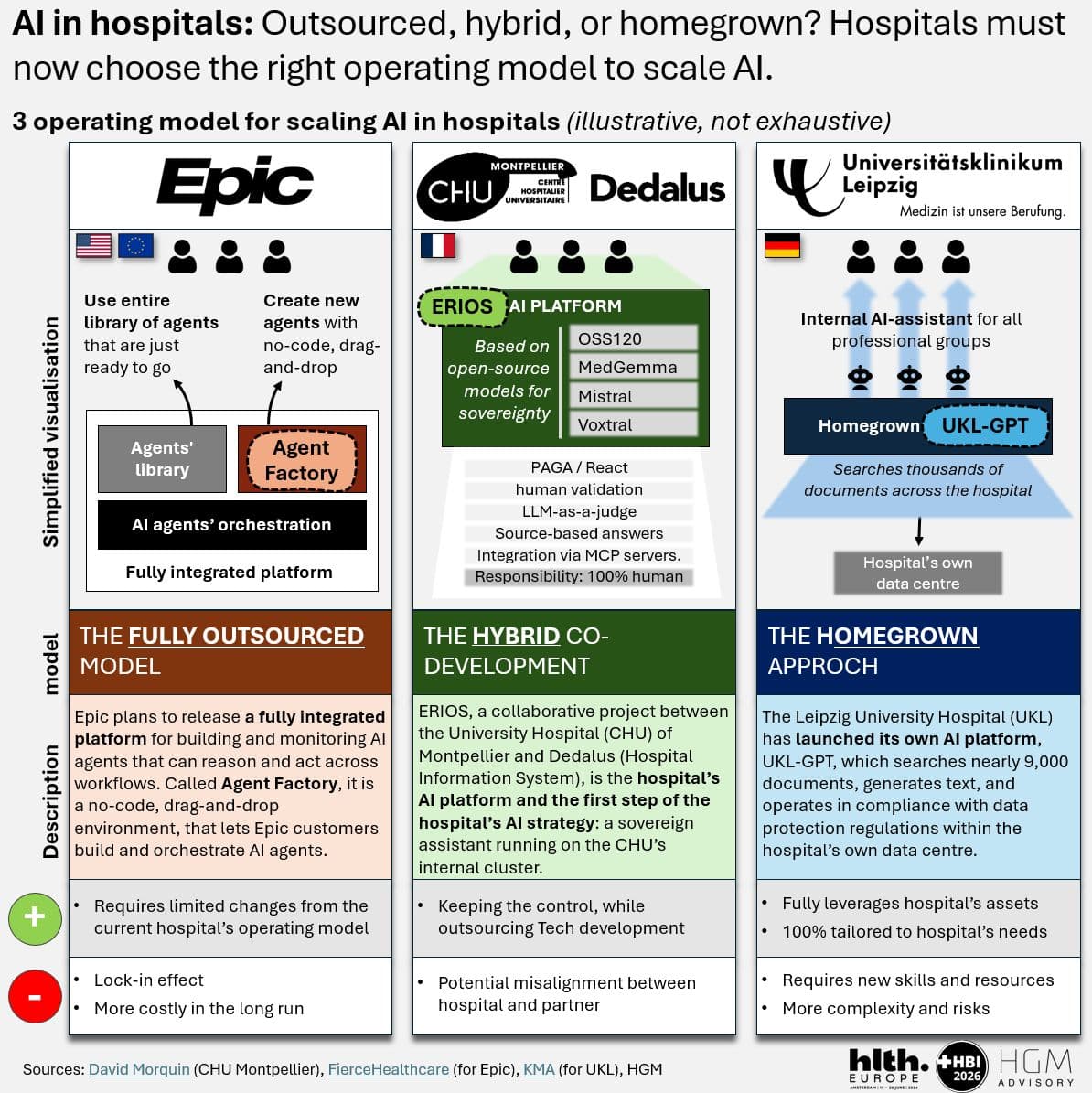
Through our advisory work with European and US health systems, we see three distinct operating models emerging: fully outsourced (vendor-led), hybrid (co-development), and homegrown (in-house). Each model carries different trade-offs, and the right choice depends on institutional context.
Model 1: Fully outsourced (vendor-led)
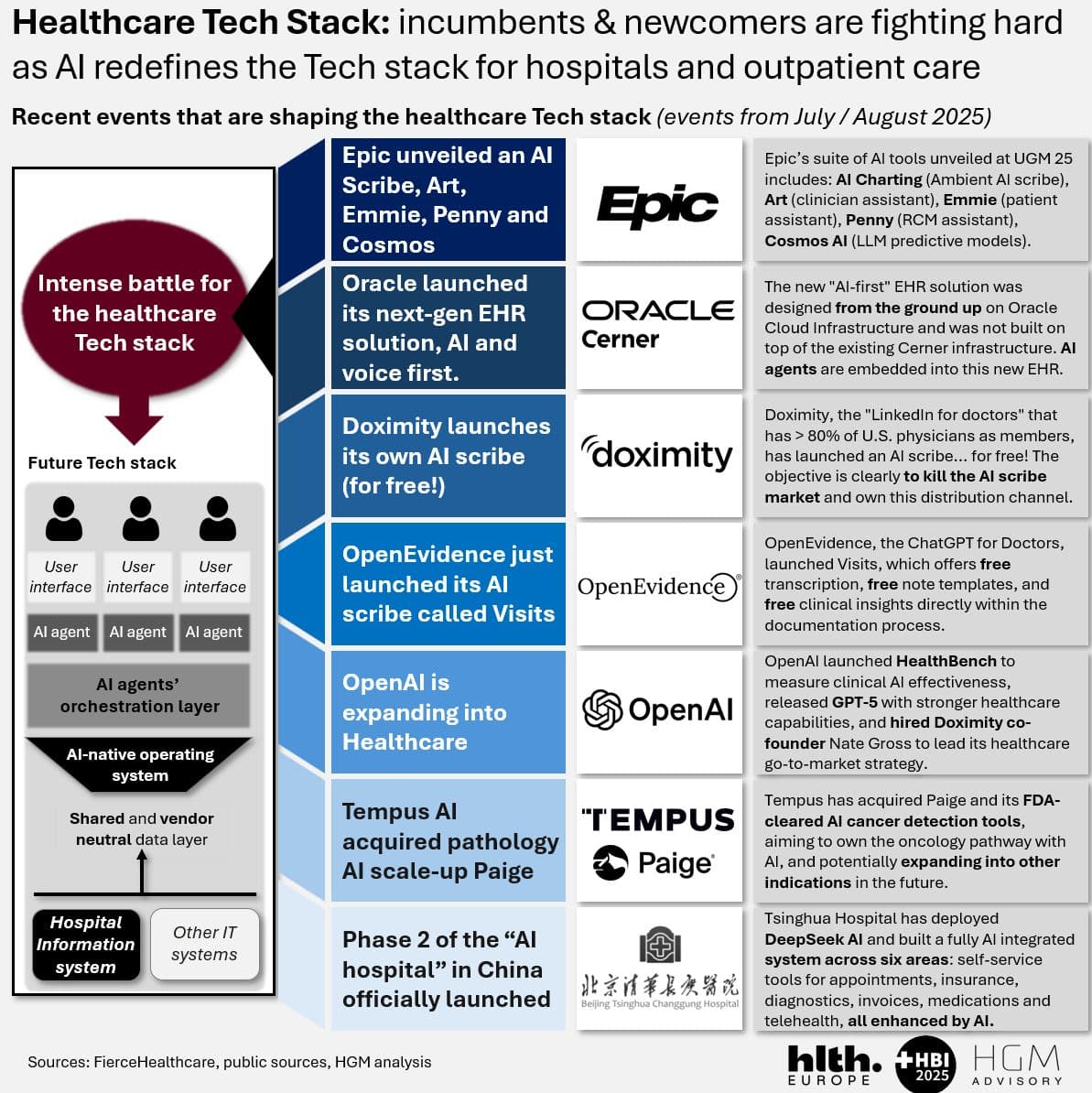
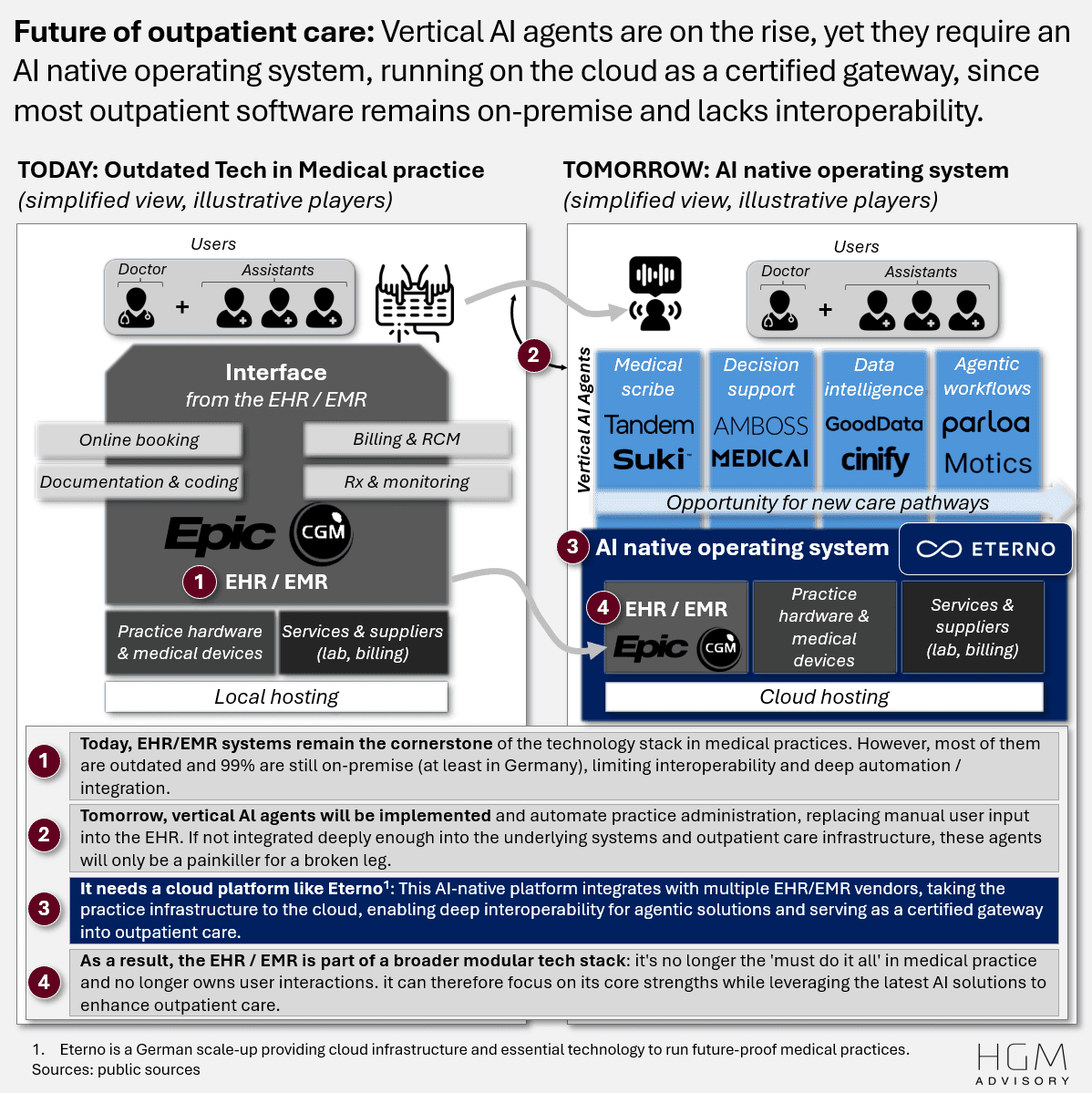
In the vendor-led model, hospitals procure AI as a turnkey product from established vendors. Epic (with its integrated AI modules), Oracle Health (embedding generative AI into its EHR workflows), and specialized vendors like Viz.ai (stroke detection) or Aidoc (radiology triage) represent this approach.
The appeal is straightforward: fast deployment (often 4-8 weeks), predictable SaaS pricing, and vendor-managed updates. For a 200-bed community hospital with a 5-person IT team, this is often the only viable path. Epic's AI suite alone now covers over 100 predictive models available out of the box.
The downside is limited customization and data control. Hospitals become dependent on vendor roadmaps, and proprietary models may not generalize well to specific patient populations.
Model 2: Hybrid (co-development)
The hybrid model is where a hospital partners with a vendor or academic institution to co-develop AI solutions. Mayo Clinic's partnerships exemplify this approach, its collaboration with Google to develop AI models for cardiac risk prediction, and its joint venture with Commure and Cerebras to build clinical AI infrastructure.
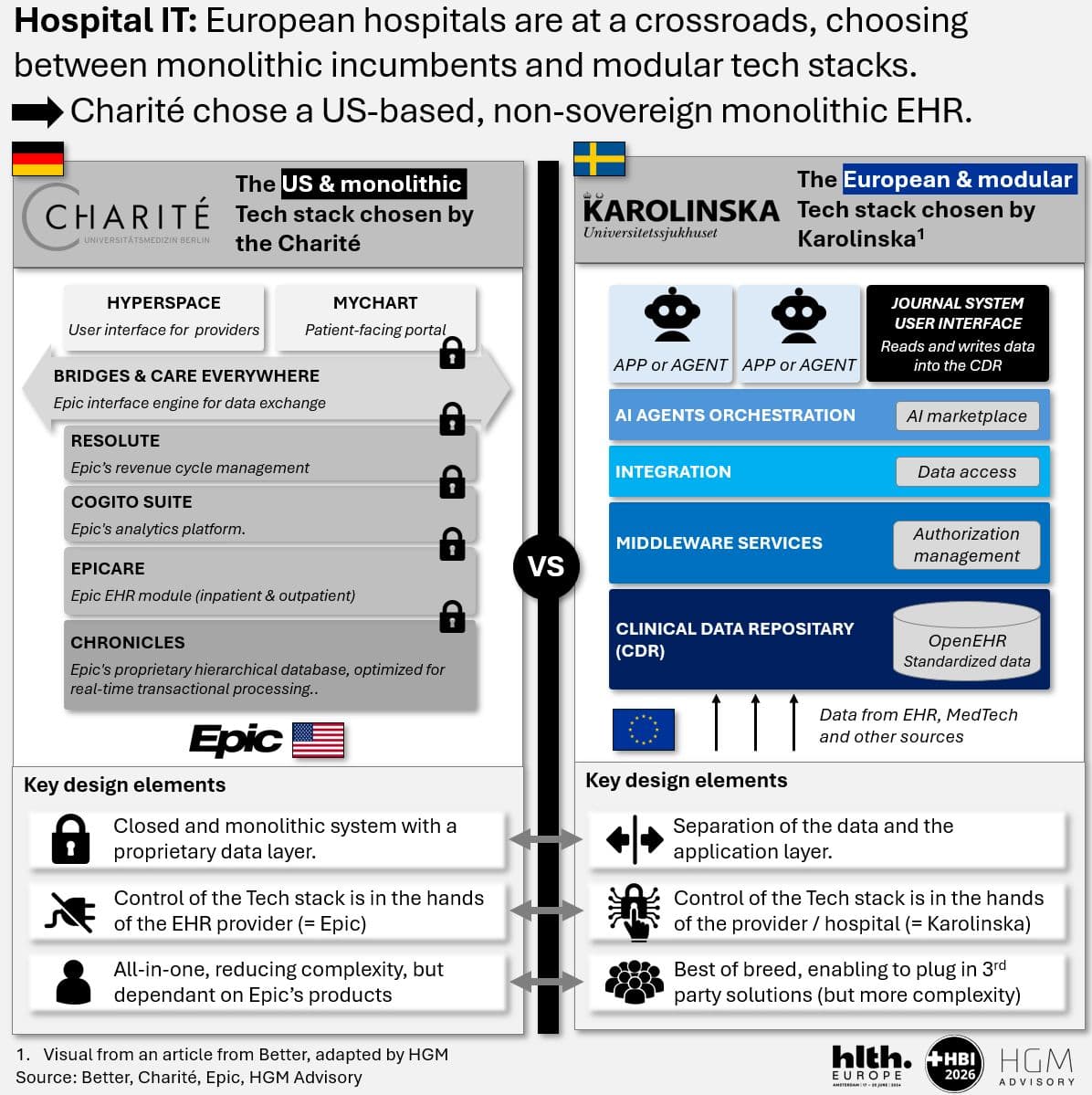
Cleveland Clinic's partnership with Palantir for operational AI, and Mount Sinai's co-development arrangement with Nvidia for radiology AI, follow similar patterns. In Europe, Karolinska University Hospital maintains co-development agreements with multiple AI startups through its innovation hub.
The hybrid model typically requires 6-18 months to reach production but delivers higher customization and institutional learning. Cost ranges from $2-10M per project.
Model 3: Homegrown (in-house)
A small number of well-resourced institutions are building AI capabilities entirely in-house. Charité Berlin has assembled a dedicated team of 30+ data scientists and ML engineers. Karolinska in Stockholm runs its own AI lab with direct access to 2.8 million patient records. In the US, Johns Hopkins' PMAP and UCSF's Center for Data Driven Insights have adopted similar approaches.
The homegrown model offers maximum customization and data sovereignty. But the cost is substantial: building and maintaining an in-house AI team costs $5-15M annually, and the talent competition with Big Tech is fierce.
This model is realistic only for large academic medical centers with research mandates and the financial capacity to invest over multi-year horizons.
Comparing the three models
The table below summarizes the key trade-offs across the three operating models.
| Dimension | Outsourced (Vendor-led) | Hybrid (Co-development) | Homegrown (In-house) |
|---|---|---|---|
| Time to production | 4-8 weeks | 6-18 months | 12-36 months |
| Upfront cost | Low ($50K-500K/yr SaaS) | Medium ($2-10M per project) | High ($5-15M/yr ongoing) |
| Customization | Low, standard models | High, tailored to institution | Maximum, full control |
| Data control | Limited, vendor-hosted | Shared, negotiated terms | Full, on-premise |
| Scalability | High, vendor-managed | Medium, project-by-project | Low, resource-constrained |
| Best fit | Community hospitals, <300 beds | Large academic centers | Top-tier research hospitals |
Which model for which hospital?
Community hospitals and small health systems should default to the outsourced model. The gap between off-the-shelf AI and custom-built AI is narrowing as vendors like Epic invest heavily in model quality.
Mid-sized academic medical centers (500-1,000 beds) should pursue the hybrid model selectively. Pick 2-3 high-impact use cases and co-develop with partners who bring complementary strengths.
The homegrown model should be reserved for the top 20-30 institutions globally that have the scale, talent, and mandate to treat AI as a core institutional capability.
The hospitals that will lead in AI are not necessarily those that build the most, they are those that deploy the right model for their context and execute with discipline.

About the author
Thomas HagemeijerFounder & CEO of HGM Advisory. Management consultant and HealthTech expert working across the full healthcare ecosystem: pharma, MedTech, investors, startups, hospitals, and policymakers. Investor at Springboard Health Angels. Ambassador at HLTH Europe and HBI. Regular keynote speaker on AI in healthcare and digital health transformation.