June 2026
FDA-approved AI algorithms: 20%+ CAGR, radiology still dominates, but hospitals are building their own

Founder & CEO, HGM Advisory
Key takeaway
FDA approval does not mean clinical value. Hospitals are increasingly building their own AI algorithms because capturing real value requires training on the hospital's own data and integrating into clinical workflows. Clinical decision support is too strategic to outsource, and leading providers want to avoid vendor lock-in in the age of AI. Meanwhile, the FDA's certification model creates friction: AI is developed to be improved continuously, while FDA certification evaluates a model at a single point in time, forcing companies to recertify with every change.
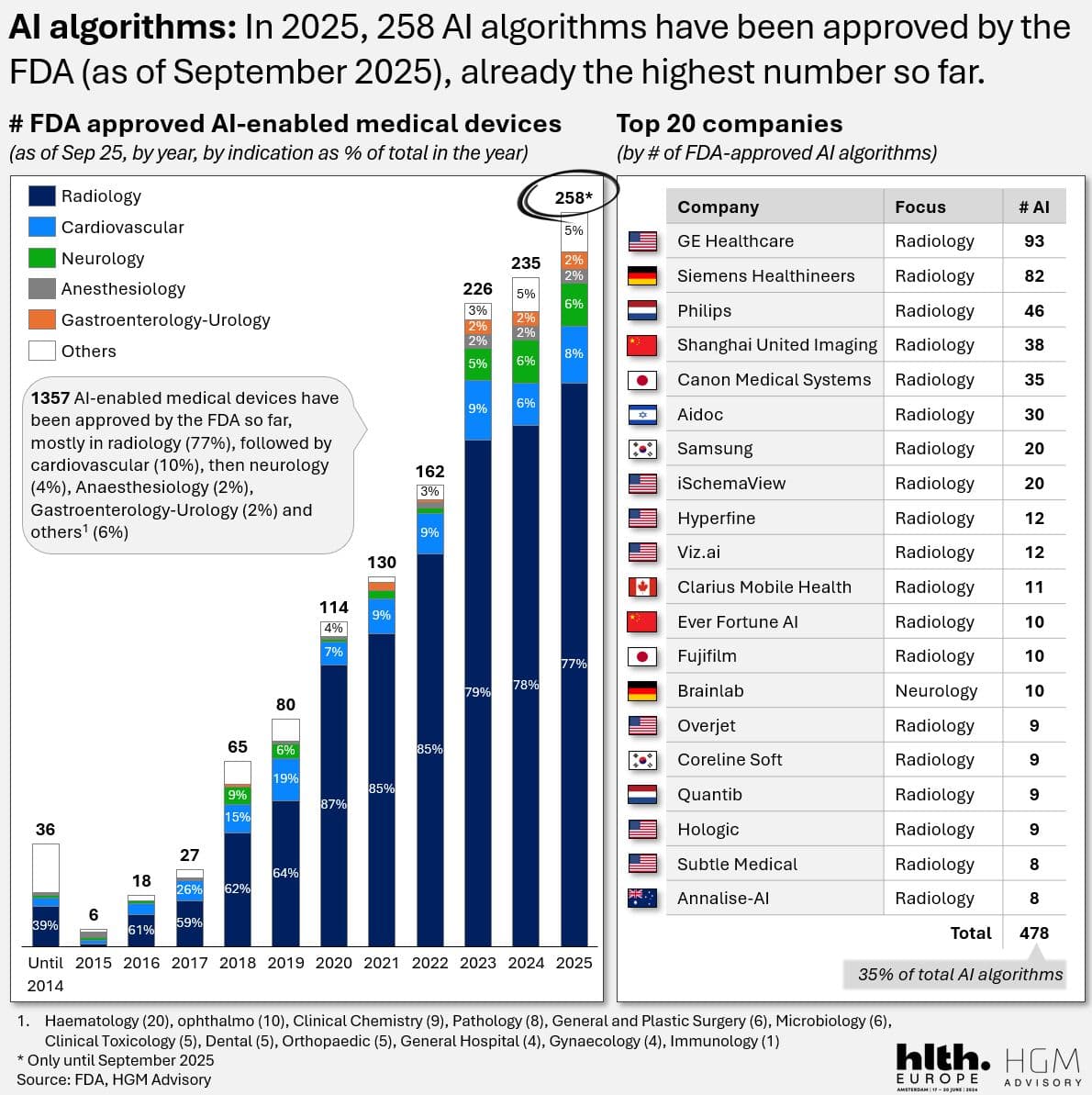
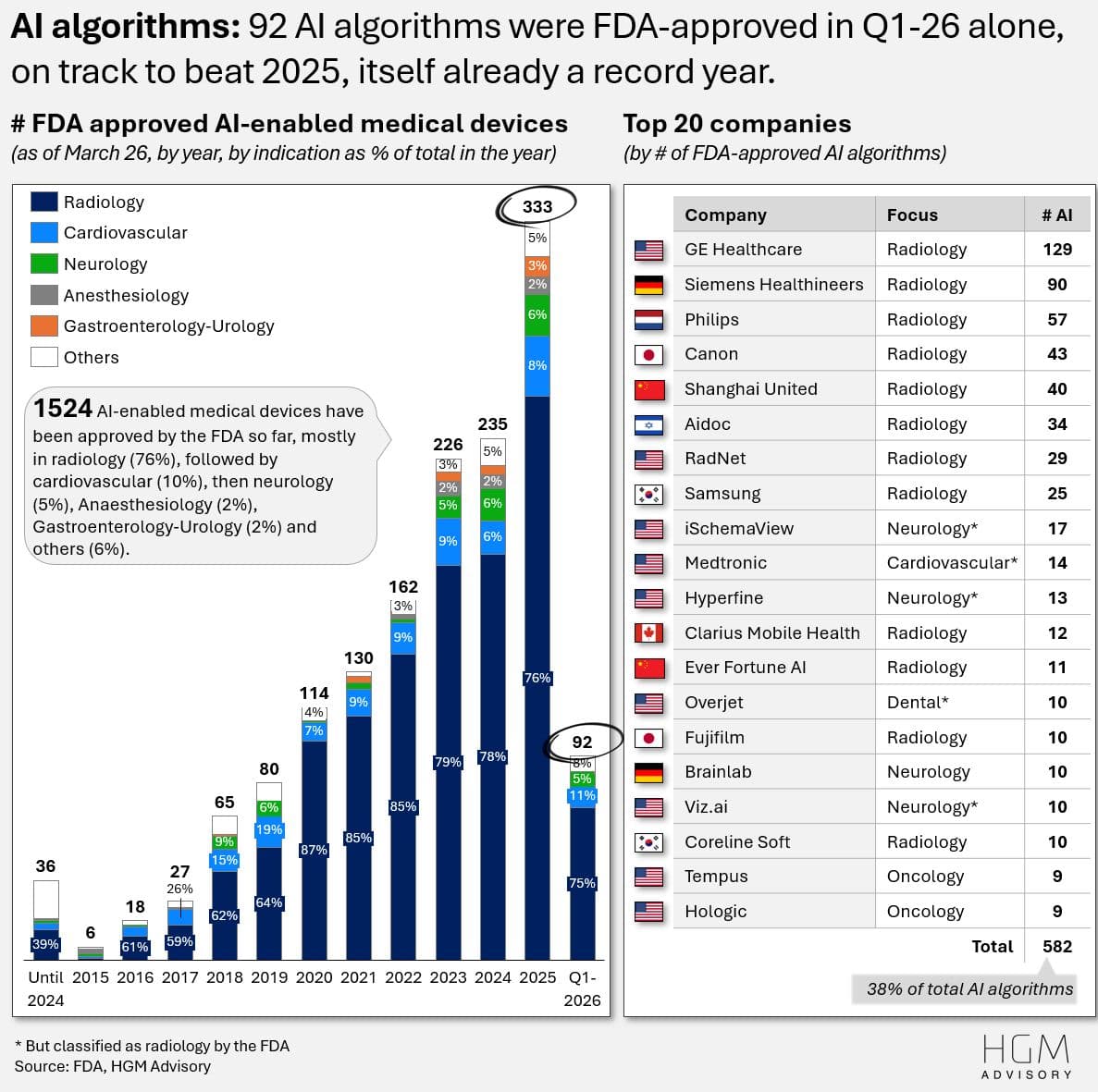
The FDA updated its list of approved AI algorithms in healthcare. The number has been growing at 20%+ CAGR since 2020, with radiology accounting for 76% of the total. Medical imaging incumbents (GE, Siemens Healthineers, Philips) lead in approvals and recent M&A is reinforcing their positions. But the bigger trend is hospitals building their own algorithms rather than outsourcing to MedTech vendors.
How fast is FDA AI approval growing, and which specialties lead?
The number of FDA-approved AI algorithms has been growing at a 20%+ CAGR since 2020. Radiology accounts for 76% of the total approvals. That share has started to shrink over the past year, with cardiovascular and neurology gaining traction. However, many FDA 'radiology' listings are simply image-based, even when the real clinical domain is oncology, cardiovascular, or another specialty. So the count of radiology algorithms may actually be inflated. A more precise classification from the FDA would be welcome to better understand where AI is truly making clinical impact.
Are medical imaging incumbents winning the AI race?
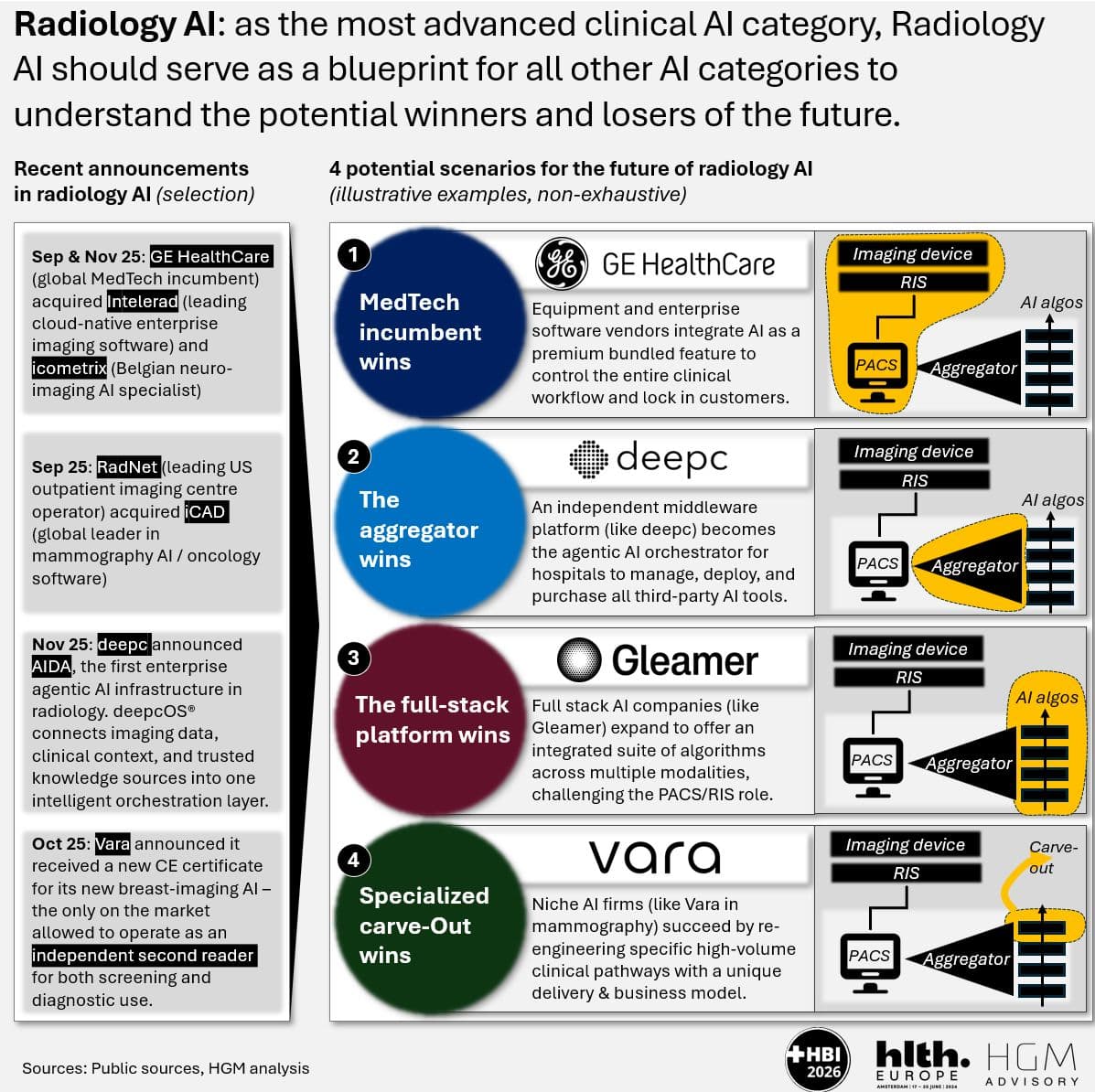
The biggest medical imaging incumbents - GE, Siemens Healthineers, and Philips - clearly lead the list in number of FDA-approved algorithms. In recent months, GE acquired icometrix, RadNet acquired Gleamer, and Philips acquired DiA Imaging, further strengthening the incumbents' positions. M&A is becoming a key strategy for incumbents to consolidate their AI portfolios rather than building everything in-house.
Why are hospitals building their own AI instead of buying from vendors?
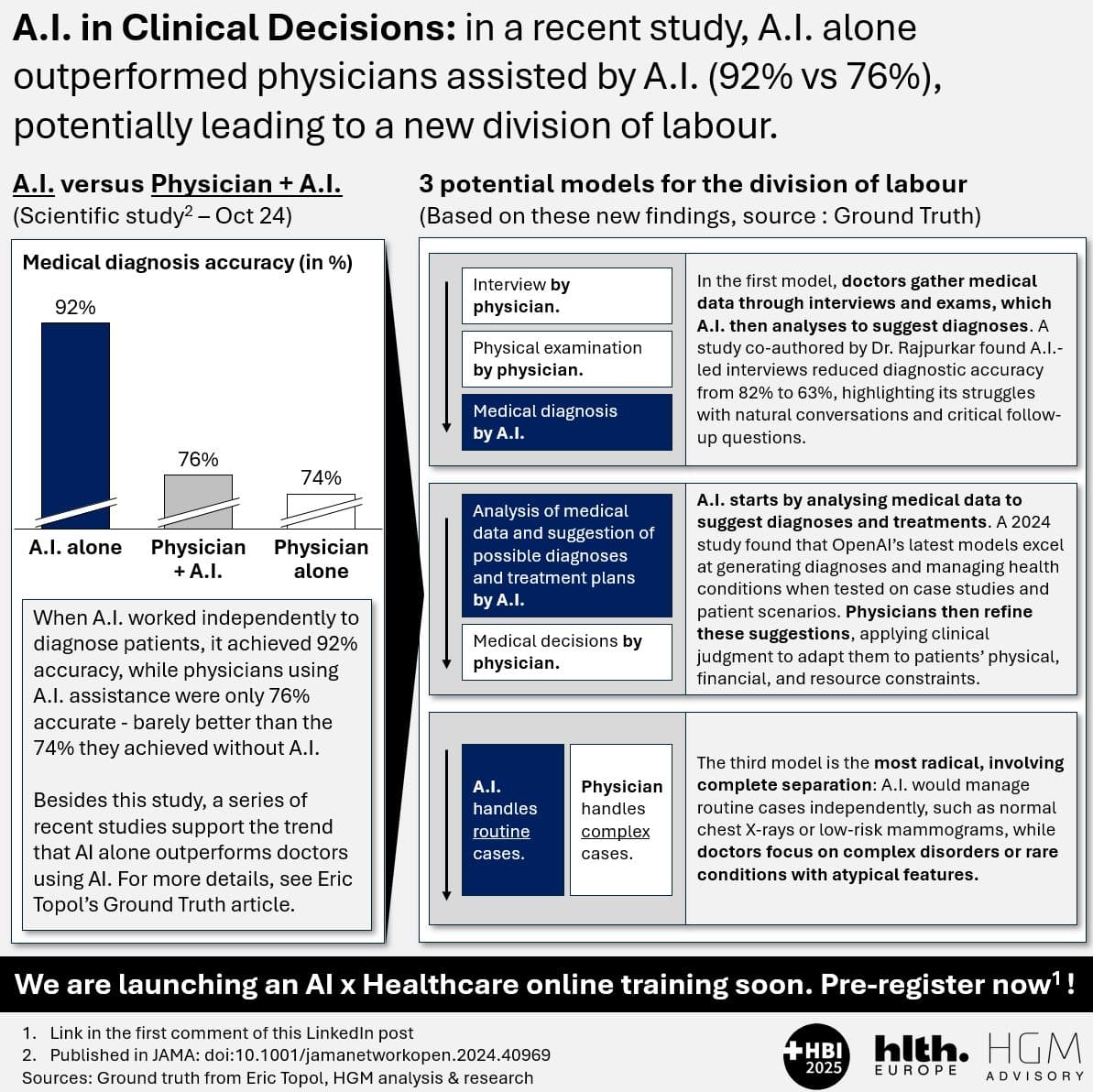
The bigger trend is that hospitals are increasingly building their own algorithms rather than outsourcing to MedTech vendors. There are a few reasons for this. Capturing the real value of an AI algorithm takes extra work from providers: these tools are not 'off the shelf.' FDA approval does not mean clinical value. A lot of effort goes into making algorithms more accurate by training them on the hospital's own data and into integrating them into the clinical workflow. Clinical decision support sits at the core of what a hospital does - it is too strategic to outsource. Vendor lock-in is exactly what many leading providers want to avoid in the age of AI.
Why is FDA recertification a pain point for AI companies?
The FDA list is full of duplicates: many algorithms have to be recertified whenever changes are made. There is a real disconnect here. AI is developed to be improved continuously, while FDA certification only evaluates a model at a single point in time. Every update, retrain, or improvement triggers a new submission process. A number of companies are now tackling this pain point, pushing regulators to adapt their logic to the reality of AI - where models are living systems that evolve with new data, not static software releases.

About the author
Thomas HagemeijerFounder & CEO of HGM Advisory. Management consultant and HealthTech expert working across the full healthcare ecosystem: pharma, MedTech, investors, startups, hospitals, and policymakers. Investor at Springboard Health Angels. Ambassador at HLTH Europe and HBI. Regular keynote speaker on AI in healthcare and digital health transformation.