
July 2026
Oura x Eli Lilly: the wearable play in GLP-1 and the rise of pharma's shadow health system

Founder & CEO, HGM Advisory
Key takeaway
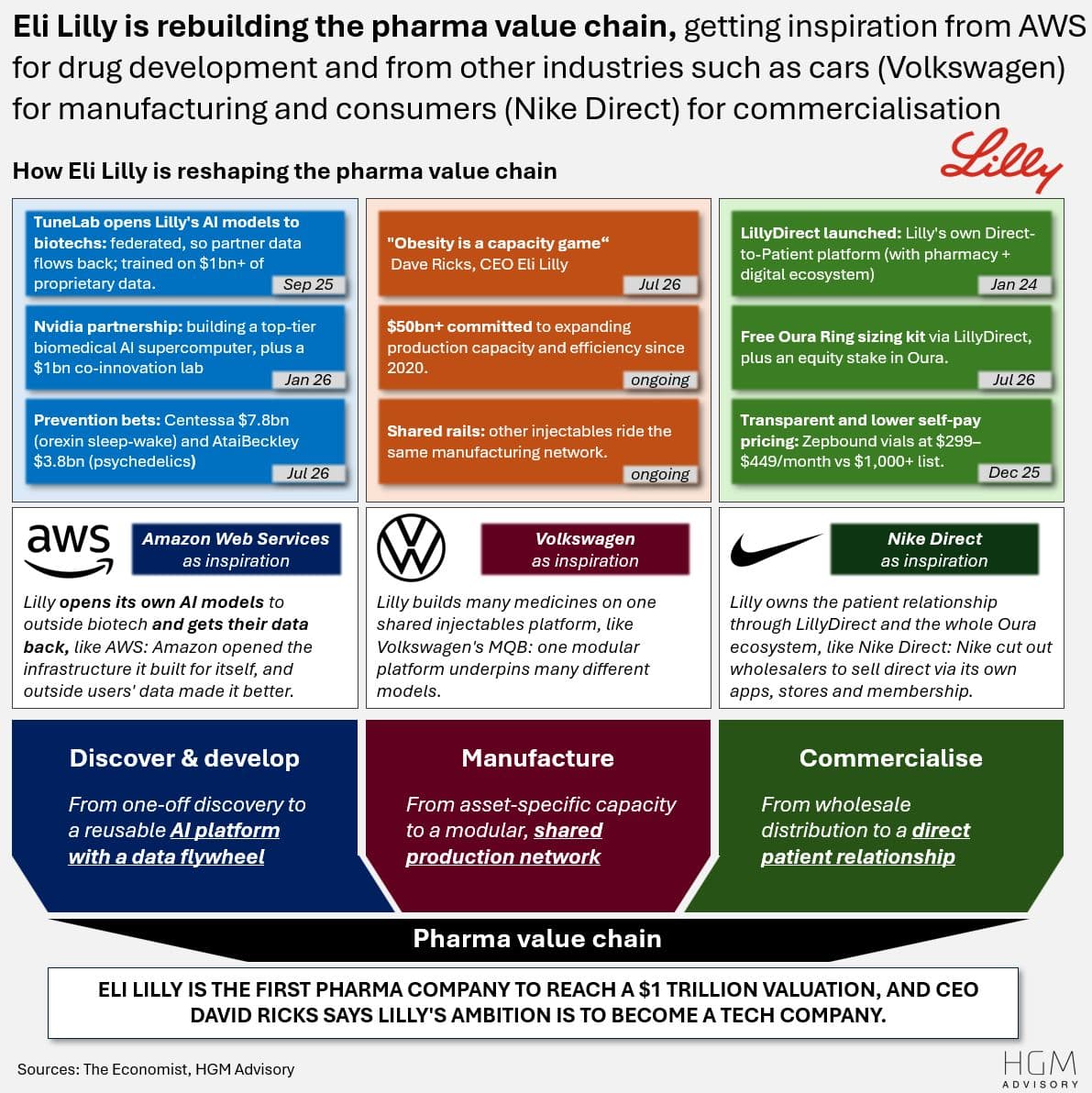
Oura and Lilly are trading installed bases: Oura gets high-intent health users it would otherwise pay to acquire, Lilly gets a device that keeps GLP-1 patients engaged. It is the sizing kit that is offered, not the ring - a $300+ ring is too expensive given current GLP-1 retention rates, but if retention improves (Hims & Hers shows 85% retention makes $780-$930 CAC work), Lilly could sponsor the ring itself. LillyDirect opened the door to a shadow health system: Novo, Pfizer, AstraZeneca, and Amgen have all followed with direct channels, several not even in GLP-1, suggesting the self-pay direct market will expand beyond obesity. Lilly became the first pharma company worth over $1 trillion.
Oura and Eli Lilly announced a partnership with LillyDirect and an equity investment by Lilly in Oura. Both sides are trading access to their installed base: Oura's 5.5 million rings ($11B valuation) and Lilly's high-intent GLP-1 patient audience. The wearable play in cardiometabolic care is finally happening, and LillyDirect has opened the door to a new shadow health system that other pharma companies are following.
What are Oura and Lilly trading in this partnership?
Both sides are trading access to their installed base. Oura has sold over 5.5 million rings and is valued around $11 billion. Oura gets a high-intent health audience from Lilly it would otherwise pay to acquire. Lilly gets a device that keeps patients engaged between clinical touchpoints. The equity investment by Lilly in Oura signals that this is not just a distribution deal but a strategic bet on wearables as part of the pharma engagement model.
Why is the wearable play in cardiometabolic care finally happening?
Oura is pushing into metabolic health and glucose, and since July users in 43 states in the US can share that data with physicians inside the app. A new data layer is forming outside the traditional system. The whole category is now being taken very seriously: Oura's competitor Whoop also just announced the appointment of Dr. Ami Bhatt as its new Chief Medical Officer. She was the chief innovation officer for the American College of Cardiology. The shift from fitness tracking to clinical-grade metabolic monitoring represents a fundamental change in what wearables can do for healthcare.
Why is Lilly offering the sizing kit and not the ring?
A ring costs over $300. A sizing kit costs a few dollars. GLP-1 retention is not yet good enough for the lifetime value to absorb a $300+ acquisition cost. But this might change. Hims & Hers carries an estimated customer acquisition cost of $780 to $930, because 85% retention and high margins make it pay back within a year. If GLP-1 retention improves, Lilly could sponsor the ring itself in the future. The economics of device subsidization depend entirely on patient retention and lifetime value, both of which are improving as GLP-1 programs mature.
How is LillyDirect building a shadow health system?
LillyDirect opened the door to a new shadow health system. Novo, Pfizer, AstraZeneca, and Amgen have all followed with their own direct channels. Several are not in GLP-1 at all, which suggests the self-pay direct market will not stop at obesity. New therapies may start reaching patients around the healthcare system rather than through it. This is good, because much needs rebuilding, especially in the US. But also risky, because self-pay favors those who can pay. Lilly became the first pharma company worth more than $1 trillion, a level usually reserved for tech companies.
Can pharma actually become AI-powered?
Sanofi already claimed to be the first AI-powered pharma, and its CEO was removed in February. The ambition has not visibly turned into value. Lilly might be different though, because its platform moves are already running, not just announced. The difference between announcing an AI strategy and operating an AI-powered direct-to-consumer platform is execution, and LillyDirect is live, growing, and now integrating wearable data through Oura. Whether this translates into better outcomes and sustainable business model innovation remains to be seen, but Lilly is further along in execution than any other pharma company.

About the author
Thomas HagemeijerFounder & CEO of HGM Advisory. Management consultant and HealthTech expert working across the full healthcare ecosystem: pharma, MedTech, investors, startups, hospitals, and policymakers. Investor at Springboard Health Angels. Ambassador at HLTH Europe and HBI. Regular keynote speaker on AI in healthcare and digital health transformation.
Related insights
July 2026
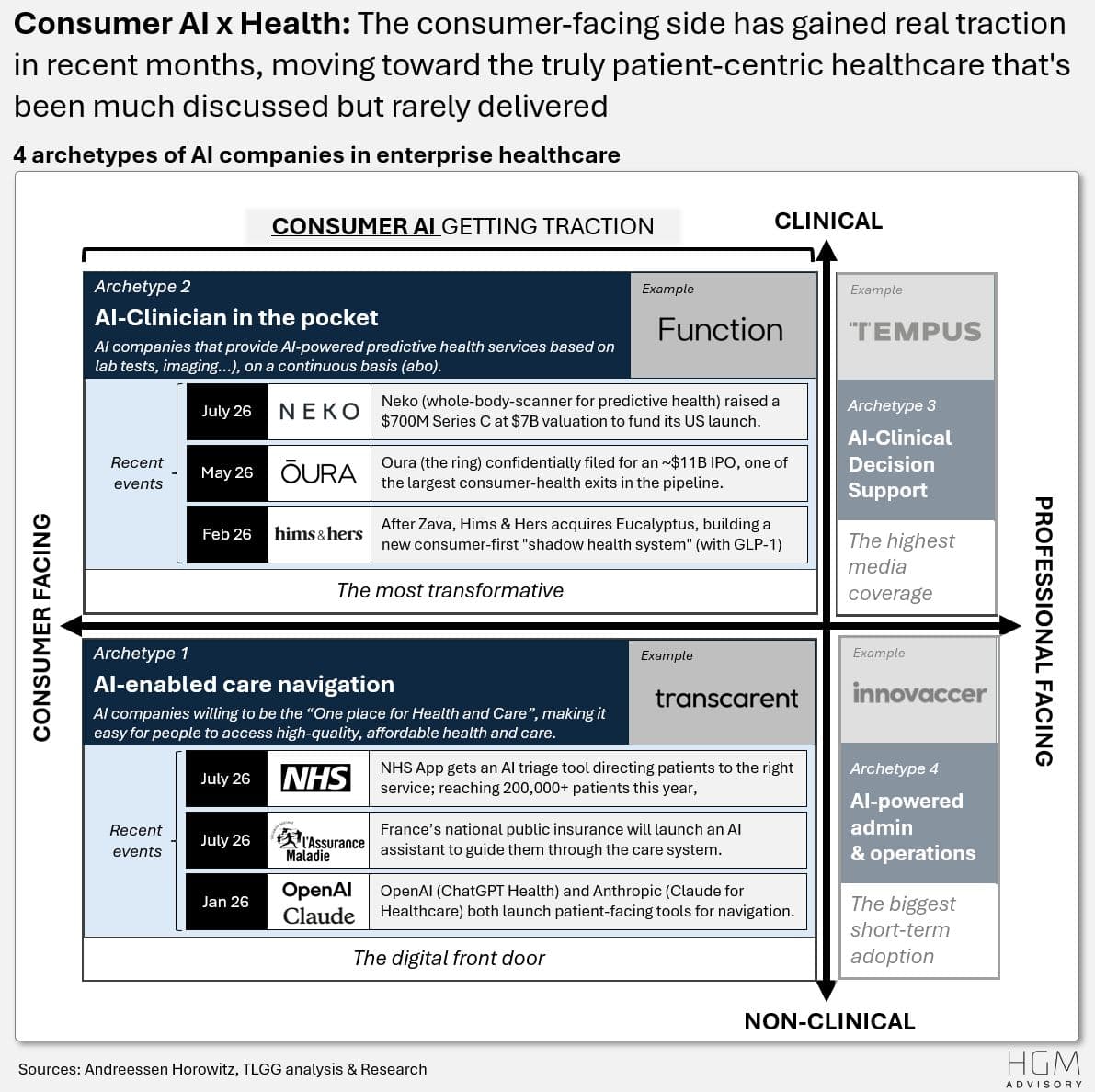
Consumer AI in health: Neko raises $700M, GLP-1 platforms build a shadow healthcare system, and doctors are caught in the middle
November 2025
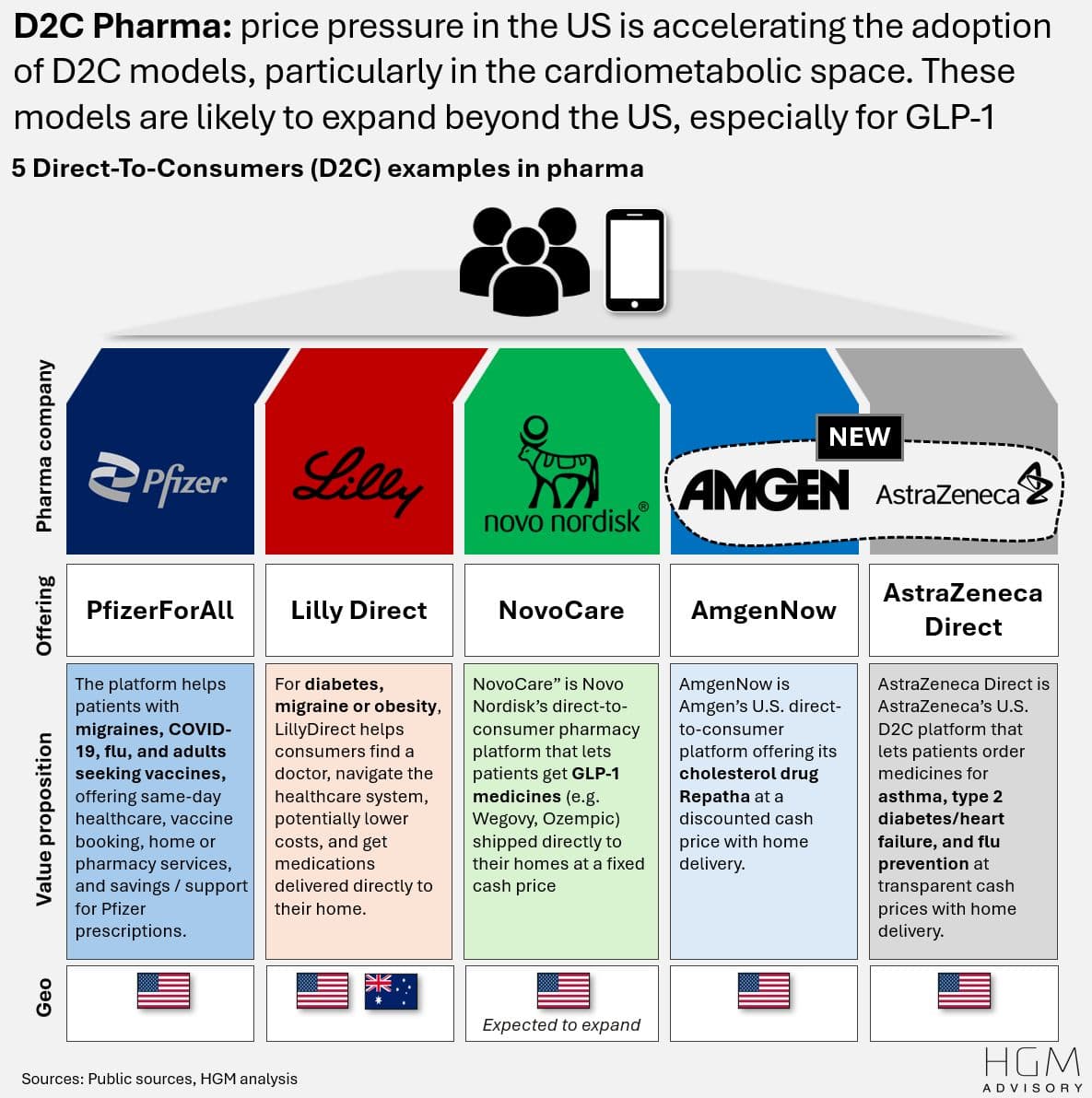
D2C Pharma: price pressure accelerates direct-to-consumer models
May 2026
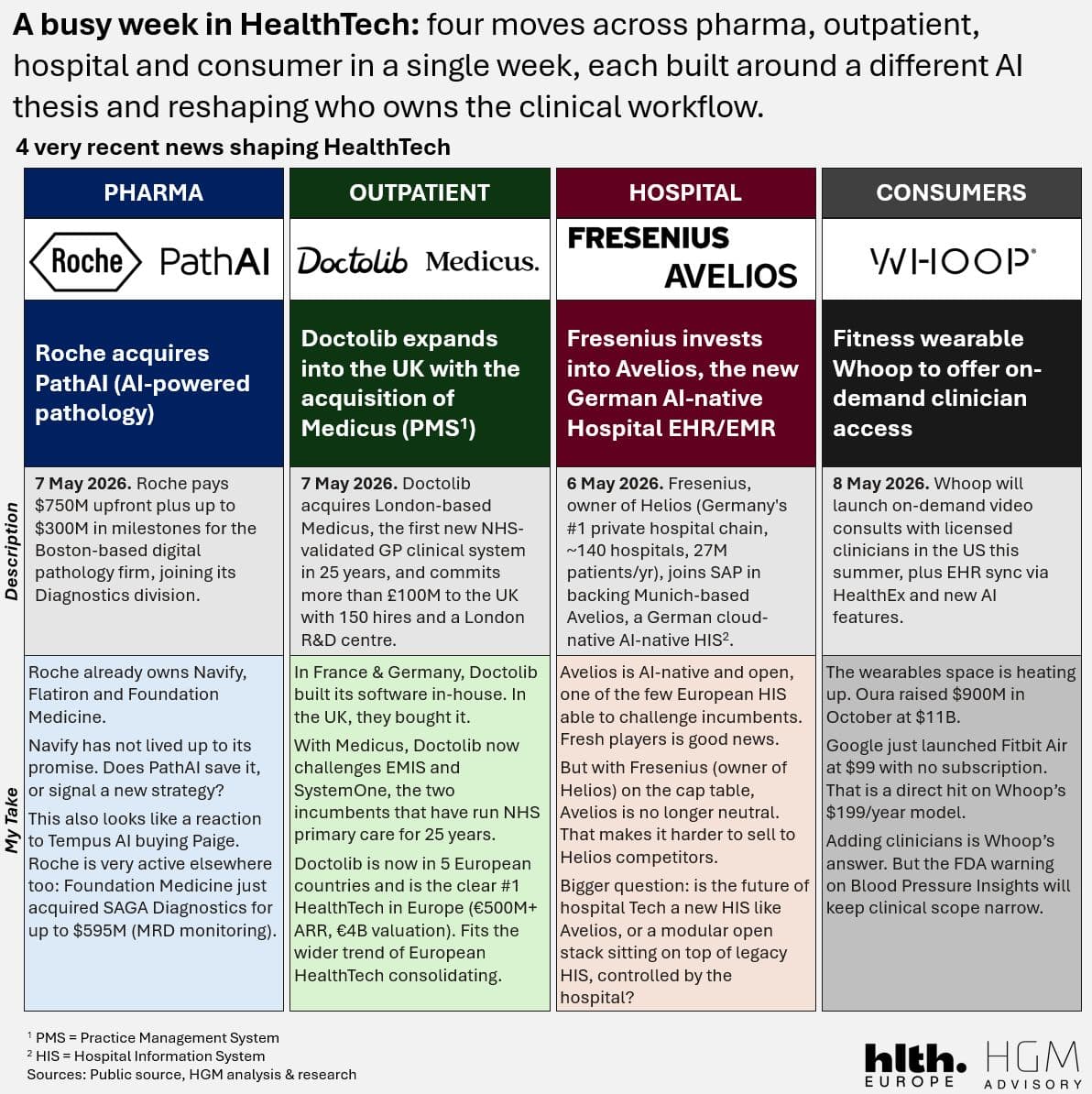
A busy week in HealthTech: four moves across pharma, outpatient, hospital and consumer, each reshaping who owns the clinical workflow