July 2026
Consumer AI in health: Neko raises $700M, GLP-1 platforms build a shadow healthcare system, and doctors are caught in the middle

Founder & CEO, HGM Advisory
Key takeaway
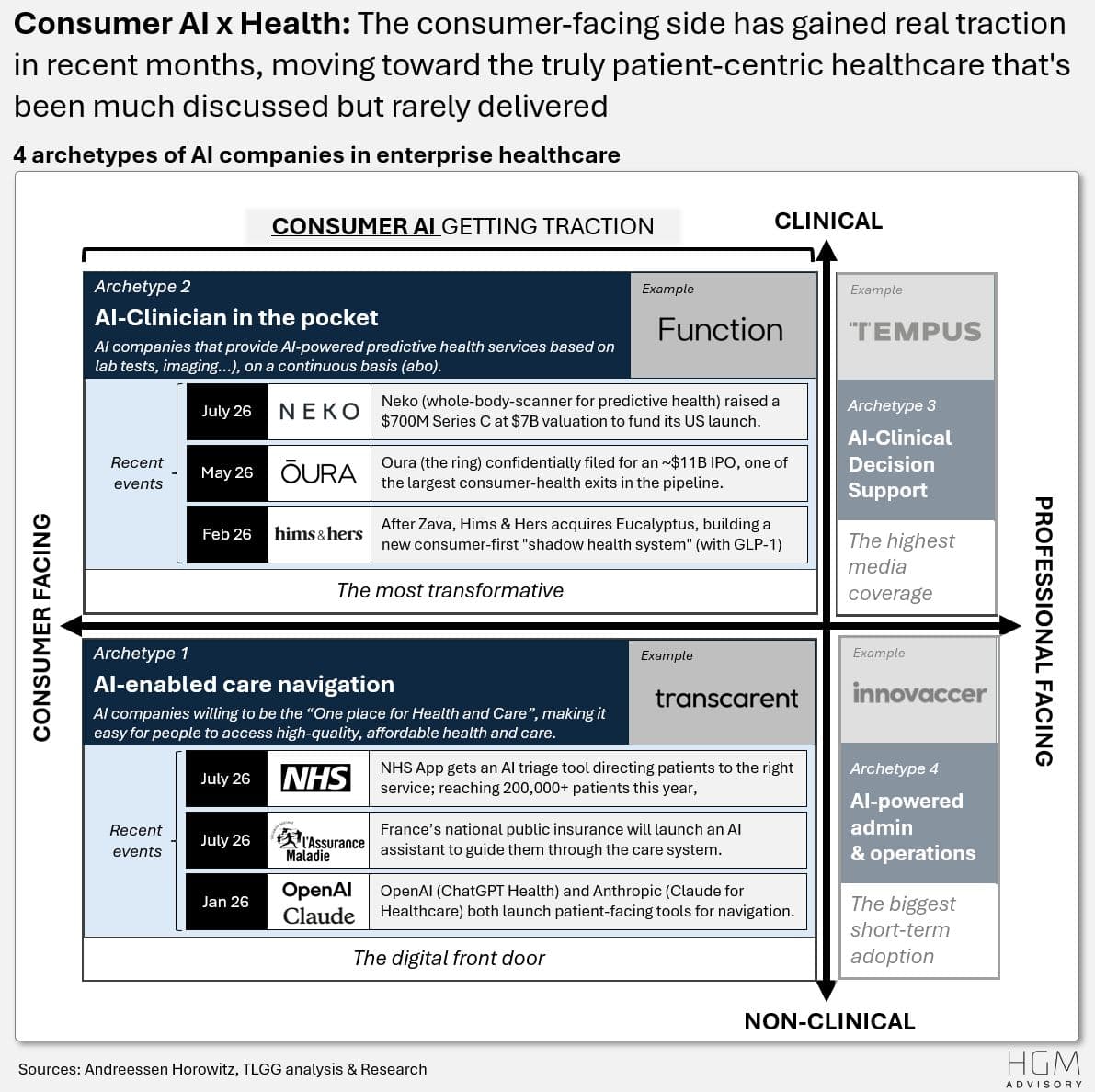
Four consumer AI archetypes are emerging in health. GLP-1 platforms (like hims & hers) work precisely because they are out of pocket - they skip queues and gatekeeping, but risk undermining universal health systems in Europe. Consumer clinical AI (Neko, Function Health) serves mostly the worried well today and generates false positives at scale, but specific predictive tests may eventually get reimbursed. AI is intensifying the doctor-patient clash: over half of German doctors were already annoyed by patients who thought they knew better three years ago, and AI tools in patients' hands are making this worse. Public systems (NHS App, France's ameli) see AI as a chance to guide patients better, but add friction on doctors who end up squeezed from both sides.
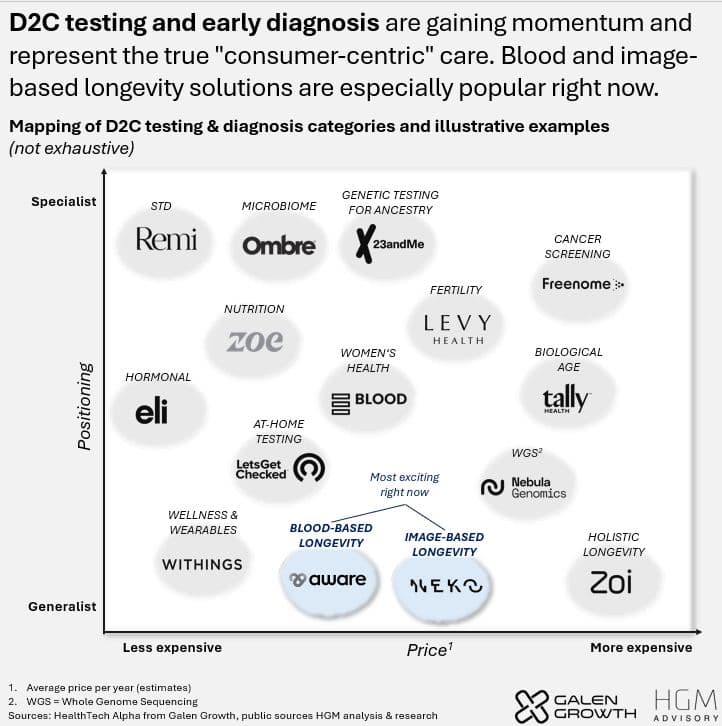
Neko Health just raised $700M at a ~$7B valuation. The same month, the NHS is adding an AI triage tool to its app. Consumer AI archetypes in health - both clinical and non-clinical - are gaining traction. GLP-1 platforms are creating a shadow healthcare system that is consumer-centric. Clinical AI tools like Neko and Function Health have potential but are not scalable yet. And doctors are caught in the middle between empowered patients and top-down public systems.
How are GLP-1 platforms creating a shadow healthcare system?
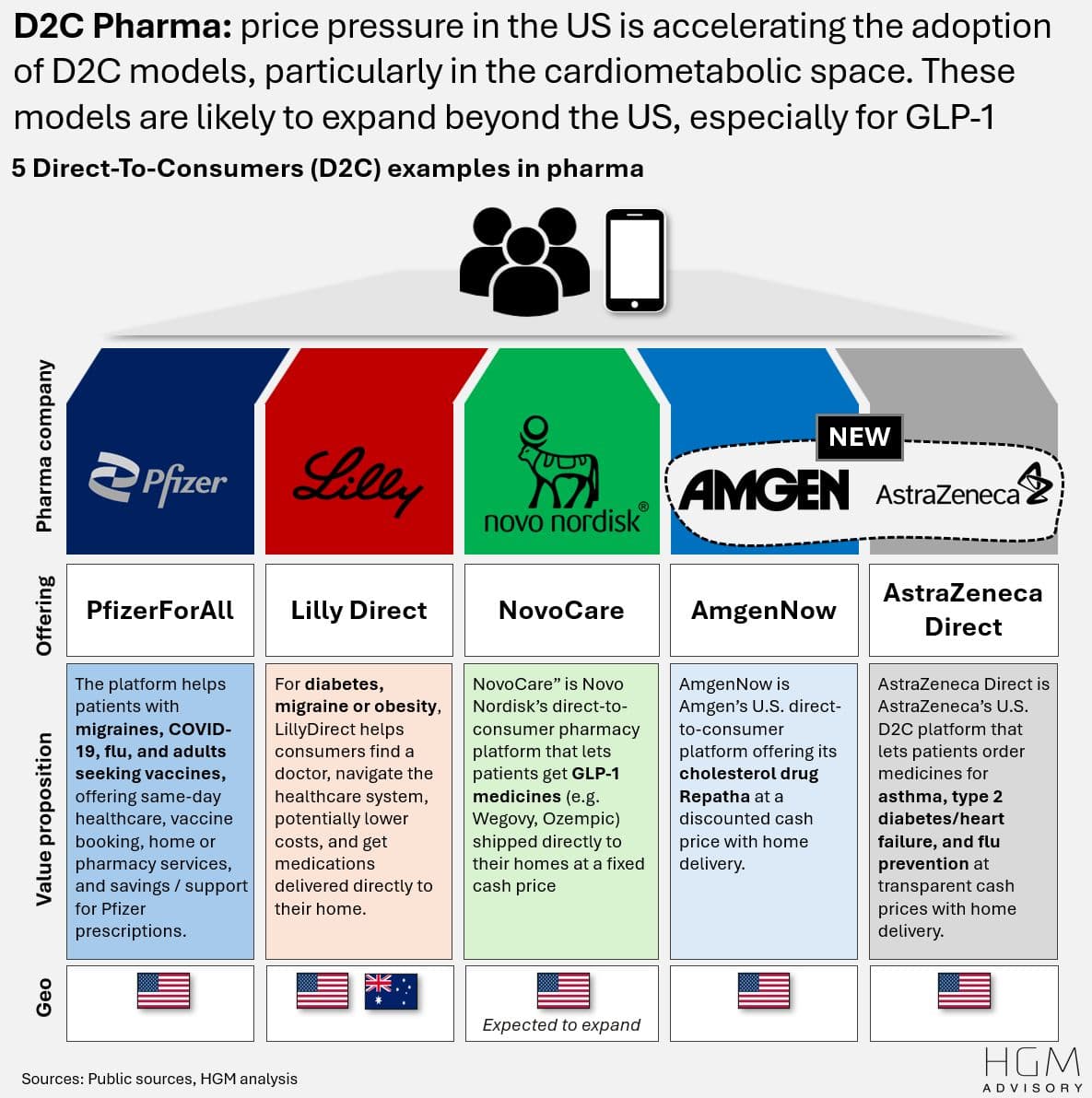
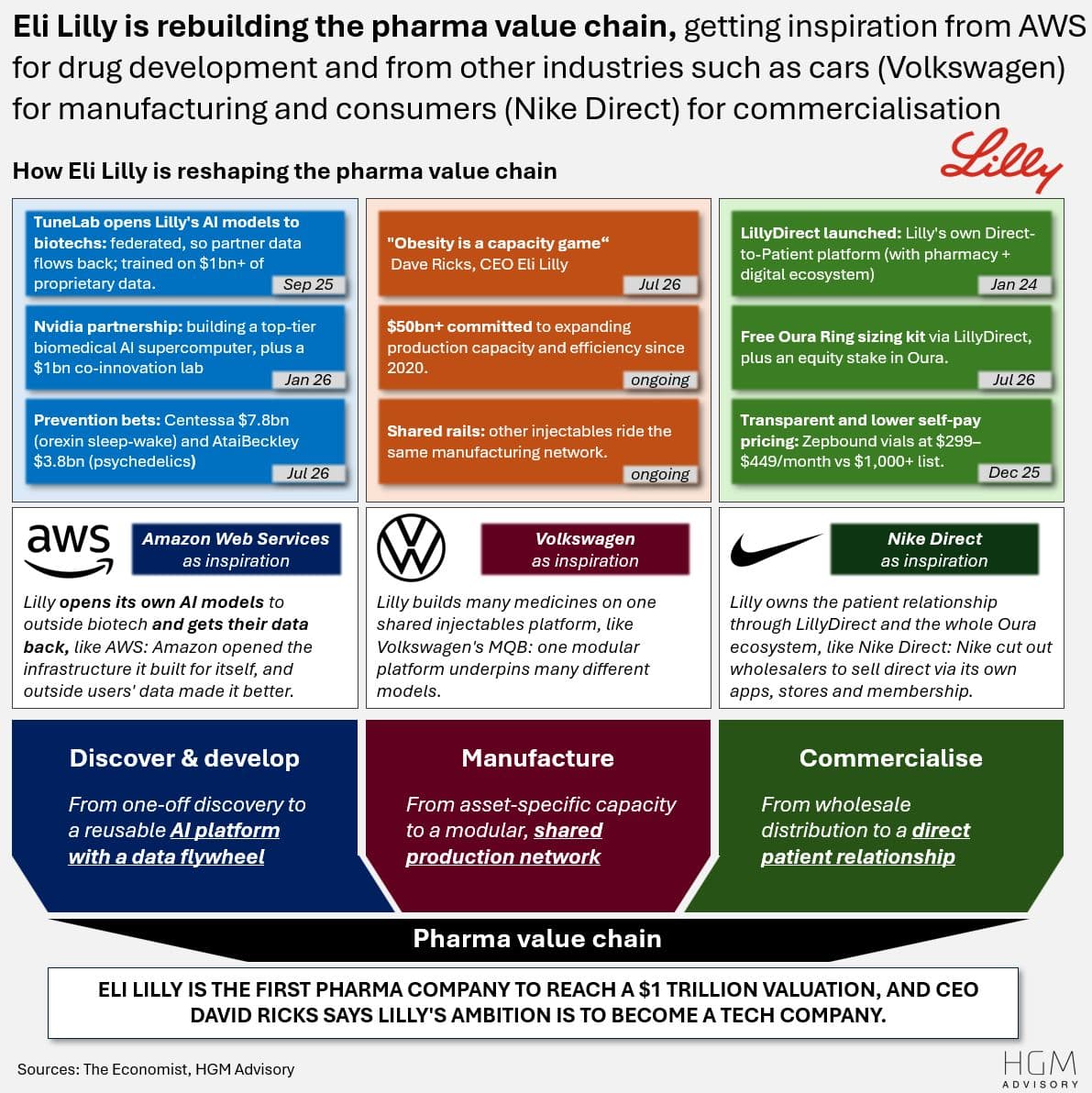
GLP-1 focused platforms like hims & hers are out of pocket, and that is exactly why they work. They increase access and convenience, and they skip the queues and the gatekeeping of the traditional system. Today they mostly focus on lifestyle: obesity, ED, hair loss. But it might not stop there. This model could expand into other therapeutic areas, even oncology in Europe, where there is no more money to finance new therapies. That is the tension. It is a chance to accelerate innovation and access, but also a big risk, because it puts universal health systems at risk in Europe by creating a two-tier system where those who can pay get faster, more convenient care.
Why is consumer clinical AI not scalable yet?
Today, the people who can afford Neko or Function Health are mostly the worried well. At population scale, these tools are often false positive generators. If we scaled them now, scarce medical resources would be spent double-checking diseases that are just not there. Neko Health raising $700M at a ~$7B valuation shows strong investor conviction, but the path from serving affluent early adopters to population-scale screening requires solving the false positive problem. However, as these players mature, some specific predictive tests powered by AI might actually get reimbursed by statutory payors, which would be the real inflection point for consumer clinical AI.
Why are consumers clashing with doctors?
Three years ago, a Bitkom study in Germany showed that more than half of German doctors were already annoyed by patients who thought they knew better. With AI, this is only getting worse, because the tools in patients' hands are becoming a lot more powerful. Patients now arrive at appointments with AI-generated differential diagnoses, lab interpretations, and treatment suggestions. The dynamic shifts from 'doctor knows best' to a negotiation between the physician's clinical judgment and the patient's AI-informed expectations. This tension is structural and will only intensify as consumer health AI improves.
How are public systems using AI to guide patients?
The NHS App triage tool, France's ameli assistant, and Mon Espace Sante all try to send patients to the right place. The logic is sound: if AI can route patients more efficiently, it reduces unnecessary visits and directs resources where they are needed most. But by doing this, they also add friction on doctors. Doctors end up squeezed in the middle: on one side, empowered patients who think they know better, and on the other, top-down public systems that think they can design pathways that bring more efficiency. The question is whether AI-powered navigation genuinely improves outcomes or simply adds another layer of bureaucracy between patients and care.

About the author
Thomas HagemeijerFounder & CEO of HGM Advisory. Management consultant and HealthTech expert working across the full healthcare ecosystem: pharma, MedTech, investors, startups, hospitals, and policymakers. Investor at Springboard Health Angels. Ambassador at HLTH Europe and HBI. Regular keynote speaker on AI in healthcare and digital health transformation.