July 2026
AMBOSS tops the Stanford-Harvard NOHARM study again: why Europe needs its own clinical AI

Founder & CEO, HGM Advisory
Key takeaway
AMBOSS is a European asset worth protecting. AI will sit at the centre of the healthcare value chain, putting diagnosis and treatment decisions within reach at unprecedented scale and cost. Europe needs its own clinical AI, and AMBOSS should get whatever backing it needs to compete with American and Chinese players. NOHARM is becoming the reference benchmark for clinical AI - unlike most medical AI benchmarks built on exam questions, NOHARM is built on real patient cases. None of these tools are FDA-approved because they retrieve and summarise evidence rather than decide anything, falling outside medical device rules.
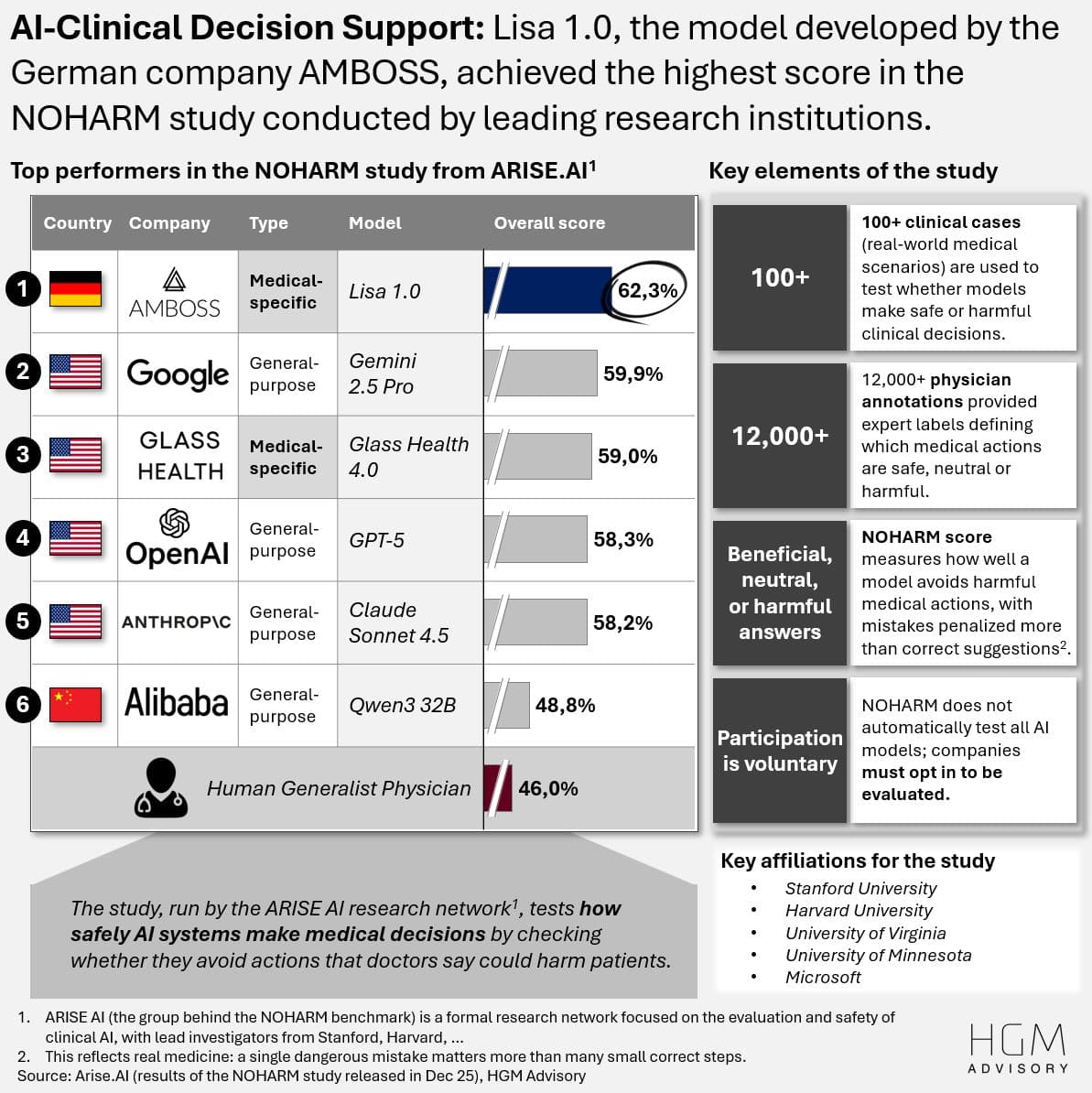
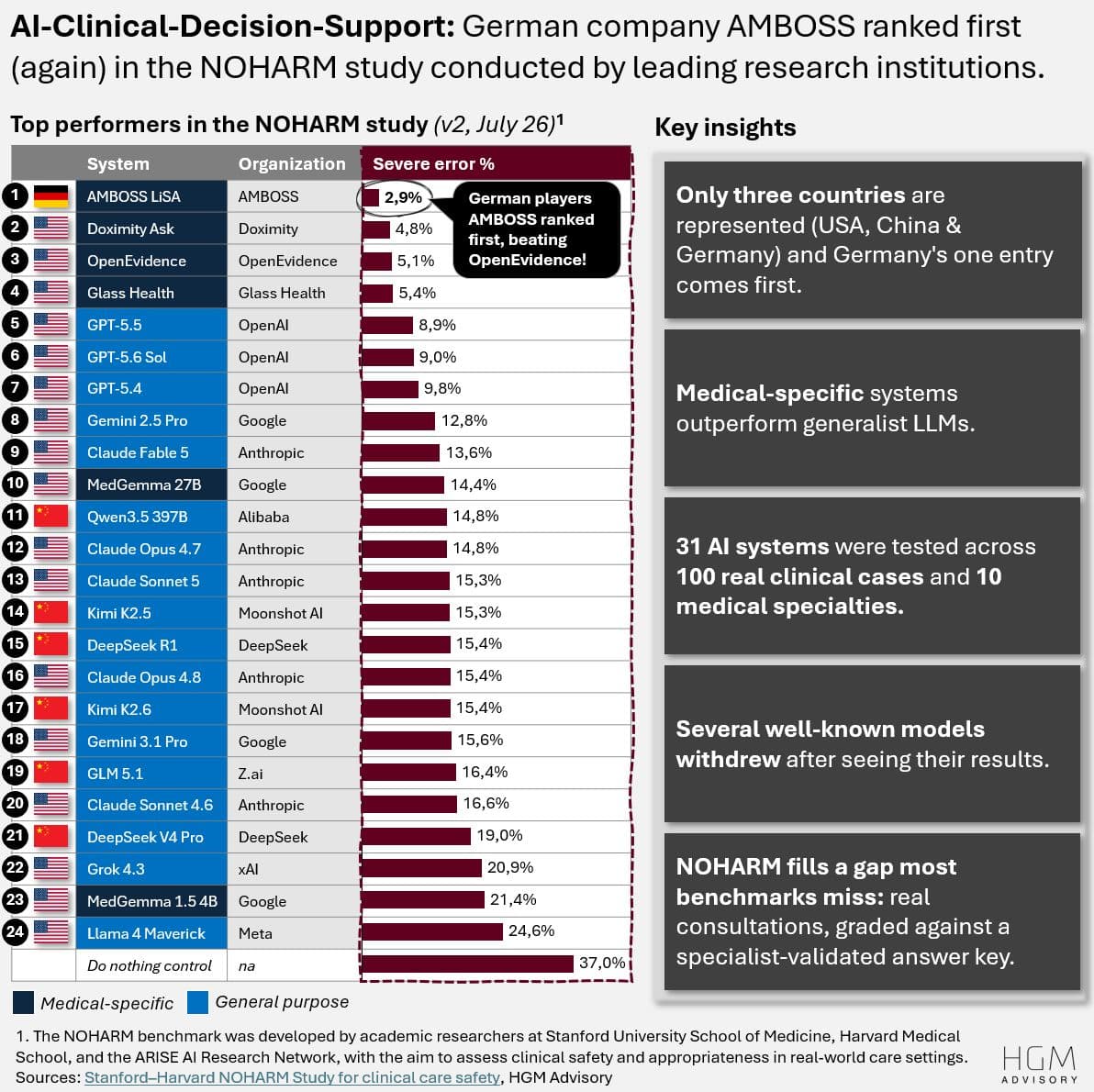
Germany's AMBOSS came first again in the new edition of the Stanford-Harvard NOHARM study on clinical AI safety. Founded in 2012 as a study tool for medical students, AMBOSS now serves over a million professionals in 180+ countries and has raised EUR260M, making it the best-funded HealthTech company in Germany. OpenEvidence entered the benchmark for the first time. None of the tools tested are FDA-approved.
How did AMBOSS rise from a student tool to Europe's leading clinical AI?
AMBOSS was founded in 2012 by medical students who thought there had to be a better way to prepare for exams than textbooks. The idea was simple: take exam prep for doctors, make it digital, make it better. Today more than a million professionals use it, in over 180 countries. It has raised EUR260 million, which makes it the best-funded HealthTech company in Germany. Two things explain the rise. First, the product: medical content that is carefully written and properly checked. Second, the go-to-market: students start using AMBOSS early, and many keep paying for it once they are practising doctors. This bottom-up adoption model created a large, loyal user base that now forms the foundation for AMBOSS's clinical AI ambitions.
Why does this matter for European sovereignty?
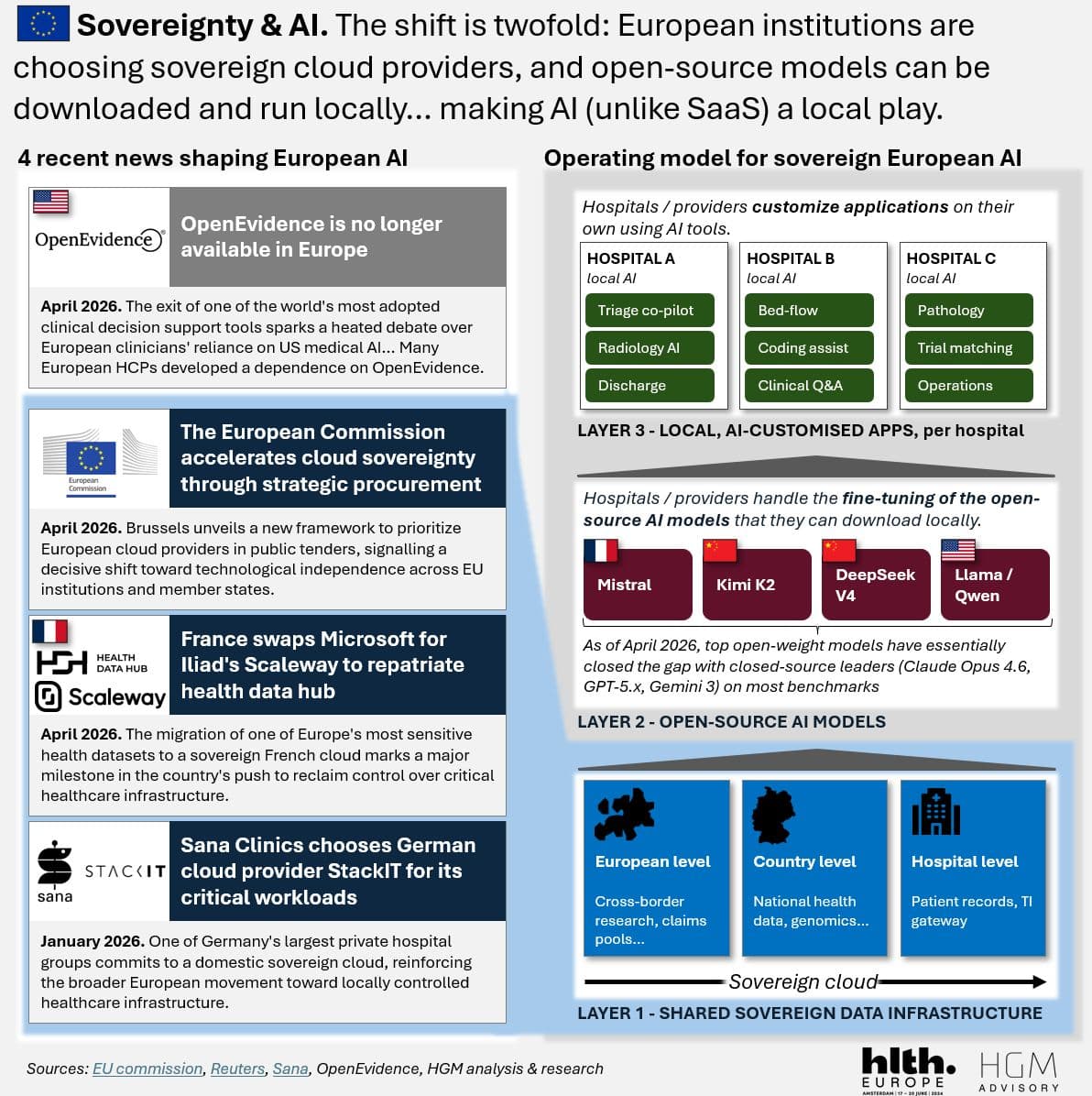
AI could put diagnosis and treatment decisions within reach at a scale, and a cost, we cannot get near today. But still theoretical for now, as every clinical AI in this study needs a doctor in the loop for regulatory reasons. So it will sit at the centre of the healthcare value chain in the years ahead. Europe needs its own clinical AI. AMBOSS is a European asset worth protecting, and it should get whatever backing it needs to compete with the American and Chinese players. Relying entirely on US-built clinical AI would create a strategic dependency in one of the most critical domains of public infrastructure.
Why is NOHARM becoming the reference benchmark?
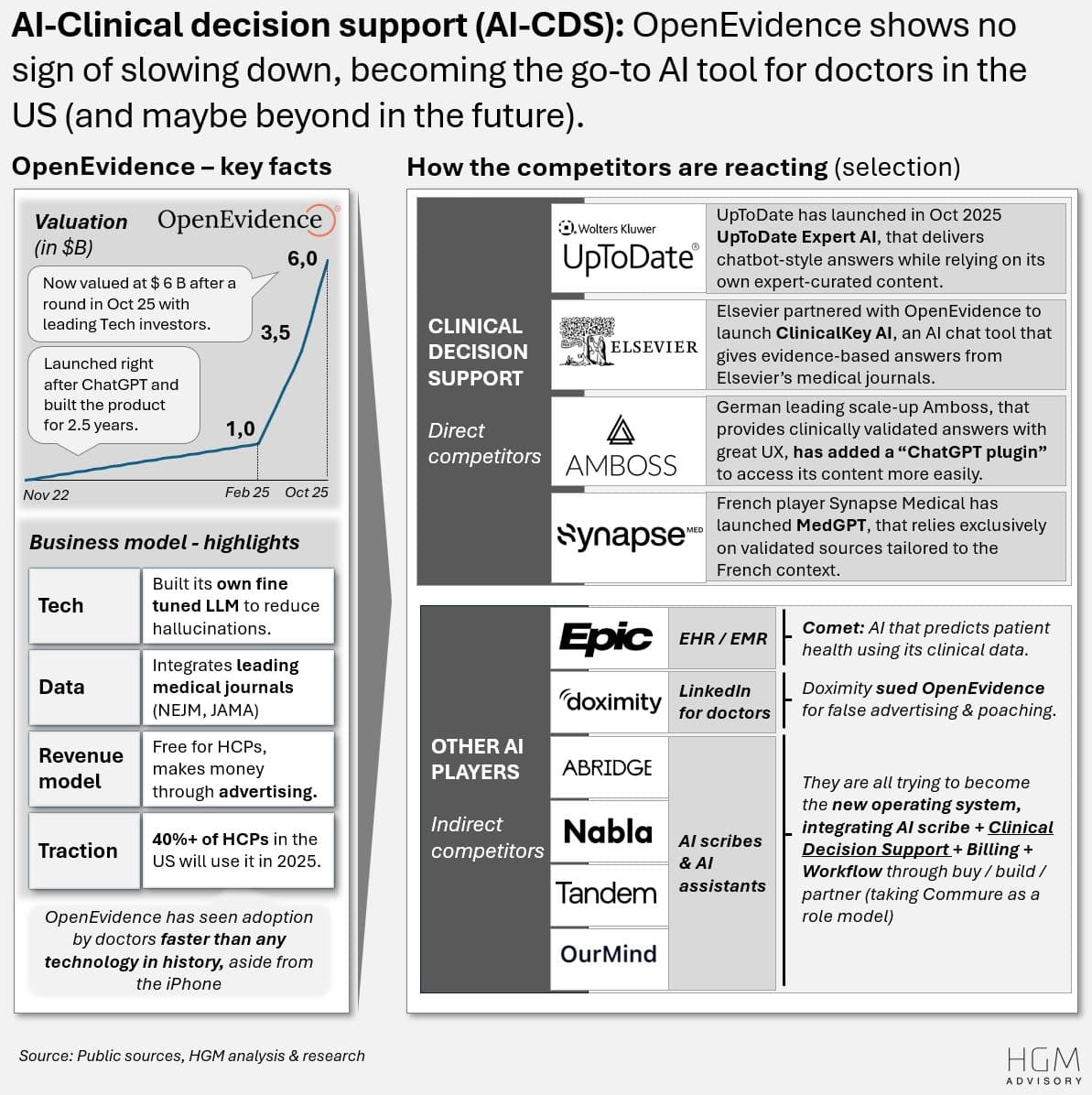
OpenEvidence was not in the December 2025 edition. It is in this one. NOHARM is becoming the reference benchmark for clinical AI, and it fills a real gap. Most medical AI benchmarks are built on exam questions. This one is built on real patient cases. The difference matters: exam-style benchmarks test knowledge recall, while NOHARM tests clinical reasoning in realistic scenarios where information is incomplete, ambiguous, or conflicting - much closer to what doctors face in practice.
Why are none of these tools FDA-approved?
The clinical AI tools in the study are used by hundreds of thousands of doctors. They fall outside the medical device rules because they retrieve and summarise evidence rather than decide anything, and regulators expect the doctor to check the reasoning. This regulatory grey zone is both an opportunity and a risk. It allows rapid adoption and iteration without the multi-year approval cycles that slow down medical device AI. But it also means these tools operate without the safety validation that formal approval requires, relying instead on the physician as the final decision-maker.

About the author
Thomas HagemeijerFounder & CEO of HGM Advisory. Management consultant and HealthTech expert working across the full healthcare ecosystem: pharma, MedTech, investors, startups, hospitals, and policymakers. Investor at Springboard Health Angels. Ambassador at HLTH Europe and HBI. Regular keynote speaker on AI in healthcare and digital health transformation.