
June 2026
Microsoft and Mayo Clinic plan a frontier AI model for healthcare - and what it means for Epic

Founder & CEO, HGM Advisory
Key takeaway
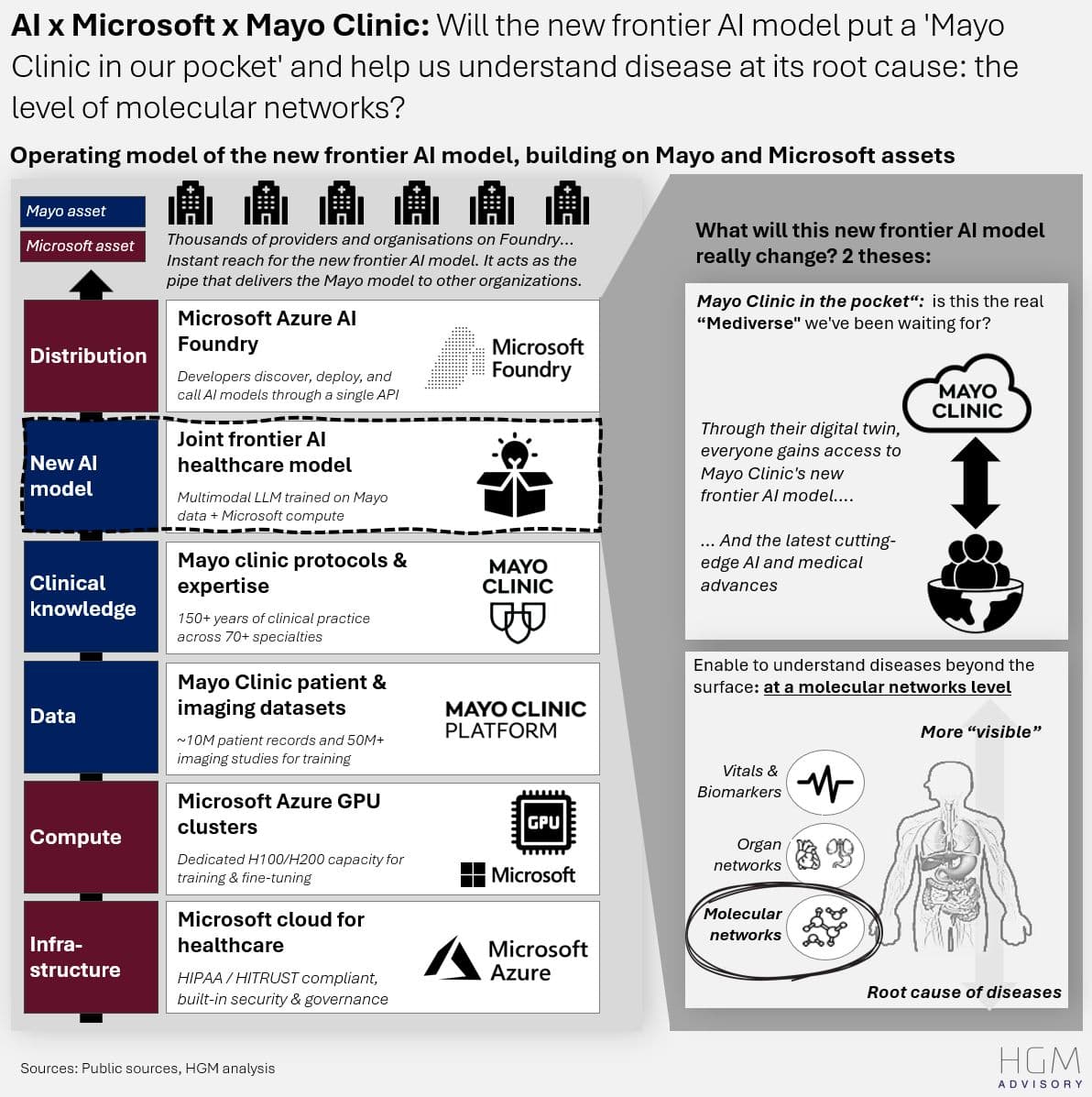
Healthcare providers are transitioning from passive technology buyers to active AI owners. Mayo Clinic's partnership with Microsoft exemplifies how providers can own the model while outsourcing development. The strategic tension is clear: Epic's products run on Microsoft's cloud and AI, yet Microsoft is now helping Mayo build a competing clinical model. Epic, as a software company rather than an AI-native one, may struggle to reduce its dependence on Microsoft and build its own frontier AI capabilities. The concept of a 'Mediverse' - making Mayo's cutting-edge diagnostic algorithms accessible globally through Azure Foundry - represents a first step toward democratizing clinical AI.
Microsoft and Mayo Clinic announced plans to build a new frontier AI model for healthcare. Mayo Clinic Platform has built one of the most advanced clinical data lakes in the world, connecting leading hospitals globally. This partnership marks a new dynamic where providers own the AI model rather than outsourcing it, while Microsoft plays all sides - powering Epic's products and building Mayo's competing clinical model.
Why is this the logical next step for Mayo Clinic Platform?
Over the past few years, Mayo Clinic has built one of the most advanced clinical data lakes in the world with Mayo Clinic Platform. Beyond its own data, it has connected other leading hospitals globally to plug in richer datasets through the same framework. But data needs serious compute and AI power to turn into new innovations, and healthcare data is heavy (genomics especially). Mayo Clinic needs a big engine to run the research. Partnering with Microsoft provides the compute infrastructure necessary to train frontier-scale models on clinical data that no single institution could process alone.
What does it mean for providers to own the AI model?
Historically, providers have always outsourced technology to third-party vendors. That dynamic is now changing. Major hospitals around the world have realized that AI and data are no longer just 'hospital IT' - they are critical infrastructure that should be owned, even if the development is still outsourced. Mayo Clinic building its own frontier model, rather than simply licensing one from Microsoft or OpenAI, represents a fundamental shift in how health systems think about technology. The model becomes a strategic asset owned by the provider, not a subscription to a vendor's platform.
Does the Mediverse concept still make sense?
It is hard to talk about the metaverse today and stay credible. But a Mediverse - a medical metaverse - actually does make sense. Mayo Clinic has already developed cutting-edge algorithms to diagnose disease and guide treatment: so why shouldn't everyone in the world have access to them? This frontier AI model, combined with Azure Foundry for distribution, is a first step toward that vision. The idea is not virtual reality in hospitals, but rather the global distribution of clinical intelligence that was previously locked inside a single institution's walls.
What does this mean for Epic?
Mayo is building this model on top of data that lives inside Epic. Epic already has its own frontier-style models. Microsoft, meanwhile, is also Epic's preferred technology partner. So Microsoft is playing all sides: selling the cloud and AI that power Epic's products, while simultaneously building Mayo's competing clinical model. If Epic wants to remain competitive, it would need to reduce its dependence on Microsoft and build its own AI. But Epic is a software company, not an AI-native one - and that distinction matters increasingly as healthcare moves toward foundation models and frontier AI capabilities. The coming years will reveal whether Epic can make this transition or whether it will be outpaced by provider-owned and AI-native alternatives.

About the author
Thomas HagemeijerFounder & CEO of HGM Advisory. Management consultant and HealthTech expert working across the full healthcare ecosystem: pharma, MedTech, investors, startups, hospitals, and policymakers. Investor at Springboard Health Angels. Ambassador at HLTH Europe and HBI. Regular keynote speaker on AI in healthcare and digital health transformation.
Related insights
April 2026
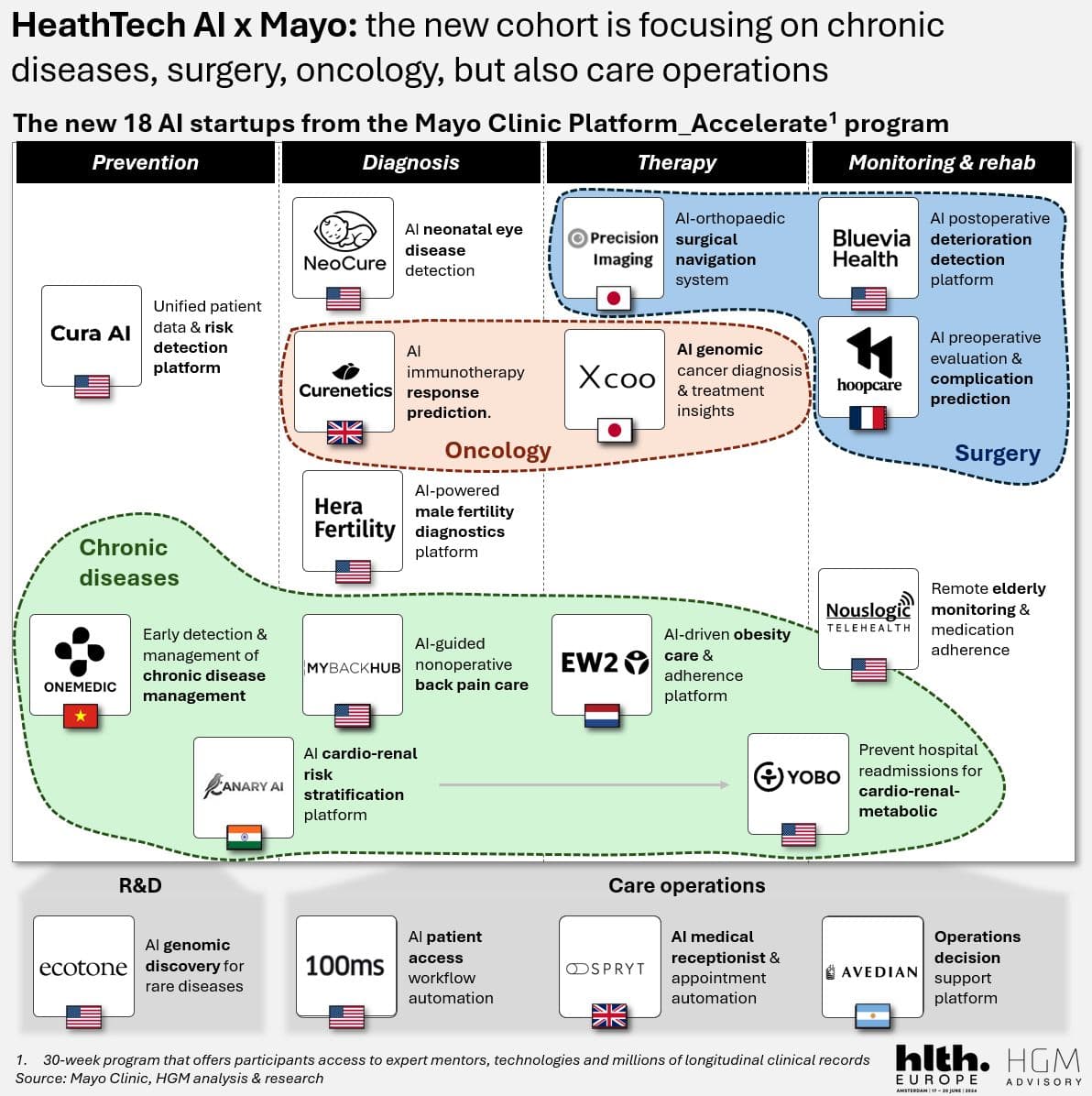
Mayo Clinic Platform Accelerate: 76 AI startups and the data-for-equity model reshaping clinical AI
May 2025
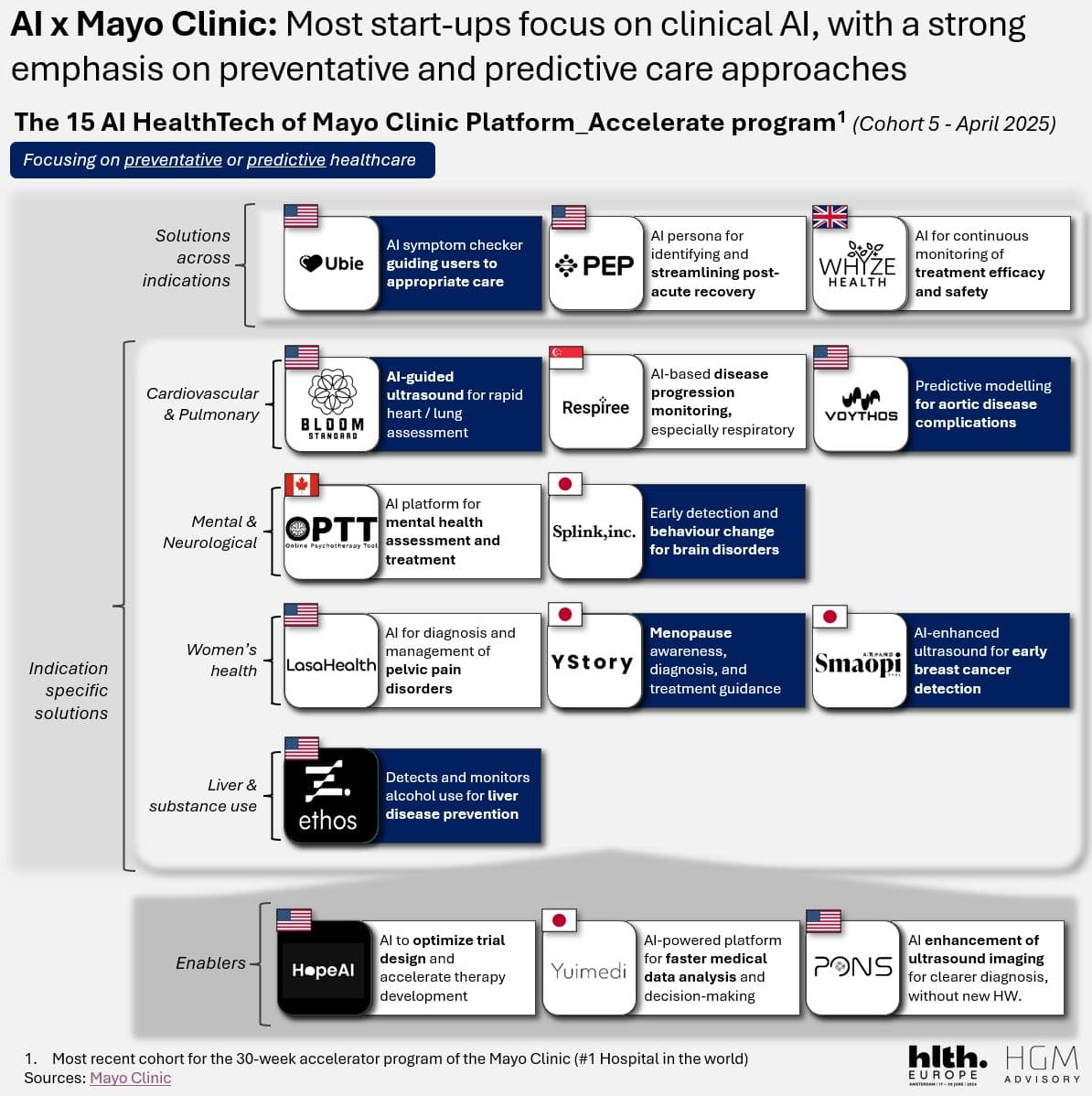
Mayo Clinic Platform Accelerate selects 15 AI startups: clinical AI, Japan's rise, and the hospital innovation blueprint
April 2026
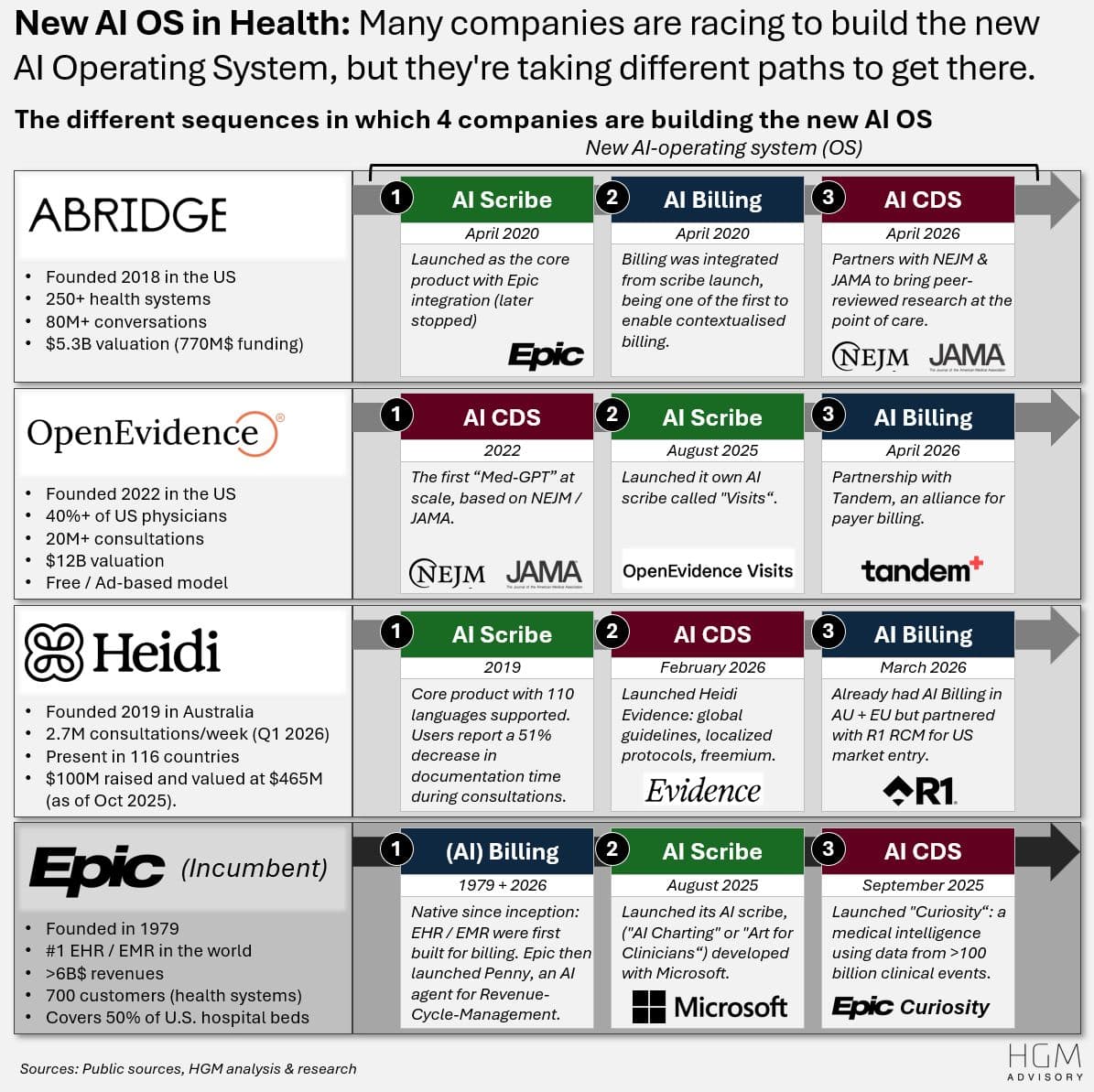
New AI OS in Health: Abridge, OpenEvidence, Heidi, and Epic are racing to build the AI operating system