
May 2026
German HealthTech: Eterno's $100M+ raise and the outpatient infrastructure gap

Founder & CEO, HGM Advisory
Key takeaway
Germany's outpatient infrastructure gap is real: almost half of German physicians are dissatisfied with their practice management systems, yet few switch because viable alternatives have been lacking. You can't run modern AI on 1990s infrastructure. Verdane's investment signals PE now sees HealthTech as viable territory - currently less than 5% of healthcare PE flows to HealthTech vs. traditional assets (dental chains, care homes). As HealthTech matures, expect this percentage to rise and PE-led European consolidation to follow.
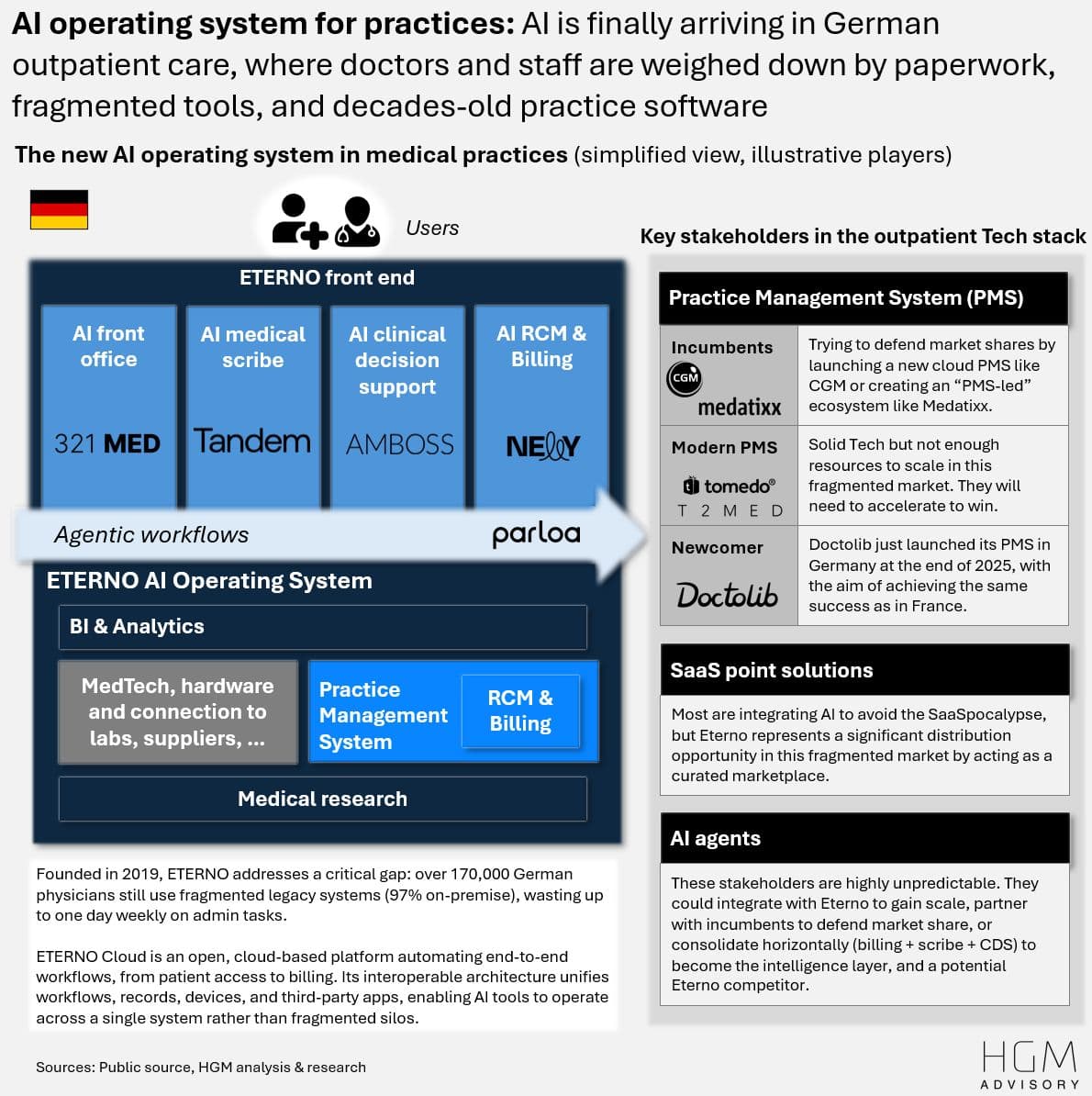
German player Eterno has secured $100M+ from Verdane to scale its AI-native platform for outpatient care in Germany. 97% of systems used by 170,000+ German physicians run on local servers built in the 1990s. Competition is emerging (Doctolib launched its PMS in late 2025), future payment models require new infrastructure, and PE is increasingly seeing HealthTech as a viable asset class.
Why is Germany's outpatient infrastructure gap so critical?
Almost half of German physicians are dissatisfied with their practice management systems, yet few switch. The challenge isn't awareness: it's a lack of viable alternatives. 97% of systems used by 170,000+ German physicians run on local servers, many built in the 1990s. This creates a fundamental problem: you can't run modern AI on 1990s infrastructure. The gap between what physicians need (real-time decision support, automated documentation, AI-driven workflows) and what their current systems can deliver is widening every year. Eterno's $100M+ raise from Verdane is a direct bet on closing this gap with an AI-native platform built from scratch, rather than layering AI on top of legacy architecture.
How is competition reshaping the German outpatient market?
Doctolib launched its PMS in Germany in late 2025, applying the same playbook that worked in France: start with patient booking, then expand backward into the full practice management workflow. This wedge strategy has proven effective - Doctolib captured over 20% of France's PMS market against legacy leaders that had dominated for decades. The entry of both Doctolib and AI-native platforms like Eterno into the German market is creating unprecedented competitive pressure on incumbent PMS vendors at exactly the moment when practices are most open to switching. While competition typically benefits end users - physicians and patients - the transition period will be disruptive for the established vendor ecosystem.
Why do future payment models require infrastructure that doesn't exist yet?
Germany remains fee-for-service, but discussions around bundled payments and capitation are accelerating. These models require real-time data sharing and outcome tracking across providers - capabilities that current systems were never built for. Whoever solves integration with billing and Telematikinfrastruktur (Germany's national health data infrastructure) will position themselves as essential infrastructure for Germany's payment evolution. The transition from fee-for-service to value-based models is not just a reimbursement question; it's fundamentally an infrastructure question. Without systems that can track outcomes across the care continuum, value-based contracts remain theoretical.
Why is this also a workforce problem?
Younger physicians increasingly prefer employment over ownership. Practices offering better working conditions - including technology that reduces administrative burden - will win the talent war. The generational shift in physician preferences is accelerating the demand for modern practice management systems. A physician choosing between two employment offers will increasingly factor in the quality of the technology stack. Practices running on 1990s infrastructure face a compounding disadvantage: they can't attract the best talent, which limits their ability to grow, which limits their ability to invest in better technology.
What does Verdane's investment signal about HealthTech as a PE asset class?
Verdane's $100M+ investment in Eterno signals that private equity now sees HealthTech as viable territory. Currently less than 5% of healthcare PE flows to HealthTech versus traditional assets like dental chains and care homes. As HealthTech companies mature - moving from venture-backed growth stages to proven unit economics and recurring revenue - this percentage is set to rise. Expect PE-led European consolidation to follow, particularly in categories where the market is fragmented and technology platforms can serve as consolidation vehicles. The outpatient PMS market, with thousands of practices running on dozens of different legacy systems, is a textbook PE consolidation opportunity.

About the author
Thomas HagemeijerFounder & CEO of HGM Advisory. Management consultant and HealthTech expert working across the full healthcare ecosystem: pharma, MedTech, investors, startups, hospitals, and policymakers. Investor at Springboard Health Angels. Ambassador at HLTH Europe and HBI. Regular keynote speaker on AI in healthcare and digital health transformation.
Related insights
March 2026
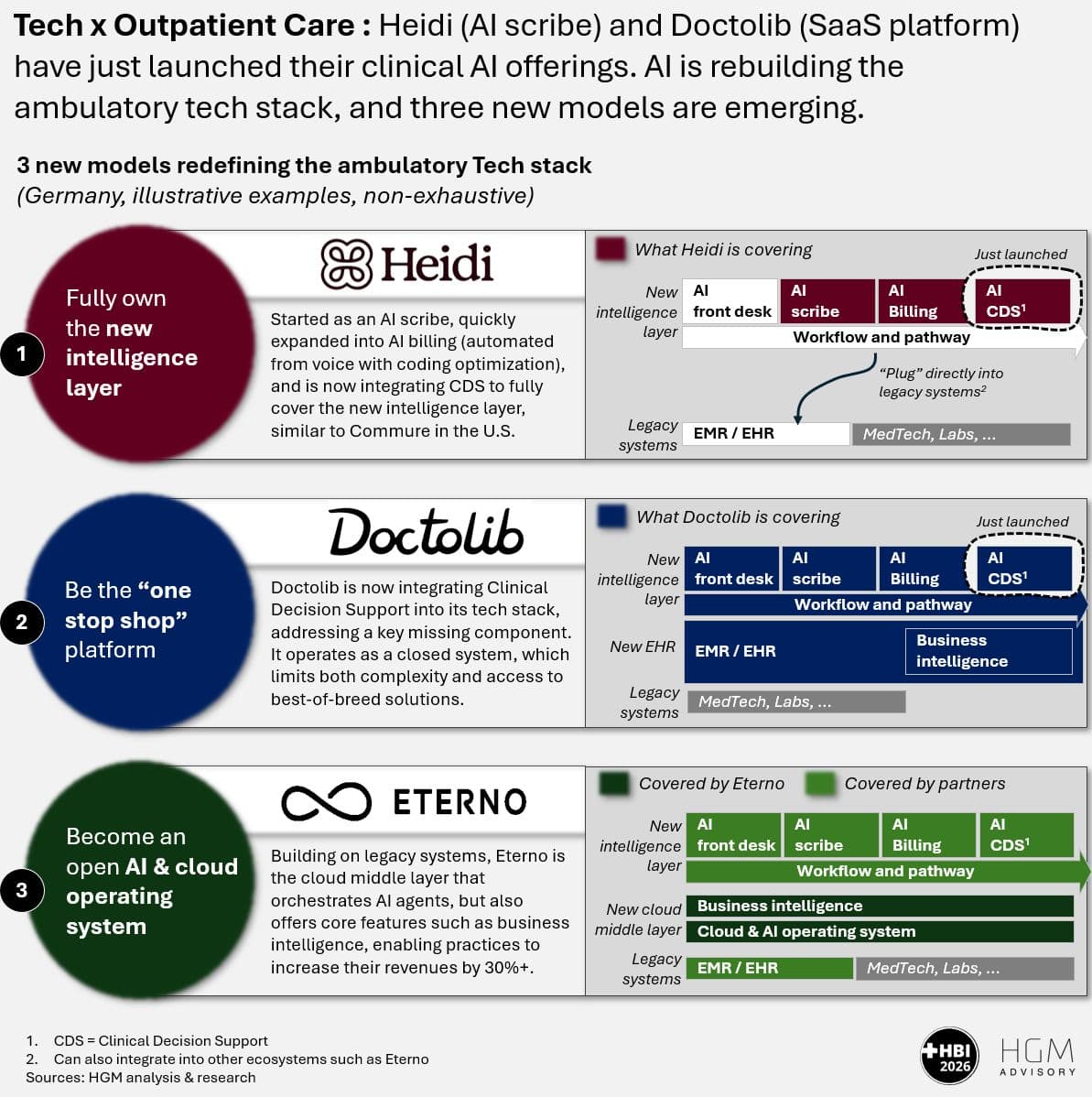
Tech x Outpatient Care: Heidi, Doctolib and Eterno are redefining the ambulatory tech stack
April 2026
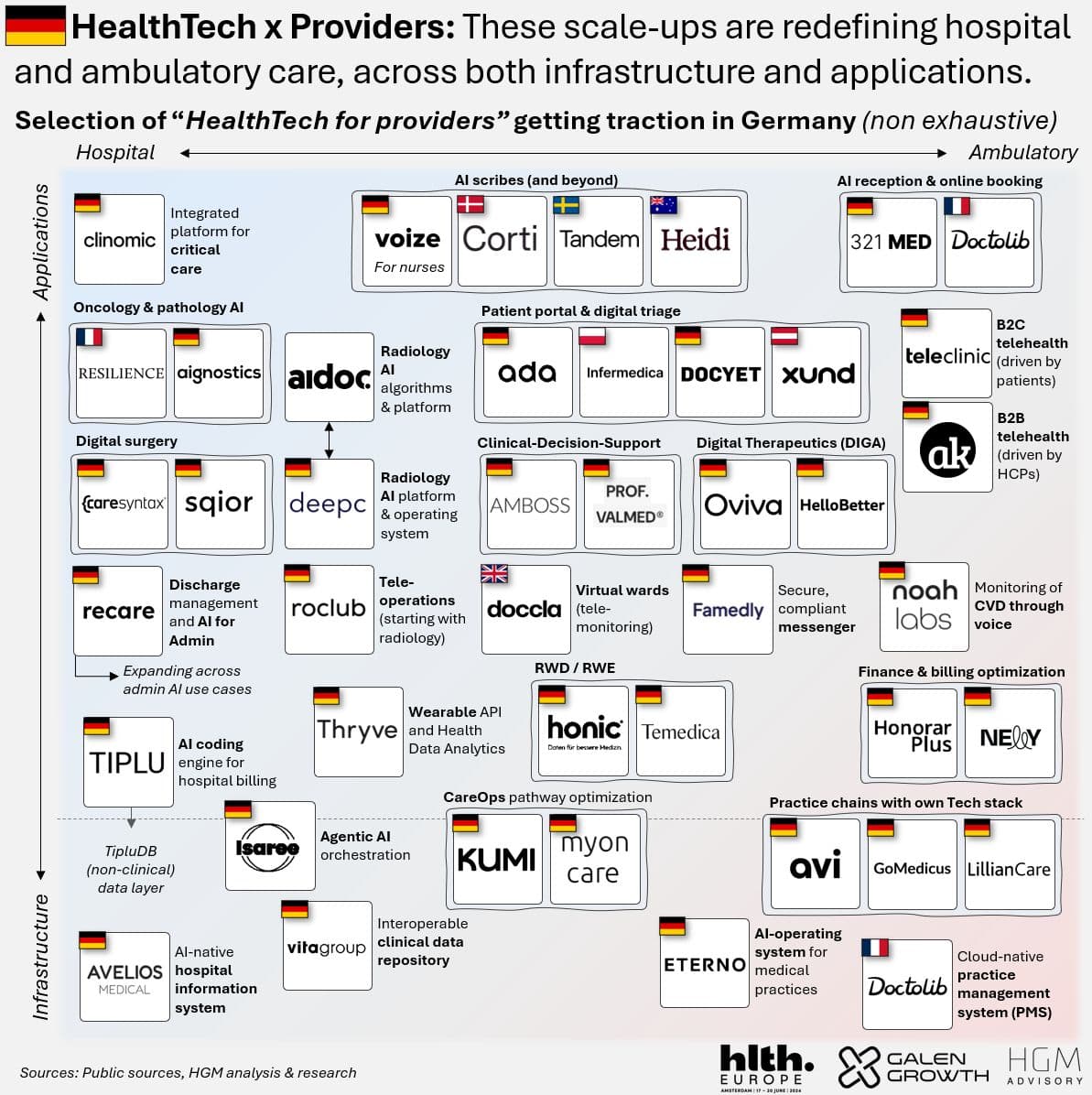
HealthTech x Providers: the scale-ups redefining hospital and ambulatory care in Germany
May 2026
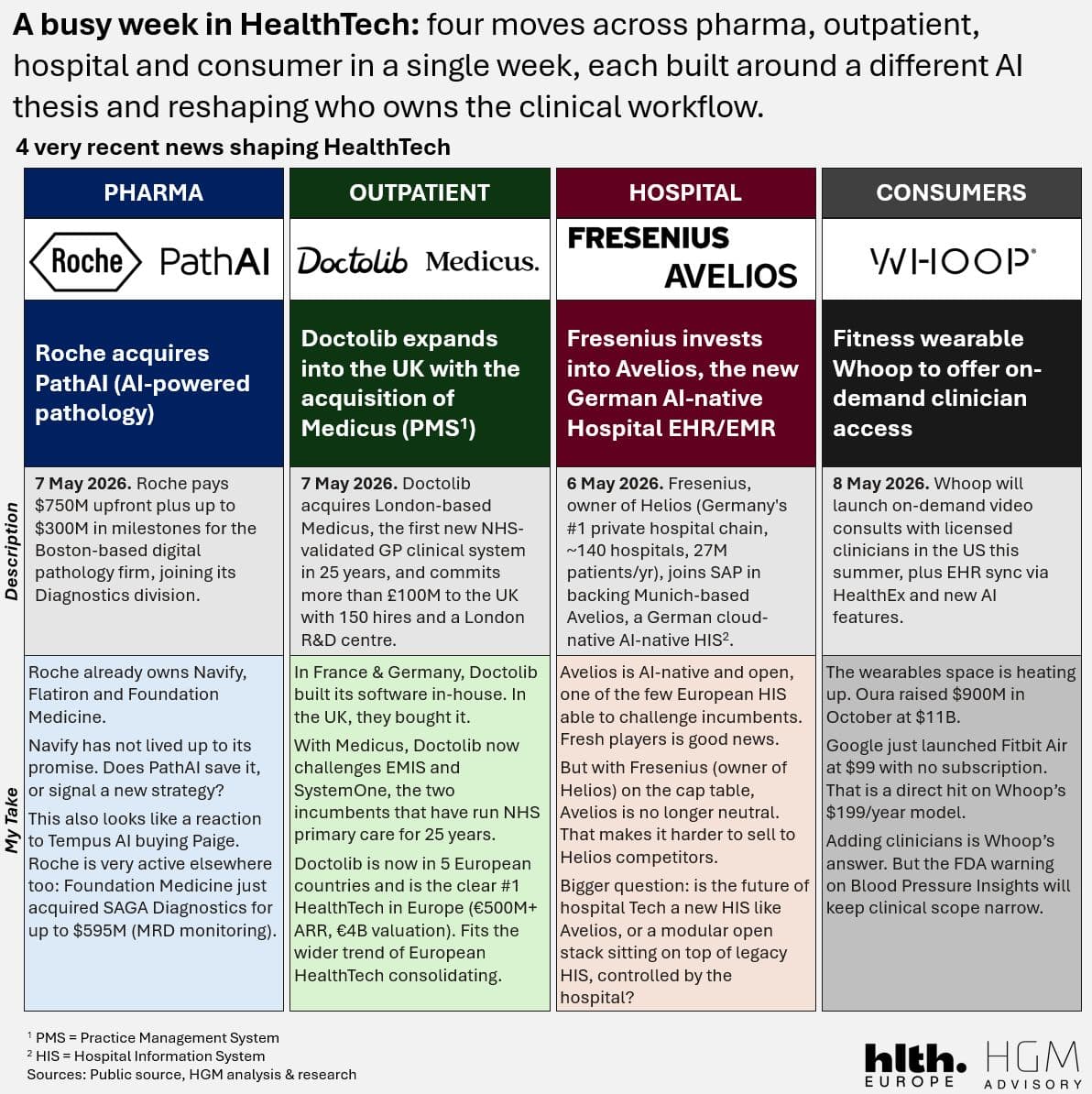
A busy week in HealthTech: four moves across pharma, outpatient, hospital and consumer, each reshaping who owns the clinical workflow